

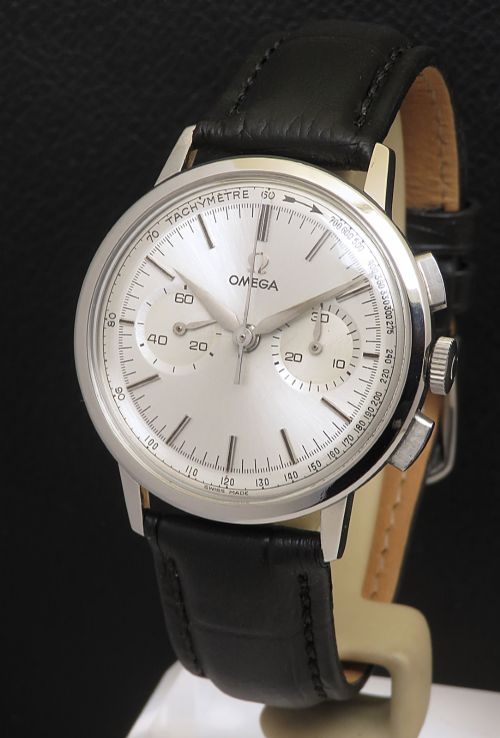
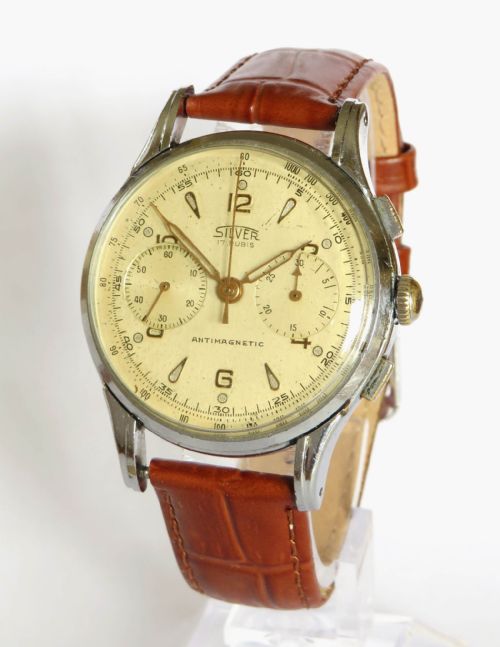
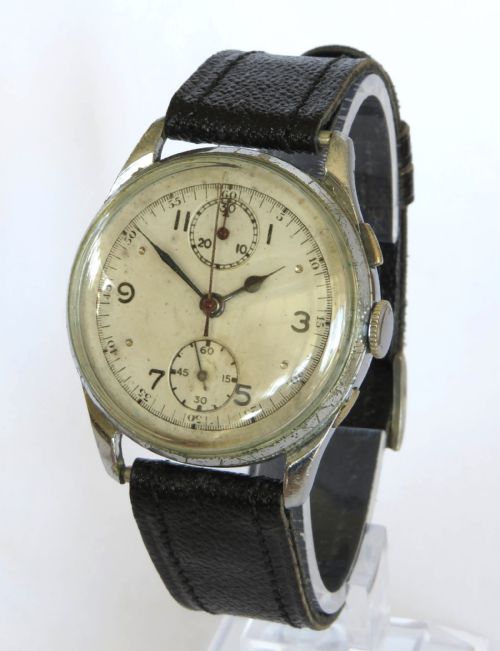
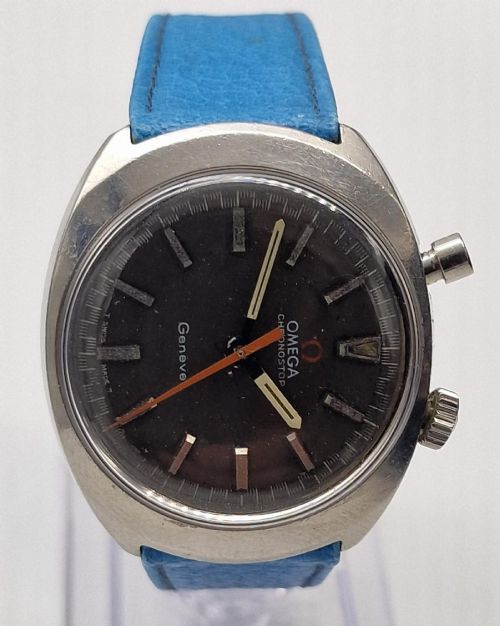


Stainless Steel Chronograph
These stainless steel chronograph wristwatches combine practical timing functions with mid-century style.
Stainless Steel Chronograph
A stainless steel chronograph is a wristwatch equipped with a stopwatch function, housed in a durable metal case. The examples found here span from the 1940s through the 1960s, capturing decades of horological development.
Most pieces date to the 1950s and 1960s, featuring specific forms such as aviators watches, drivers editions, and panda dials. Wristwatches dominate the selection, offering mechanical movements ranging from manual wind to chronograph complications.
Makers represented in these listings include established names such as Omega, Breitling, Heuer, Benrus, Invicta, and Antoremi. Each piece reflects the functional design priorities of mid-century aviation and everyday timing.
Materials and Construction
Construction relies heavily on stainless steel for cases, paired with acrylic glass or acrylic over the dial for protection. Straps utilise leather or fabric to secure the wristwatch to the wrist.
Movements incorporate precise mechanical calibres, such as the Venus 170 and Omega Cal 320, driving the stopwatch complications. Dial layouts often feature contrasting subdials, known as panda dials, alongside chrome and glass elements.
Stainless Steel Chronograph Retail Price Guide 2026
Typical asking prices for stainless steel chronograph among the pieces listed under this phrase on Sellingantiques today, from the lower quarter to the upper quarter. They describe what is for sale here now, not the wider market.
Evaluating Quality
Quality depends upon the preservation of original dial components, hands, and case edges against decades of wear. Pieces retaining original manufacturer signatures and distinct dial configurations hold greater interest for collectors.
The sophistication of the mechanical movement inside, such as specialised chronograph calibres by recognised makers, separates standard timepieces from more complex aviation and drivers editions.
Omega·Antoremi·Breitling·Invicta·Benrus·Heuer
The Stainless Steel Chronograph Glossary
- Chronograph
- A wristwatch with an independent sweep-second hand that can be started, stopped, and returned to zero for timing intervals. This complication defines the primary utility of these timepieces.
- Panda Dial
- A watch dial featuring a light background with contrasting dark subdials, resembling the face of a panda. This layout improves legibility during timing tasks.
- Calibre
- The internal mechanical movement or model of the watch mechanism. Collectors look at specific calibres to identify the workshop origin and complexity of the piece.
- Manual Wind
- A mechanical movement wound by hand via the crown rather than automatically by wrist motion. Most vintage chronographs rely on this traditional method.
- Acrylic Glass
- A lightweight, shatter-resistant plastic material used for crystals over the dial during the mid-century period. It can be polished to remove surface scratches.
Stainless Steel Chronograph: Frequently Asked Questions
How do I operate a vintage chronograph?
Operation involves using the pushers on the side of the stainless steel case to start, stop, and reset the stopwatch function independently of the main timekeeping hands.
Care should be taken not to force the pushers, as vintage mechanical components require gentle handling to maintain their longevity.
What is a panda dial?
A panda dial consists of a light-coloured main dial face paired with contrasting dark subdials for the chronograph counters.
This high-contrast design was popularized during the mid-century period to improve legibility for pilots and drivers.
Are these watches waterproof?
Vintage stainless steel chronographs generally lack modern waterproof seals and gasket integrity due to their age. Exposure to moisture or swimming should be avoided to protect the internal movement and dial.
Even models designated for diving or aviation from the 1950s and 1960s require professional pressure testing before any contact with water.
How do I date a vintage wristwatch?
Dating relies on serial numbers, movement calibres, case reference numbers, and stylistic markers such as dial typography and hand shapes. Comparing these details against manufacturer archives yields the production period.
The listings here primarily draw from the 1940s, 1950s, and 1960s horology periods.