

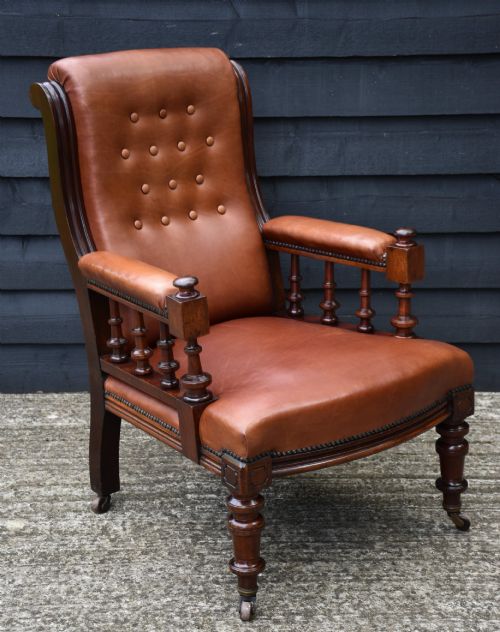
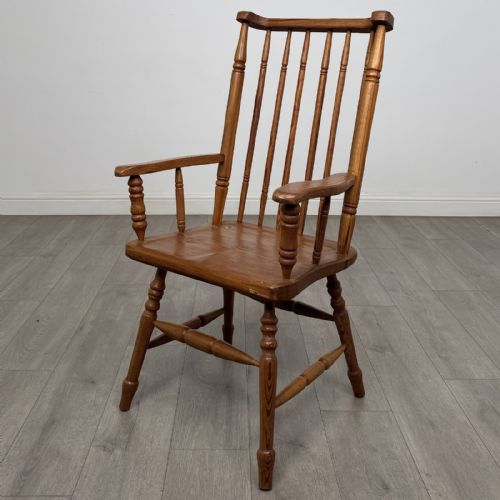
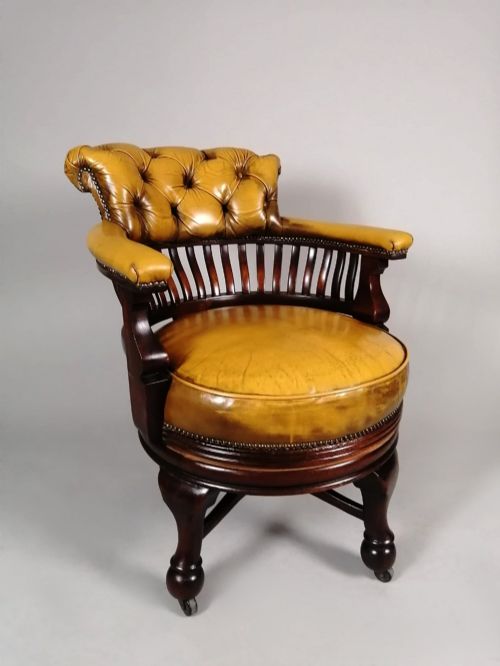
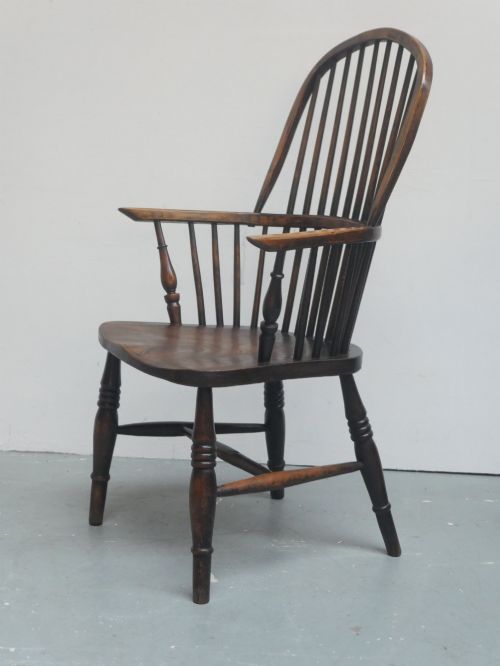
Vintage Spindle Armchair
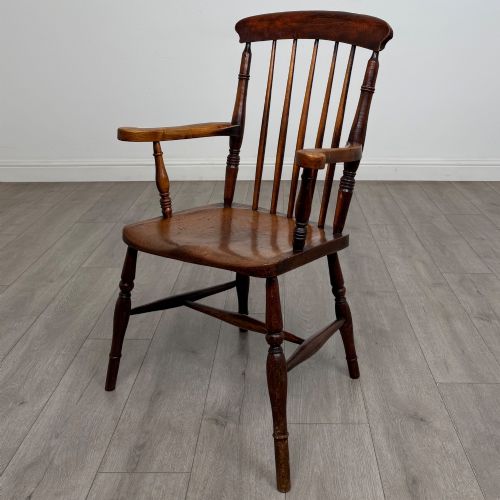
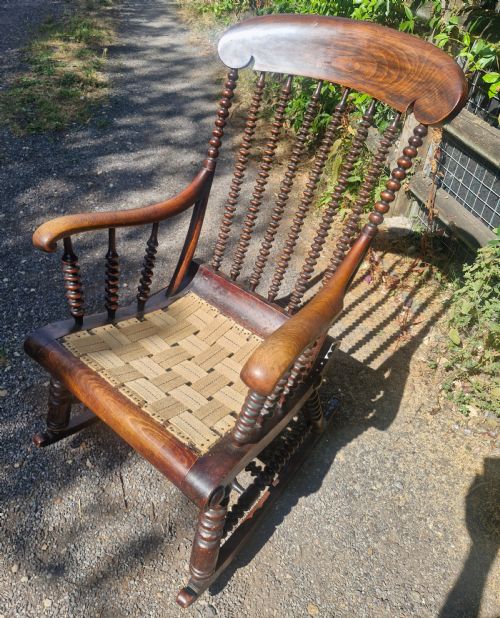
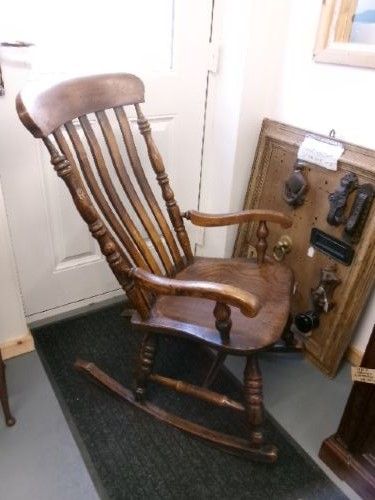
A vintage spindle armchair brings solid vernacular craftsmanship and turned wooden supports into a sitting room or study.
Vintage Spindle Armchair
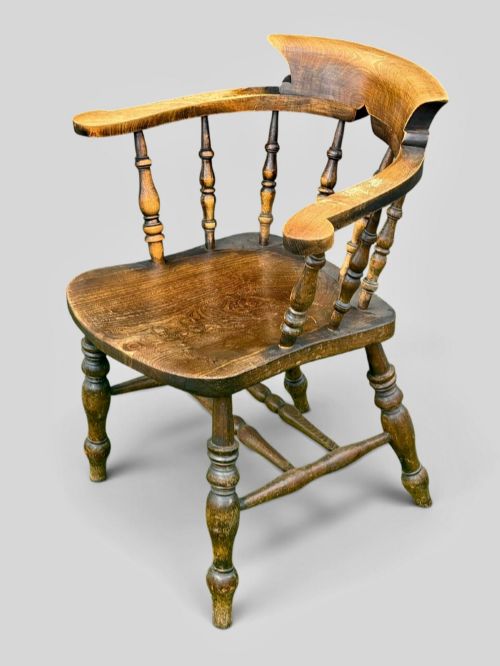
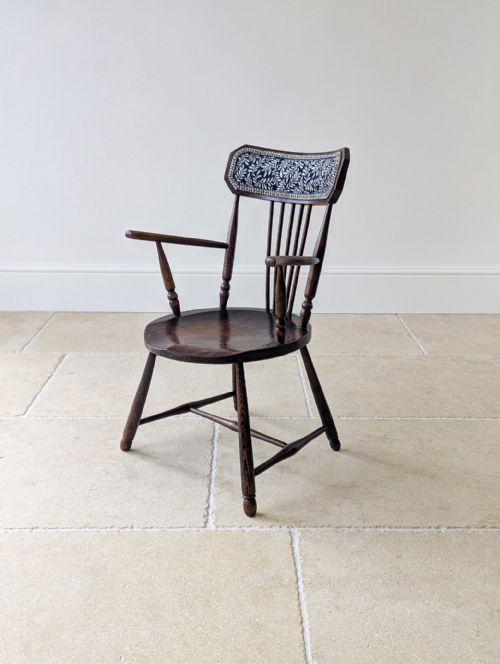
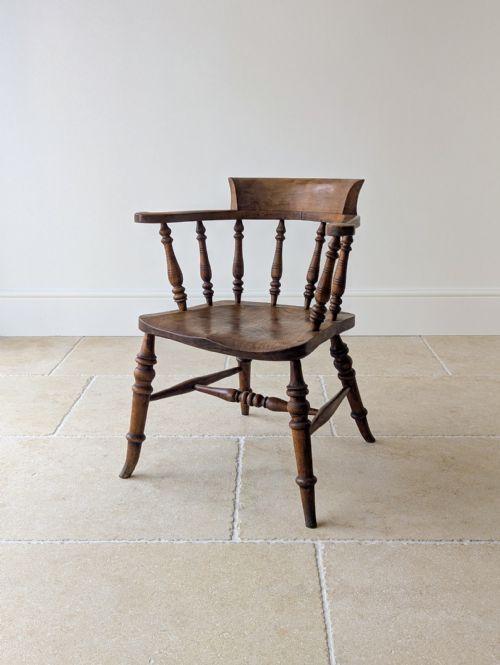
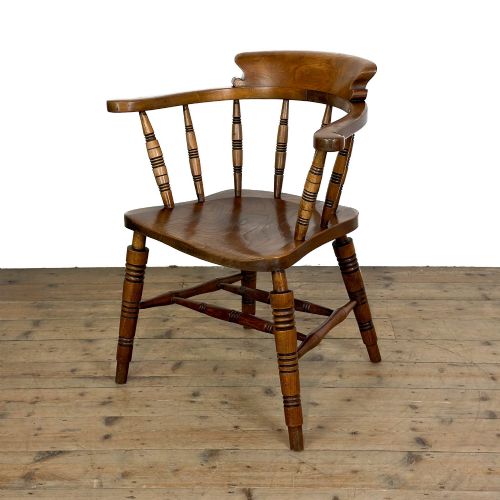
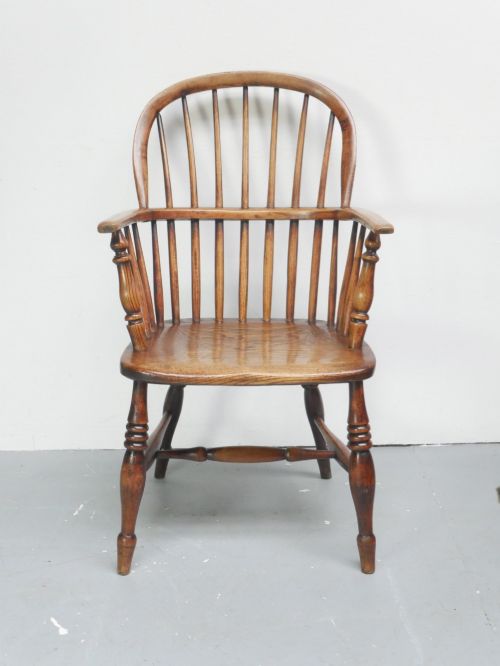
A vintage spindle armchair offers traditional seating through regional British and American forms like Windsor chairs, smoker's bows, and captain's chairs. Buyers hunting for a vintage spindle armchair encounter sturdy everyday seating designed for longevity rather than courtly display.
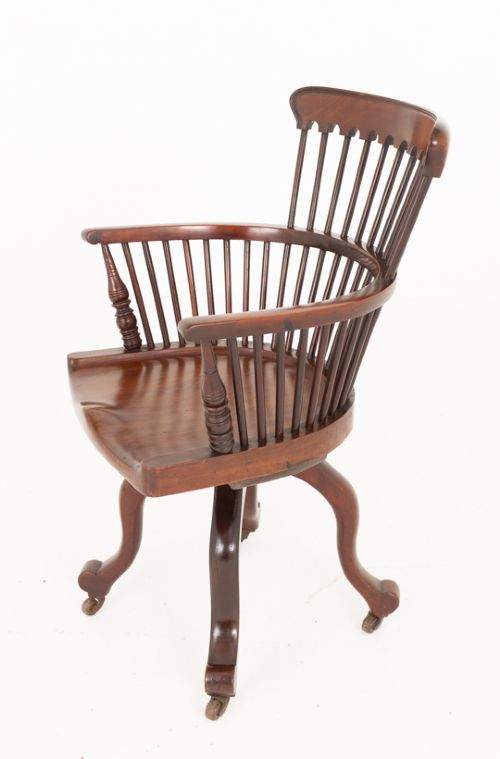
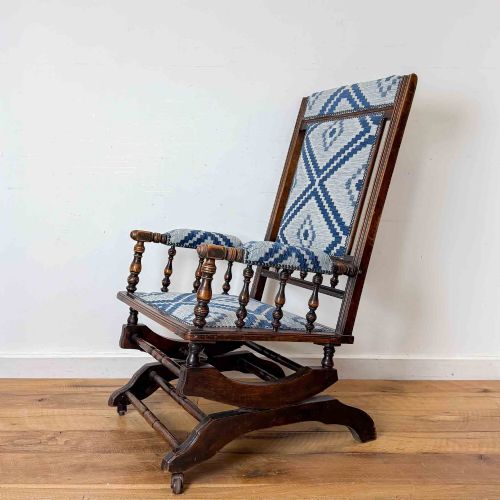
The pieces span the nineteenth century through the early twentieth century, taking in Victorian, Edwardian, and Arts and Crafts periods. Most examples rely on country house or farmhouse utility, appearing as low elbow seats, rocking chairs, and office desk chairs.
Elm, beech, and ash dominate the construction, often paired in a single chair where a solid elm seat anchors turned beech spindles and ash framing. Mahogany and oak appear more frequently in formal desk or office variations.
How they were made
Chairmakers shaped green timber using pole lathes and drawknives, turning spindles on simple machinery to achieve uniform cylindrical profiles. Seats were traditionally saddled from a single thick block of elm, scooped out with adzes and scorps for comfort.
Joints relied on wedged tenons and mortises where legs and spindles passed directly through the seat plank. This method allowed the dry wood to grip the unseasoned turned components tightly as ambient humidity shifted over decades.
Vintage Spindle Armchair Retail Price Guide 2026
Typical asking prices for vintage spindle armchair among the pieces listed under this phrase on Sellingantiques today, from the lower quarter to the upper quarter. They describe what is for sale here now, not the wider market.
Listings demonstrate a strong preference for elm and beech, frequently combining both woods within a single Windsor frame.
What varies in quality
The integrity of the timber selection dictates the durability of the frame, with dense burr-free elm seats holding up far better than secondary softwoods. Superior pieces maintain their original turned geometry without excessive replacement spindles or re-glued undercarriages.
Proportion and stance separate standard utility chairs from finer vernacular commissions, particularly where comb backs or lyre motifs show careful hand-finishing. Original surface treatments, whether aged patinated wax or untouched historic paint, elevate the character of the piece.
J SPENCER
The Vintage Spindle Armchair Glossary
- Smoker's bow
- A low-backed Windsor derivative with a continuous curved arm rail supported by turned spindles. These were common in nineteenth-century public houses and farmhouse parlours.
- Captain's chair
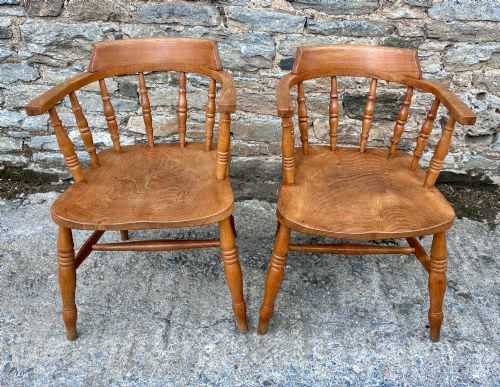
- A sturdy timber armchair designed for office or domestic use, featuring a rounded low backrest and turned uprights. They often sit on swivel mechanisms or simple wooden legs.
- Spindle back
- A chair back constructed from a series of slender turned wooden rods rather than solid wooden splats. This technique reduced weight while maintaining structural strength.
- Windsor chair
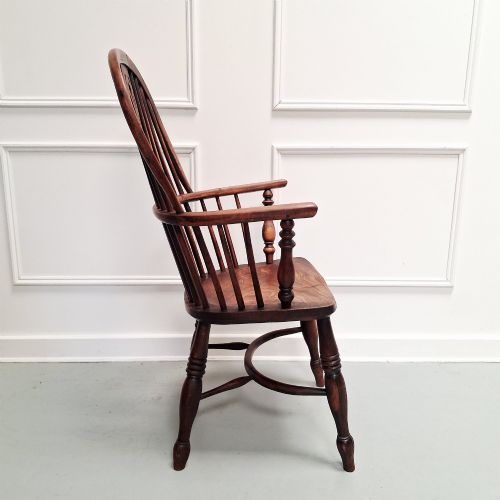
- A chair built with a heavy wooden seat into which the legs, back and spindles are directly inserted. Regional variations include hoop backs and comb backs.
- Vernacular
- Everyday objects made by local tradesmen using regional materials and traditional methods rather than following metropolitan academic designs. These pieces prioritise utility above stylistic fashion.
Vintage Spindle Armchair: Frequently Asked Questions
What is the difference between a Windsor and a captain's chair?
Windsor chairs generally feature an arched back construction where spindles run up to a bow or comb top rail. Captain's chairs utilise a lower, continuous rail wrapping around the elbows.
Both styles rely on the central tenet of sticking components directly into a solid wooden seat block.
Are these armchairs suitable for daily desk use?
Many nineteenth and early twentieth-century examples were specifically built as office or desk chairs, occasionally featuring revolving mechanisms or leather pads. Their sturdy wooden frames handle regular seating well.
Buyers should check the seat height against modern desk clearances before purchasing.
How should I care for historic elm and beech timber?
Maintain stable indoor humidity levels to prevent the dry old timber from splitting or shrinking. Apply a neutral beeswax polish occasionally to nourish the surface patina.
Avoid placing chairs near direct heat sources or in strong sunlight.