

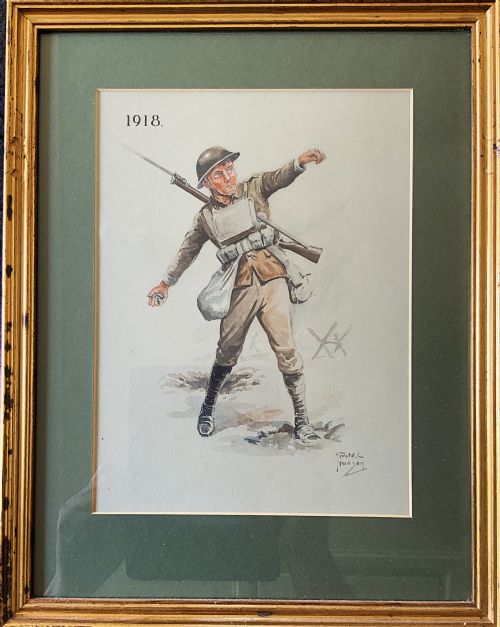


Vintage Soldier Picture
A vintage soldier picture brings historic military character to a room, offering framed watercolours, charcoal drawings and porcelain plaques from periods spanning the eighteenth century to the mid-twentieth century.
Vintage Soldier Picture
A vintage soldier picture encompasses framed watercolours, original charcoal battlefield drawings, porcelain plaques, and unique wall mirrors featuring military subjects. These works capture figures from the First World War, the Napoleonic Wars, and earlier historical eras, rendered in traditional British and Edwardian styles.
Buyers on this page most frequently encounter early twentieth-century watercolours and military portrait paintings depicting British and Belgian soldiers. These works range from frontline sketches dated to the First World War to later retrospective depictions of historical cavaliers and army militaria.
The selection includes diverse decorative formats such as wall art, framed prints, and paired genre paintings by known artists. Each piece reflects the military aesthetics and artistic techniques of its respective period, from 1910 portraits to Art Deco mirror designs.
How they were made
Artists and makers utilised traditional media such as watercolour, wash, and charcoal on paper to capture detailed military portraits and battlefield scenes. These works are frequently housed in period wooden frames, occasionally protected beneath glass.
Alternative forms involve porcelain wall plaques and chrome or metal components integrated into decorative wall mirrors. The creation of trench art combined charcoal drawing on paper with wartime materials sourced directly from locations like Arras.
Printed cards and original photographs represent the photographic and printmaking techniques employed during the early and mid-twentieth century. These diverse methods demonstrate the range of craftsmanship applied to military subjects across different decades.
Vintage Soldier Picture Retail Price Guide 2026
Typical asking prices for vintage soldier picture among the pieces listed under this phrase on Sellingantiques today, from the lower quarter to the upper quarter. They describe what is for sale here now, not the wider market.
The selection includes wall art, paintings, wall mirrors, wall plaques, and original photographs from military contexts.
What varies in quality
The distinction between standard works and exceptional pieces lies in the directness of the artist's hand and the immediacy of the historical record. Direct frontline sketches and named portraits carry greater documentary weight than generalized historical revivals.
Materials and framing contribute significantly to the overall presence of a vintage soldier picture. Original period frames and preserved paper surfaces maintain the integrity of watercolours and charcoal drawings better than later replacements.
Leopold Halvoet·Snaffles·Frank Dadd
The Vintage Soldier Picture Glossary
- Watercolour
- A painting method where fine pigment is suspended in a water-based solution on paper. This medium allows for transparent washes that capture light and detail in portraiture.
- Trench art
- Decorative or utilitarian objects made by soldiers, prisoners of war, or civilians from war-zone materials. These pieces provide direct physical links to historical conflicts.
- Wash
- A thin, fluid layer of diluted watercolour or ink spread evenly across paper. It creates atmospheric depth and tonal background in military illustrations.
- Cavalier
- A horse soldier or cavalryman from the seventeenth century, frequently depicted in historical revival paintings. The term also references the royalist supporters of Charles I.
- Militaria
- Collectable artefacts and artworks related to armed forces and military history. This category encompasses uniforms, portraiture, medals, and battlefield depictions.
Vintage Soldier Picture: Frequently Asked Questions
What periods do these soldier pictures represent?
The selection includes works from the eighteenth century, the Edwardian era, and the First World War period. Later pieces extend into the mid-twentieth century.
Specific dates on listings range from 1900 through the 1920s and 1930s, reflecting both contemporary wartime production and later historical revivals.
How were charcoal battlefield drawings created?
Artists working near the front lines utilised charcoal and paper to record immediate scenes during active campaigns. These sketches often captured specific individuals and locations under wartime conditions.
The resulting works preserve personal accounts of military service, frequently annotated with names and dates by the creator.
Where were porcelain wall plaques displayed?
Porcelain wall plaques served as decorative items within domestic interiors during the early twentieth century. They commemorated military figures and themes using fired ceramic techniques.
These pieces were typically hung on walls alongside framed paintings and mirrors to display patriotic or historical interests.
How do I care for antique paper art?
Keep watercolours and charcoal drawings away from direct sunlight to prevent the fading of pigments and paper discolouration. Stable indoor humidity levels protect both the paper support and the surrounding frame.
Displaying pieces behind glass shields the delicate media from dust and atmospheric pollutants while maintaining visibility.