



Vintage Small Drawer Units
These vintage small drawer units span miniature apprentice chests to industrial filing cabinets, offering compact storage shaped by practical trades and domestic needs.
Vintage Small Drawer Units
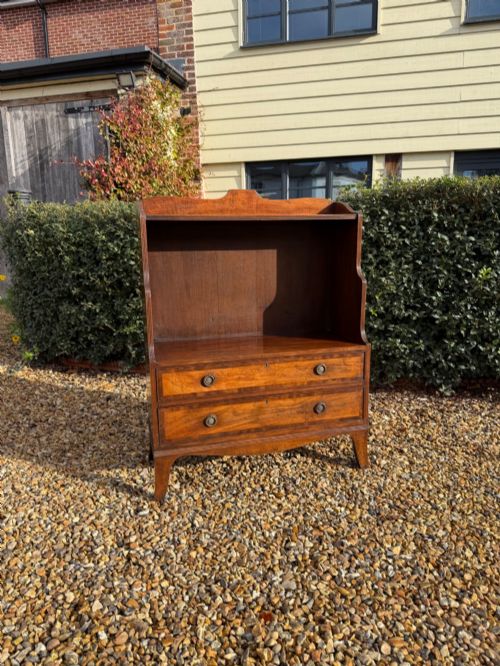
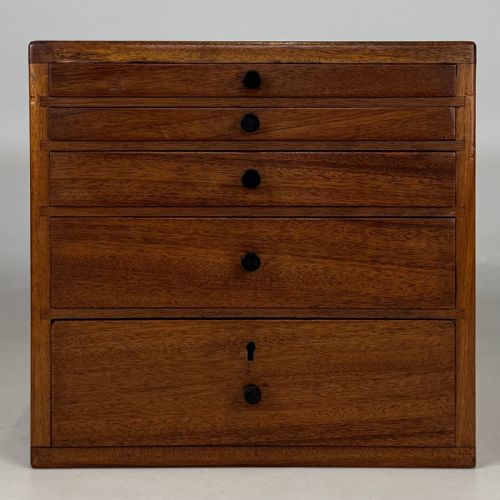
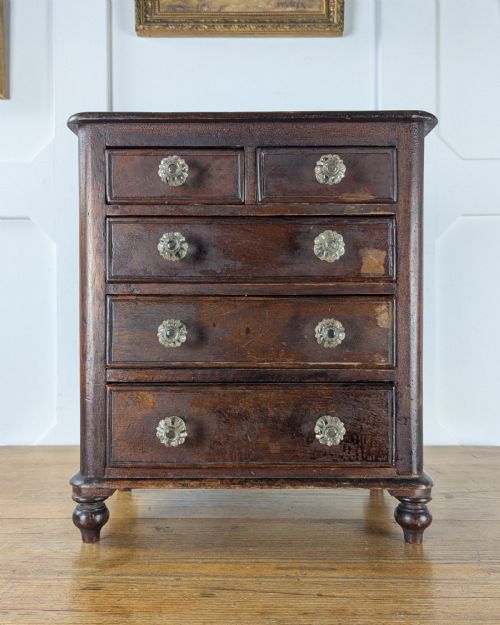
Vintage small drawer units encompass everything from domestic miniature chests and apprentice pieces to commercial banks of drawers, filing cabinets, and jewellers' chests. Buyers seeking these items will find pieces originating from the eighteenth century through to the 1930s, reflecting varied uses in offices, shops, and homes.
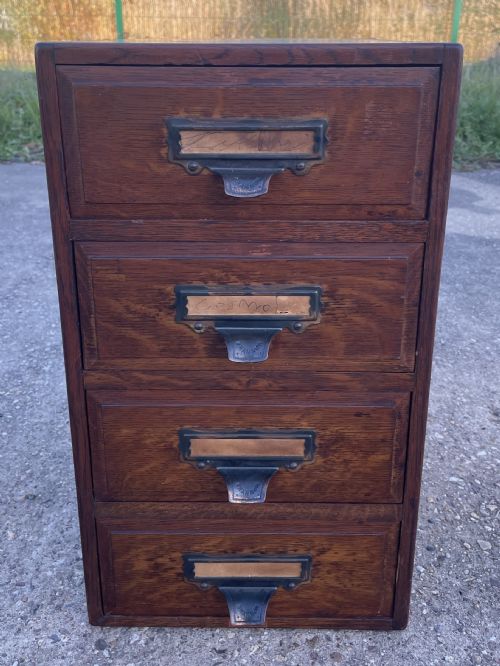
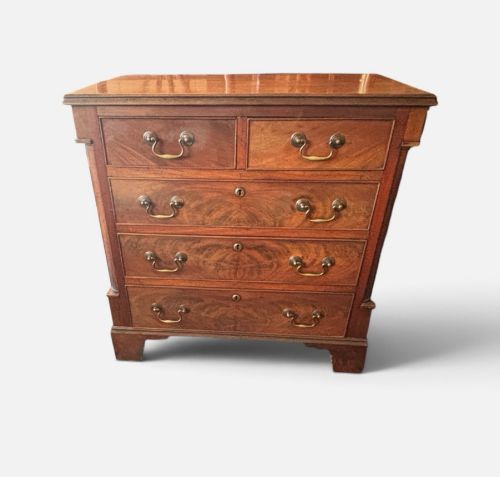
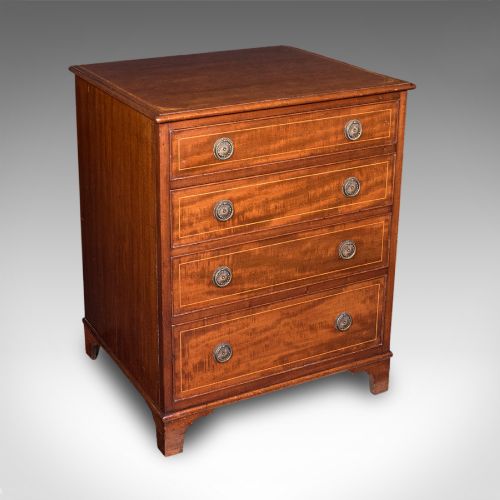
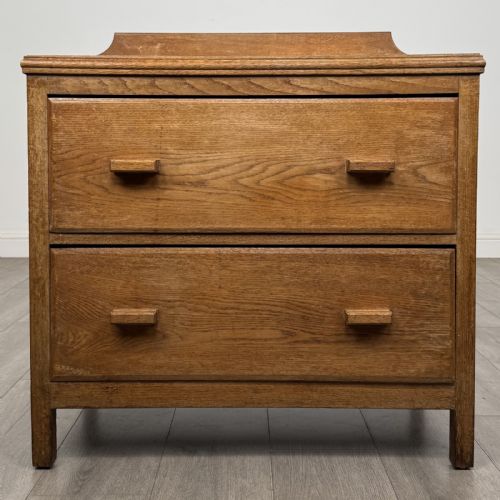
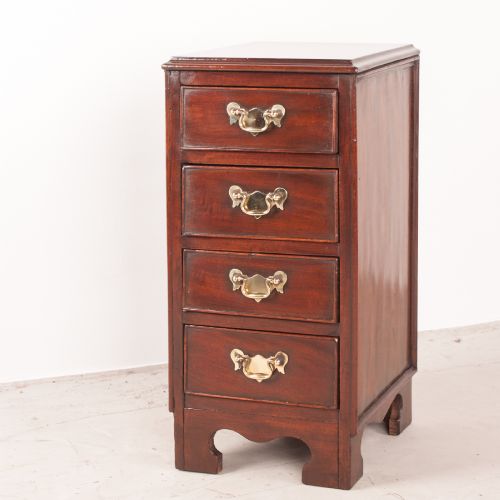
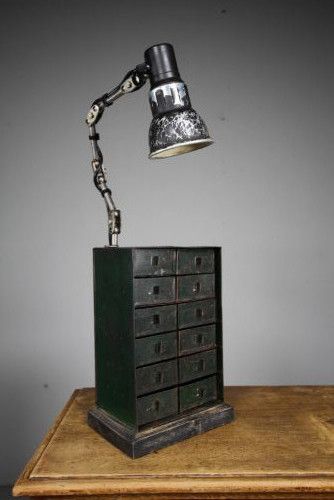
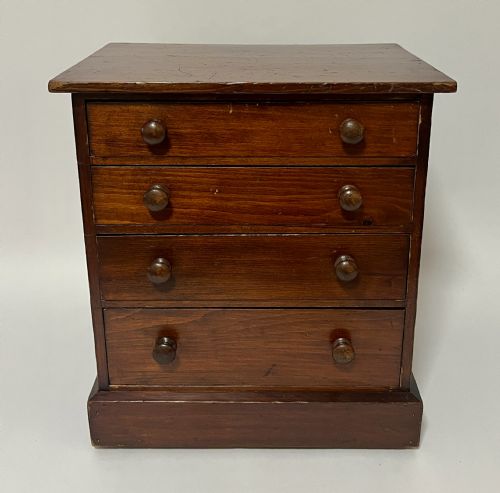
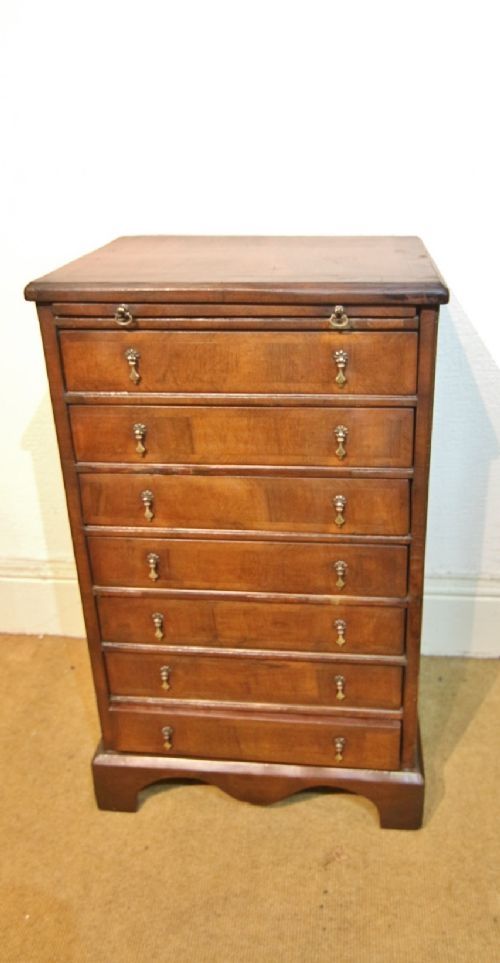
The most common versions met on this page include mahogany and oak chests of drawers, industrial multi-drawer filing units in metal or wood, and specialist storage such as collectors' cabinets and dental cabinets. These pieces often feature period brass handles, raised galleries, or milk glass linings, uniting compact proportions with functional storage.
Origins stretch across Victorian, Edwardian, and Art Deco styles, alongside Georgian and Queen Anne revivals, providing distinct aesthetic choices for compact spaces. Whether configured as narrow office cabinets, music chests, or apothecary units, each format serves specific sorting and display purposes.
Materials and construction methods
Makers utilised hardwoods such as mahogany, walnut, satinwood, and golden oak alongside pine, beech, and deal for internal or utilitarian framing. Metal elements appear in industrial filing cabinets and jewellers' chests, often paired with original brass handles and light fittings.
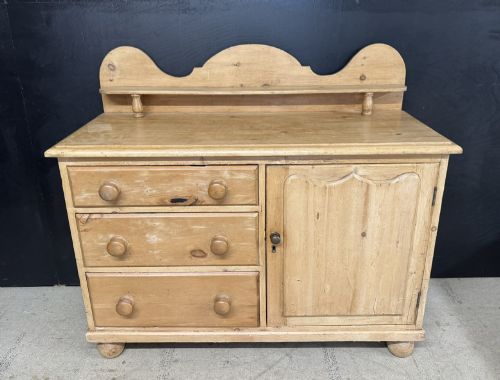
Joinery methods reflect the period of manufacture, encompassing traditional dovetailed drawer construction in nineteenth-century chests and robust metal framing in early twentieth-century office furniture. Surface finishes range from polished figured walnut and inlaid hardwood to stained deal and painted ironmongers' drawer units.
Vintage Small Drawer Units Retail Price Guide 2026
Typical asking prices for vintage small drawer units among the pieces listed under this phrase on Sellingantiques today, from the lower quarter to the upper quarter. They describe what is for sale here now, not the wider market.
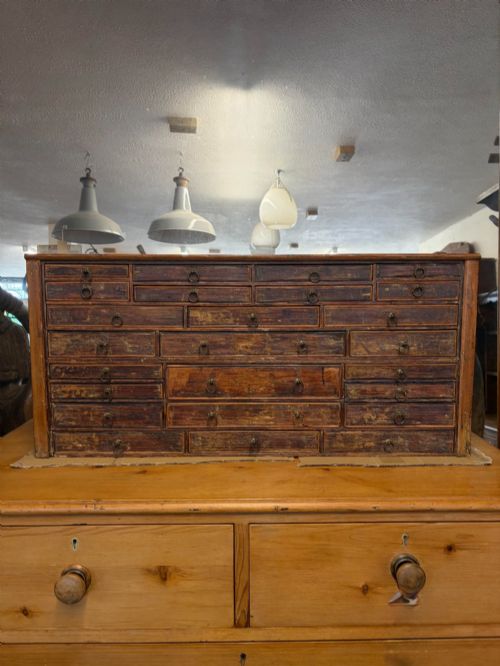
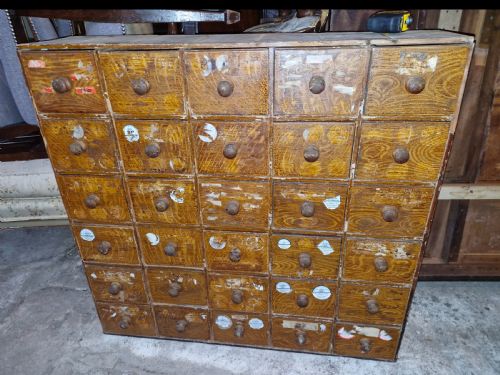
One twenty-five drawer bank originates from Luxmore's of Ilfracombe, ready to swallow up an impressive collection of stray paperclips.
Distinctions in craftsmanship and design
The upper tier of these pieces displays refined timber selection, such as figured walnut and finely grained mahogany, paired with sympathetic proportions and meticulous dovetailing. Lesser examples rely on utilitarian stained pine or deal with simpler joinery intended strictly for commercial utility.
Original hardware and fittings heavily influence desirability, with period brass handles, glass linings, and intact manufacturer details elevating standard storage to notable examples of the cabinetmaker's or metalworker's craft.
Luxmore's of Ilfracombe·Amberg
The Vintage Small Drawer Units Glossary
- Apprentice piece
- A small-scale item demonstrating a woodworker's skill to attain master status. These miniature chests replicate full-size furniture with complete technical accuracy.
- Collectors cabinet
- A specialist storage unit designed for natural history specimens, coins, or small objects. They typically contain numerous shallow drawers within a glazed or panelled housing.
- Gallery
- A raised ornamental border running along the top edge of a chest or cabinet. This feature prevents small items or papers from sliding off the surface.
- Haberdashery cabinet
- A shop display unit featuring multiple shallow drawers, often with glass fronts or pulls. They were originally utilised in retail drapery stores to organise small sewing goods.
- Dovetail
- An interlocking woodworking joint formed by alternating wedge-shaped pins and tails. This construction method secures drawer corners against lateral pulling forces.
Vintage Small Drawer Units: Frequently Asked Questions
What were vintage small drawer units used for?
These units served diverse practical roles across homes, offices, and specialist trades, functioning as office filing systems, music storage, and apothecary organisation. Domestic examples held trinkets, jewellery, or sewing equipment, while commercial variants sorted documents, dental tools, and hardware.
Industrial versions equipped ironmongers and merchant shops, whereas miniature chests often demonstrated technical proficiency or served as portable travel storage for valuable specimens.
How do I date an antique small chest of drawers?
Dating relies on examining timber selection, construction techniques, and stylistic revival influences from periods such as the Georgian or Queen Anne eras. Eighteenth and nineteenth-century pieces often exhibit hand-cut dovetails and solid secondary woods, whereas early twentieth-century examples incorporate industrial metal runners or machine-made components.
Hardware styles, including brass drop handles and escutcheons, provide additional chronological markers that align with Victorian, Edwardian, or Art Deco manufacturing norms.
Are multi-drawer filing cabinets suitable for modern home offices?
Compact filing units and multi-drawer office cabinets integrate easily into contemporary workspaces by offering vertical storage with a minimal footprint. Their robust construction and numerous shallow drawers provide practical organisation for modern stationery, documents, and craft supplies.
Pieces finished in oak, mahogany, or walnut also introduce tactile warmth and period character to domestic study environments.
How should I care for antique wooden drawer units?
Preserving these pieces involves maintaining stable indoor humidity levels to prevent timber warping and protecting finished surfaces from direct sunlight. Occasional application of appropriate wax polish nourishes hardwoods like mahogany and walnut without building up heavy residue.
Drawer runners benefit from remaining clean and ungreased to ensure smooth operation without attracting dust or causing friction against old wood.