


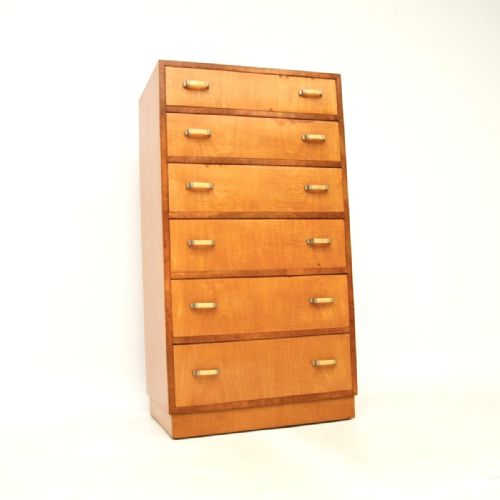


Vintage Six Drawer Dresser
These vintage six drawer dresser pieces offer practical storage across diverse woods, spanning the nineteenth century through the Art Deco era.
Vintage Six Drawer Dresser
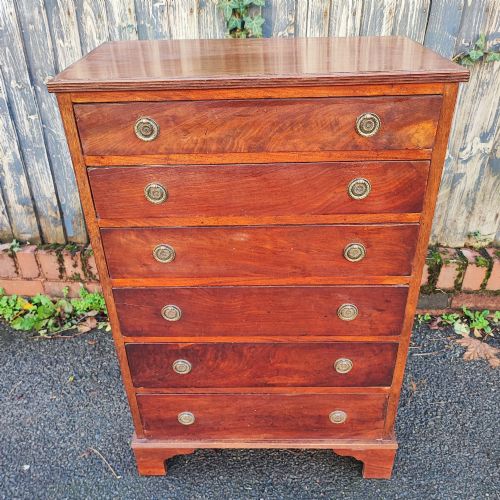
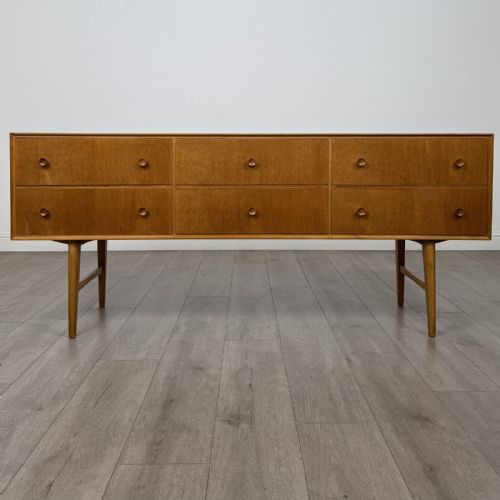
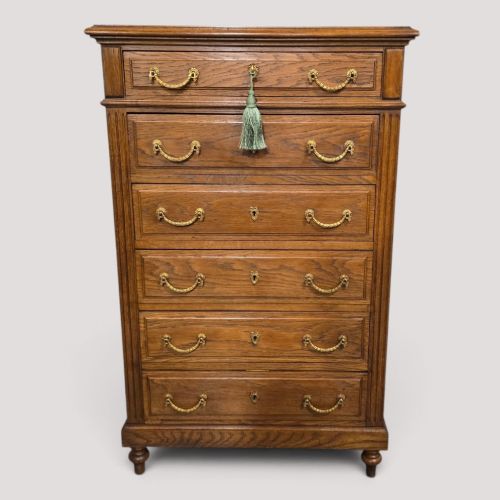
When searching for a vintage six drawer dresser, buyers encounter a variety of forms including chests of drawers, sideboards, and narrow cabinets. The inventory spans several periods, notably the nineteenth century, Edwardian era, and the nineteen-twenties and nineteen-thirties. These pieces provide substantial capacity for storage while introducing period character to a room.
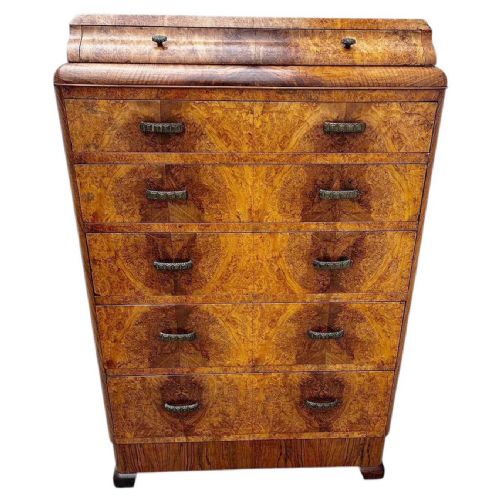
The most common examples on this page are sturdy pine or oak chests and sideboards from the nineteenth century and the early decades of the twentieth century. Alongside these, buyers find decorative variations in burr walnut, mahogany, and rosewood reflecting styles such as Victorian Country, Art Deco, and French Provincial.
Materials and construction
Makers utilised a range of timbers including pine, oak, walnut, burr walnut, mahogany, satinwood, and rosewood. These woods were chosen for their grain patterns and structural durability, forming the primary carcasses and drawer fronts of the furniture.
Additional materials such as brass for handles and inlay, and marble for tabletops, were integrated into specific designs. These elements combined traditional cabinetmaking methods with the stylistic requirements of periods like the Art Deco movement and Victorian era.
Vintage Six Drawer Dresser Retail Price Guide 2026
Typical asking prices for vintage six drawer dresser among the pieces listed under this phrase on Sellingantiques today, from the lower quarter to the upper quarter. They describe what is for sale here now, not the wider market.
Some chests feature marble tops, offering a cool, stone surface for daily items.
What separates the best pieces
Quality in these chests and sideboards rests upon the selection of timber veneers, such as burr walnut or figured mahogany, and the precision of decorative details like brass inlay. Finer examples display harmonious grain matching on the drawer fronts and carefully integrated marble surfaces.
The choice of secondary woods and the robustness of the drawer construction distinguish higher grade items from standard utilitarian storage. Pieces attributed to specific stylistic movements demonstrate more considered proportions and refined decorative restraint.
The Vintage Six Drawer Dresser Glossary
- Chest of Drawers
- A piece of furniture consisting of multiple parallel drawers used for storage. These items typically stand upright and feature varying numbers of tiers.
- Sideboard
- A long piece of furniture placed in dining spaces or living areas for storing tableware and linens. They frequently incorporate cupboards alongside banks of drawers.
- Burr Walnut
- A wood obtained from the burls or growths on walnut trees, displaying highly figured, swirling grain patterns. It was favoured by cabinetmakers for decorative veneer work on high quality furniture.
- Inlay
- A technique where pieces of a contrasting material, such as brass or lighter wood, are embedded into the surface of the primary timber to create decorative patterns.
Vintage Six Drawer Dresser: Frequently Asked Questions
What periods do these pieces come from?
The pieces originate from the nineteenth century, the Edwardian period, and the nineteen-twenties and nineteen-thirties.
They reflect aesthetic movements ranging from Victorian Country and Queen Anne to Art Deco and Mid-Century Modern.
How are these dressers constructed?
Cabinetmakers built them using solid hardwoods and softwoods like oak, pine, and mahogany, often applying decorative veneers such as burr walnut.
Additional materials like brass and marble appear on specific examples to enhance the surface appearance and hardware details.
Where were these pieces used?
Such furniture served domestic functions primarily in bedrooms, hallways, and dining rooms for organising clothing, linens, and household goods.
Sideboard variants were typically positioned in dining spaces, while chests of drawers suited sleeping quarters.
How do I identify different styles?
Styles are recognised through distinct design characteristics, such as the curved fronts of Edwardian pieces or the geometric veneer work of Art Deco items.
Materials also offer clues, with heavy pine suggesting Victorian Country and burr walnut pointing towards nineteen-thirties design.