


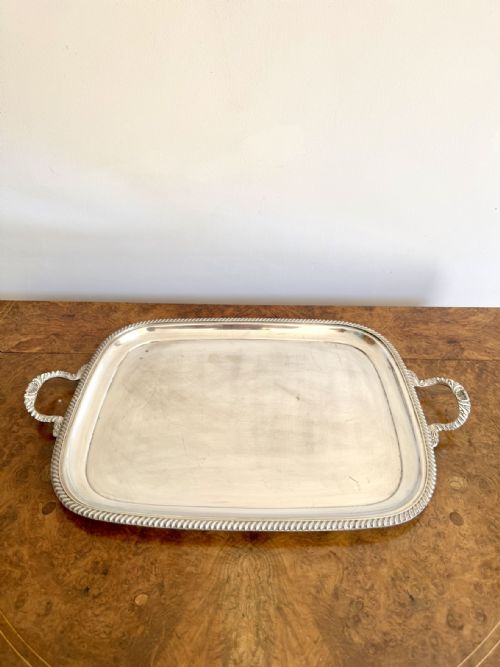
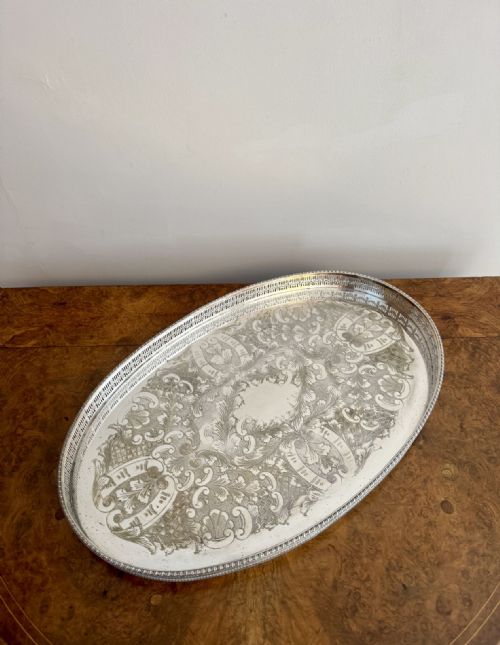


Vintage Silverplated Tray
These vintage silverplated tray examples bring genuine period elegance to table service, offering durable metal forms plated in silver for daily use or display.
Vintage Silverplated Tray
When you search for a vintage silverplated tray, you encounter serving pieces spanning from the late Victorian and Edwardian eras through the Art Deco period. These objects encompass serving trays, salvers, circular cocktail trays, and specialised platters designed for formal dining and entertaining.
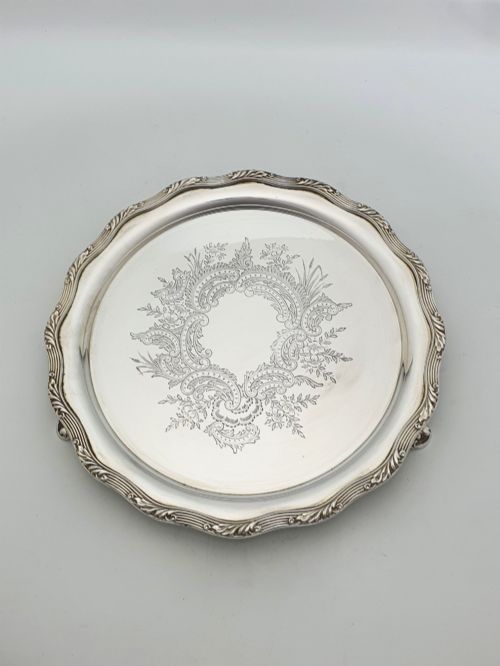
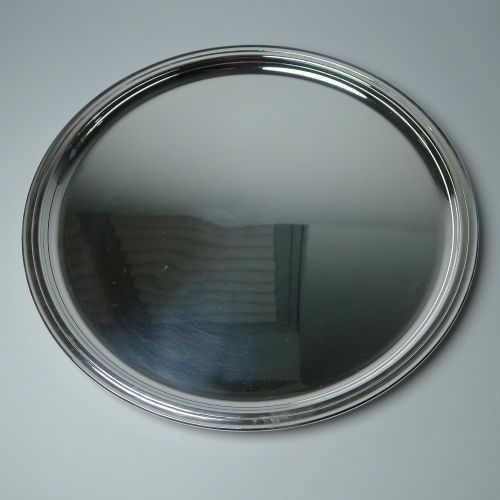
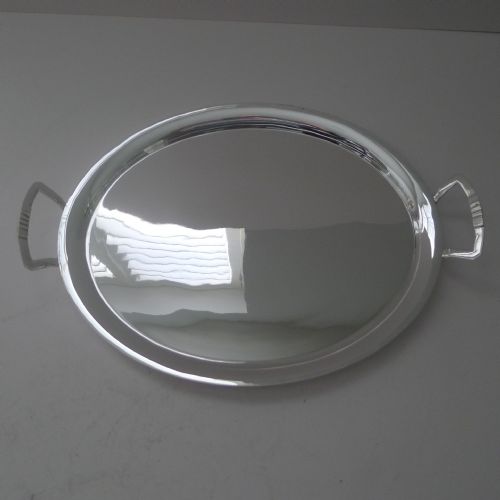
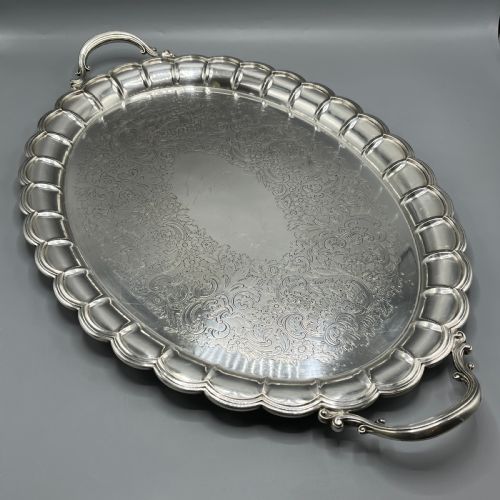
The specimens on this page most commonly reflect Edwardian tastes and Art Deco geometry, alongside Victorian Style and French Rococo Revival forms. Makers applied silver plating over base metal, EPNS, and electroplated nickel silver to achieve the lustre of solid silver without the associated weight and cost.
How they were made
Artisans built these pieces using base metal or electroplated nickel silver as a substrate, applying a thin layer of silver through electroplating techniques. Workshops utilised EPNS extensively across Edwardian and later twentieth-century production to create sturdy yet bright serving ware.
Decorative details often included scalloped rims, chased borders, and applied handles cast in styles ranging from Georgian Revival to French Rococo. Paris and London houses employed skilled metalsmiths to shape circular cocktail trays and rectangular serving platters with precision.
Vintage Silverplated Tray Retail Price Guide 2026
Typical asking prices for vintage silverplated tray among the pieces listed under this phrase on Sellingantiques today, from the lower quarter to the upper quarter. They describe what is for sale here now, not the wider market.
What varies in quality
Quality rests heavily upon the thickness of the silver plating and the crispness of the chased or cast ornament around the rim and handles. Pieces bearing the marks of established makers such as Mappin & Webb, Christofle Gallia, or Asprey typically display superior weight and balance.
The integrity of the underlying base metal and the preservation of the silver layer dictate the overall merit of a piece. Finer examples retain their original bright finish and structural rigidity across repetitive serving use.
Christofle Gallia Paris·Asprey London·Mappin and Webb·Victor Saglier Paris
The Vintage Silverplated Tray Glossary
- EPNS
- Electroplated nickel silver. This acronym denotes a base metal alloy of copper, nickel, and zinc coated with a layer of silver.
- Salver
- A tray, usually circular and footed, traditionally used for presenting drinks, letters, or calling cards.
- Electroplating
- The industrial process of depositing a thin layer of silver onto a base metal via an electrical current.
- Rococo Revival
- A nineteenth-century design style drawing on eighteenth-century French motifs, featuring asymmetrical scrolls and naturalistic floral motifs.
Vintage Silverplated Tray: Frequently Asked Questions
What is a vintage silverplated tray used for?
These pieces served historically for carrying tea sets, cocktails, or food dishes during formal entertaining in Edwardian and Art Deco drawing rooms.
Today, collectors utilise them as display surfaces, dressing table organisers, or functional serving items for contemporary gatherings.
How do I clean a vintage silverplated tray?
Cleaning requires a specialised silver polish and a soft cloth to remove tarnish without wearing through the thin plated surface.
Avoid abrasive pads or harsh chemical dips that strip the electroplated layer and expose the underlying base metal.
How can I tell the period of a tray?
Stylistic clues such as geometric lines point towards Art Deco pieces from the nineteen-thirties, while heavy scrolling indicates Victorian or Edwardian origins.
Maker marks and stamps stamped into the base metal provide additional chronological markers for dating.
What does EPNS mean on the back?
The letters stand for electroplated nickel silver, indicating the primary metal composition beneath the outer silver coating.
This standard marking appears frequently on British serving ware produced from the late Victorian period onwards.