



Vintage Silver Trumpet
These vintage silver trumpet pieces, spanning Victorian to Art Deco periods, combine precious metal and glass to display blooms with elegance.
Vintage Silver Trumpet
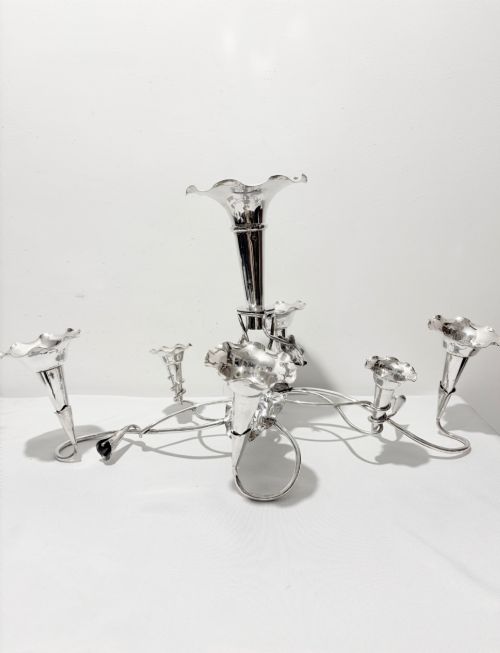
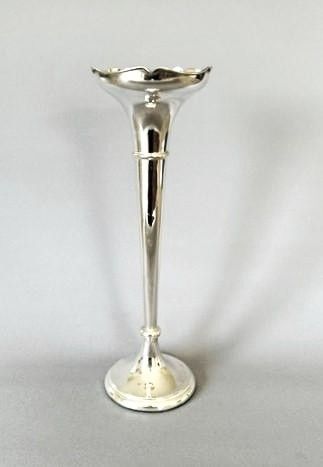
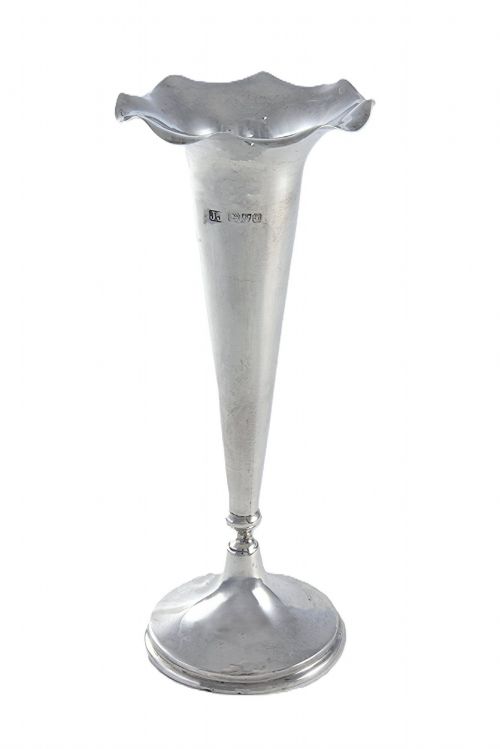
A vintage silver trumpet search covers slender, flared vessels designed to hold single stems or form the arms of multi-branch epergnes. These objects emerge from periods ranging from the late nineteenth century through the Edwardian era and into the Art Deco years of the nineteen-thirties.
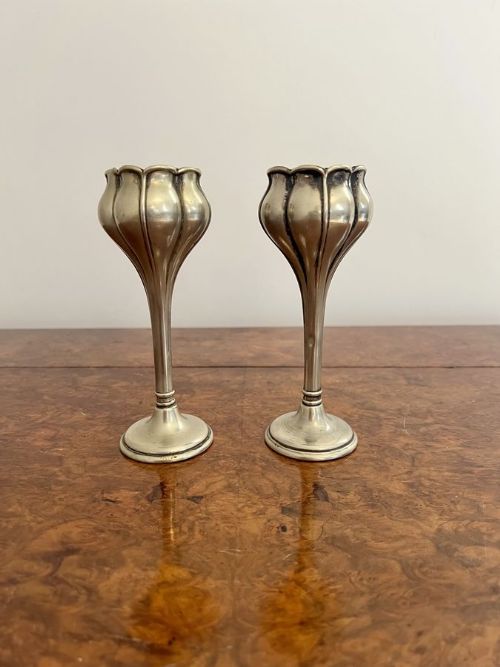
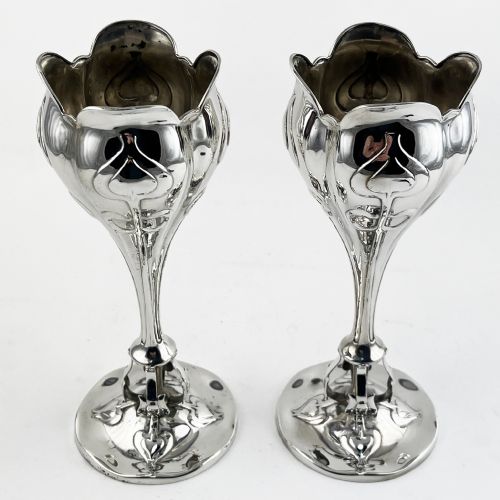
The most common forms on this page include single spill vases, pairs of matching vases, and grand multi-trumpet epergnes that anchor a dining table. Makers of these pieces utilised materials like sterling silver, silver plate, electroplated nickel silver, chrome, and glass.
Stylistic influences span Victorian elaboration, Edwardian refinement, Art Nouveau curves, Vienna Secessionist geometry, and Art Deco lines. Collectors find both solid sterling examples carrying town marks and silver plated or chrome variations paired with cut, wrythen, or pearlescent glass.
Materials and construction
Silversmiths and manufacturers formed the trumpet bodies either from solid sterling silver or by coating base metals such as electroplated nickel silver and chrome. Metal spinning and stamping allowed workshops to achieve the signature wide flare and slender neck.
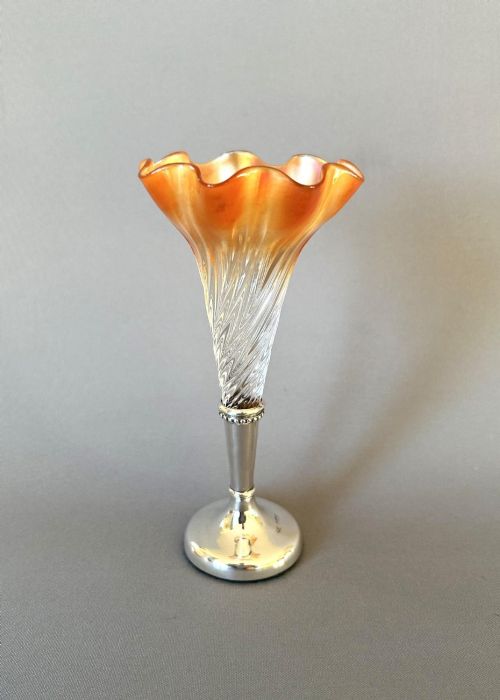
Glass components, including cut glass, wrythen glass, and pearlescent finishes, were mouth-blown or moulded before being fitted into silver bases or collars. Many designs married the rigidity of metal with the translucency of glass to catch the light from multiple angles.
Vintage Silver Trumpet Retail Price Guide 2026
Typical asking prices for vintage silver trumpet among the pieces listed under this phrase on Sellingantiques today, from the lower quarter to the upper quarter. They describe what is for sale here now, not the wider market.
Form variations range from single spill vases and desk lighters to multi-branch epergnes and wall sconces.
Distinctions in quality
Quality rests in the weight of the metal and the crispness of any chased or embossed ornamentation applied to the surface. Thicker gauge silver and robust plating retain their structural integrity and polish far better over decades of handling.
The integration between the trumpet body and its base separates standard production from superior work. Well-executed mounts, clear hallmarks, and undamaged glass inserts indicate higher workshop standards during production.
Daniel & Arter
The Vintage Silver Trumpet Glossary
- Epergne
- A centrepiece stand featuring multiple trumpet-shaped vases branching from a central bowl or stem. These pieces served as decorative centerpieces on formal dining tables.
- Spill Vase
- A tall, narrow container originally used to hold taper candles or wooden spills for lighting fires. In silver and glass, they evolved into decorative holders for single flower stems.
- Electroplated Nickel Silver
- A base metal alloy of copper, nickel, and zinc coated with a layer of silver through electrolysis. This technique allowed manufacturers to produce affordable items with the appearance of solid silver.
- Wrythen Glass
- Glass blown with a twisted, spiral ribbing pattern that creates dynamic refraction. This texture appears frequently on Edwardian and Victorian flower vases.
- Vienna Secessionist
- An artistic movement focusing on clean geometric forms and restrained ornamentation away from historicist revival styles. Pieces in this style reject heavy Victorian clutter in favour of linear purity.
Vintage Silver Trumpet: Frequently Asked Questions
What were trumpet vases used for?
Trumpet vases held individual blooms or arranged slender floral displays on dining tables and mantelpieces. Their flared rims supported long-stemmed flowers such as roses or lilies.
Larger configurations like epergnes allowed hosts to display multiple flower varieties across branching trumpets during formal meals.
How do I clean silver trumpet vases?
Clean silver components using a soft cloth and a gentle, non-abrasive silver polish formulated for plated or solid metal surfaces. Avoid harsh scrubbing that wears down thin silver plating over brass or nickel.
Wash glass inserts separately in warm, soapy water and dry them thoroughly before reinserting them into the metal bases.
Are these pieces made of solid silver?
Many items utilise silver plate, electroplated nickel silver, or chrome rather than solid sterling silver. Hallmarks stamped onto the metal indicate solid silver standards and assay office origins.
Plated items and chrome pieces offer the same aesthetic form without the higher cost associated with solid precious metal construction.
How can I tell the period of a piece?
Stylistic cues such as floral motifs indicate Edwardian or Victorian origins, while geometric lines point to Art Deco design. Materials like chrome paired with glass strongly suggest the nineteen-thirties.
Assay marks and registration numbers stamped on sterling or plated components provide precise dating clues for Victorian and Edwardian items.