
Vintage Silver T Bar
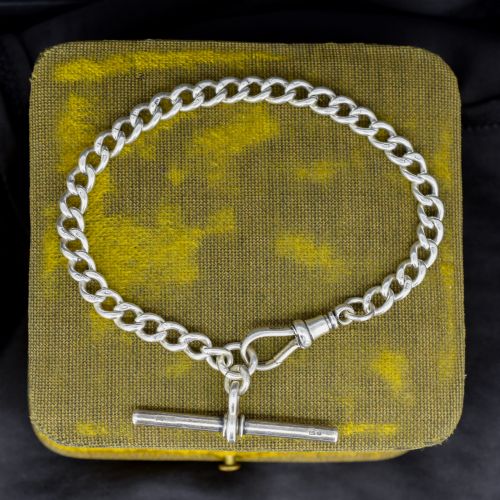
When you search for a vintage silver t bar, you are looking at pocket watch chains and bracelets designed to secure a timepiece or fasten a link.
Vintage Silver T Bar
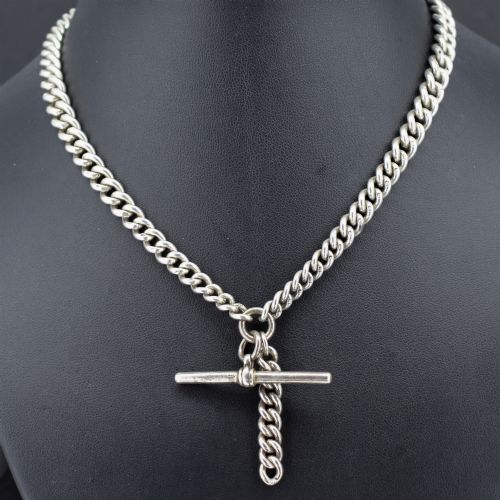
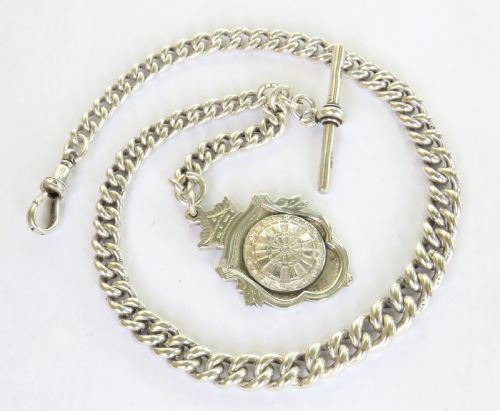
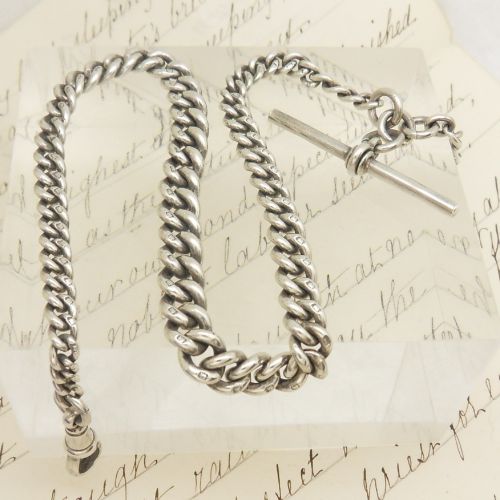
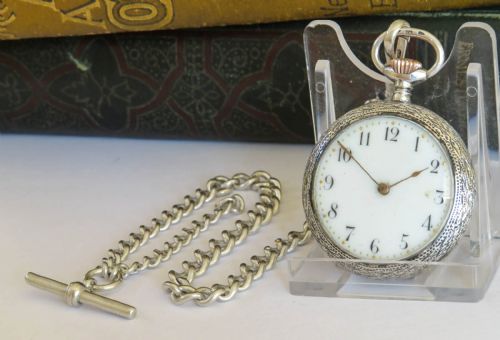
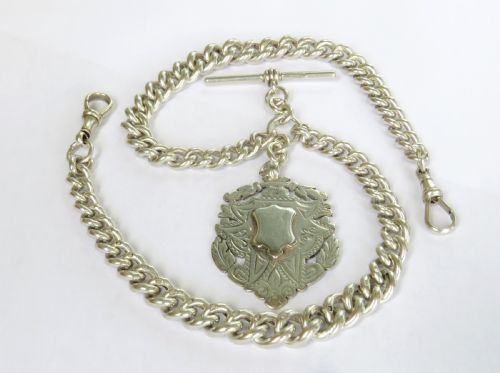
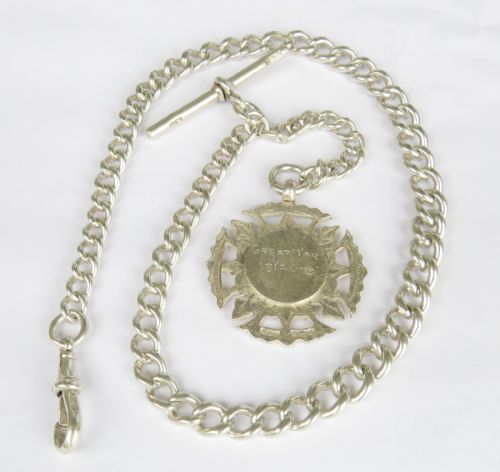
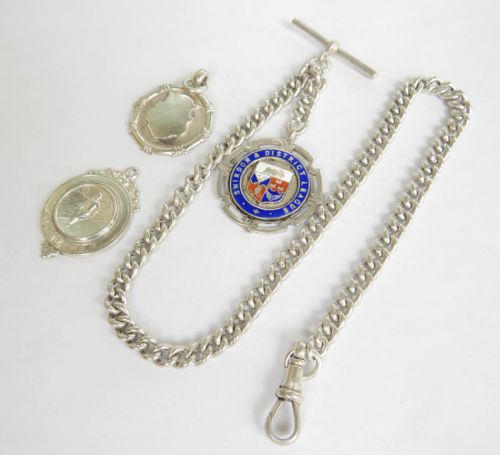
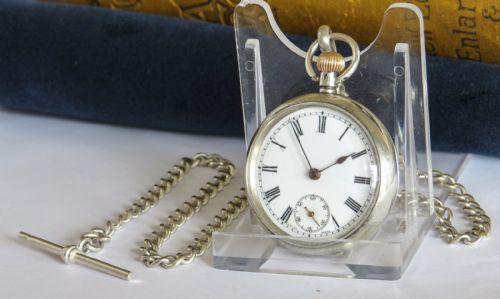
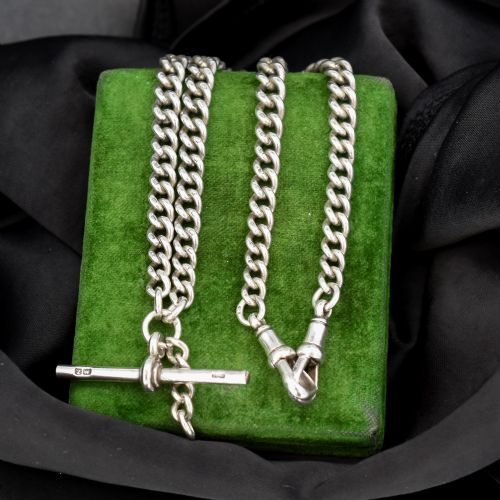
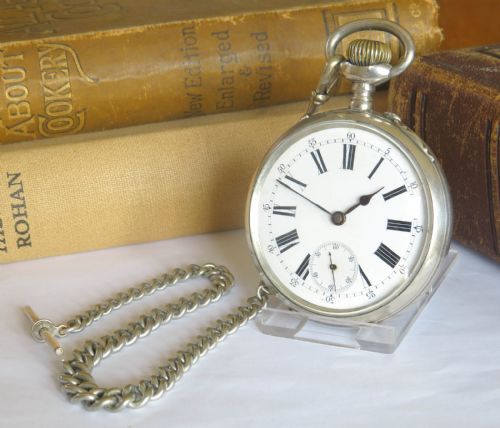
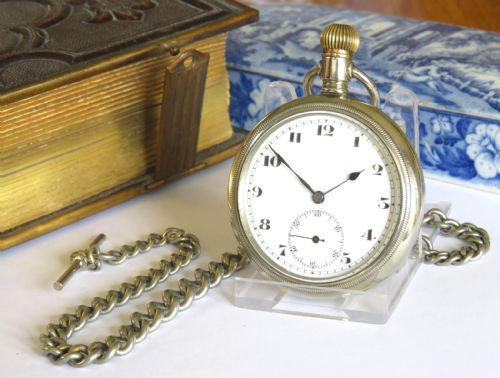
A vintage silver t bar most commonly appears as part of an antique pocket watch albert chain, designed to pass through a waistcoat buttonhole while the chain attached to a timepiece in the pocket. These practical items originate from periods spanning the late nineteenth century through the mid twentieth century, reflecting the daily habits of earlier eras.
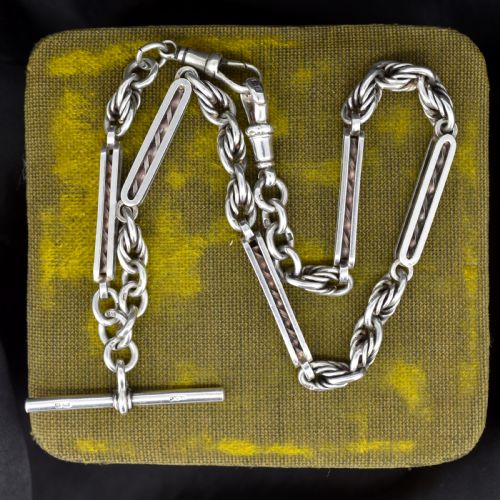
Beyond watch chains, the form also emerges on sterling silver bracelets featuring dog clips and drops. These variations demonstrate how the functional crossbar adapted from menswear accessories into personal jewellery over successive decades.
The pieces encountered on this page stretch from Victorian and Edwardian examples to Art Deco designs. Makers and assay offices stamped hallmarks onto many of these items, providing tangible links to towns such as Chester alongside dates from the nineteen hundreds onward.
Materials and construction methods
Makers utilised sterling silver and silver plate to fashion links, chains, and bars, sometimes combining them with materials like enamel, glass, wood, and steel in related items. Sterling silver components underwent traditional silversmithing techniques, including curb link formation, fancy link assembly, and hallmark stamping.
Constructing these accessories required precise metalworking to ensure durability for daily wear. T bars were cast or forged and then attached to albert chains via jump rings or swivels, creating a secure fastening system designed to withstand constant handling.
Factors determining quality
Quality in a vintage silver t bar and its accompanying chain rests upon the crispness of the hallmarks, the sturdiness of the links, and the original integrity of the components. Clear maker marks and assay office stamps indicate higher standards of manufacturing and accountability.
The complexity of the link design, from simple curb patterns to intricate fancy links, also separates standard utility pieces from finer examples. Preserved swivel actions and secure dog clips demonstrate superior craftsmanship that endures through use.
Hermes Paris·Sudre·Richard Comyns·PH Vogel·Hukin and Heath
The Vintage Silver T Bar Glossary
- T bar
- A small transverse bar of metal attached to a pocket watch chain, designed to slip through a buttonhole to secure the chain. This component forms the defining feature of albert chains and related bracelets.
- Albert chain
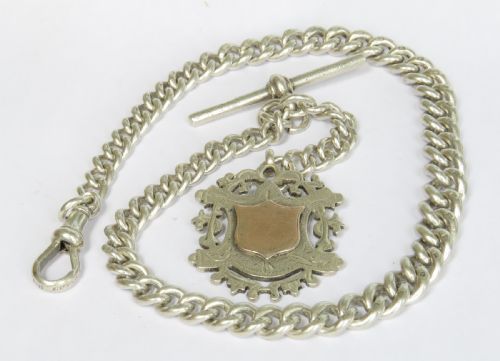
- A chain attached to a pocket watch, named after Prince Albert who popularised the accessory. These chains typically incorporate a t bar at one end and a swivel clasp at the other.
- Hallmark
- An official stamp applied to precious metals indicating the standard of purity, the assay office, and the year of manufacture. British silver items frequently display these authoritative marks.
- Dog clip
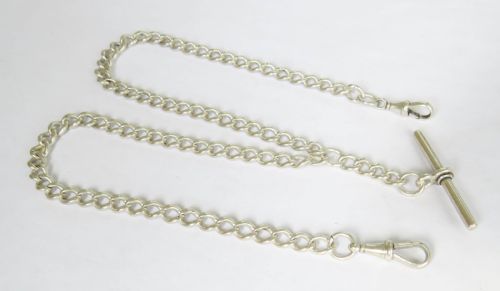
- A spring-loaded clasp used on watch chains and bracelets to secure a fob or pendant. This mechanism allows the wearer to attach and detach items quickly.
- Fob
- An ornamental medallion or seal attached to a pocket watch chain. Fobs often commemorate sports teams, military service, or personal achievements.
Vintage Silver T Bar: Frequently Asked Questions
How do you wear a vintage silver t bar?
The t bar slips horizontally through a waistcoat buttonhole, anchoring the attached pocket watch safely in the pocket. The remaining length of the chain drapes across the front of the garment.
Alternatively, modern wearers attach these chains to belt loops or utilise t bar bracelets around the wrist. The crossbar simply anchors into a secure loop or link.
Are these chains made of solid silver?
Many listings consist of sterling silver or marked silver, while others utilise silver plate over a base metal. Hallmarks stamped directly onto the metal indicate the exact standard.
Checking the links and the t bar itself for stamps reveals whether the piece is solid sterling or plated. Assay office marks provide further confirmation of the metal composition.
How do I date a silver watch chain?
Dating relies heavily upon the stamped hallmarks found on the individual links and the t bar. Letter codes and symbols correspond to specific years and assay offices.
Stylistic elements like curb link thickness or Art Deco geometric influences also help narrow down the decade of production. Surviving fobs attached to the chain often provide additional historical context.