


Hallmarked Silver Albert
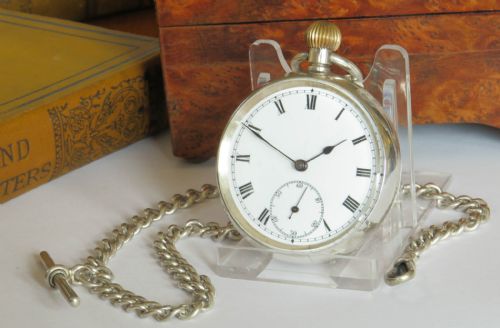
These hallmarked silver albert pieces are robust Victorian and Edwardian watch chains and accessories built for daily pocket use.
Hallmarked Silver Albert
The pieces appearing on this page span the 19th century, Victorian, Edwardian, George V, Art Deco, 1900, 1910, 1920, and 1930 periods. Alongside traditional watch chains, the selection includes related items such as watch fobs, stamp cases, necklaces, and silver tablespoons.
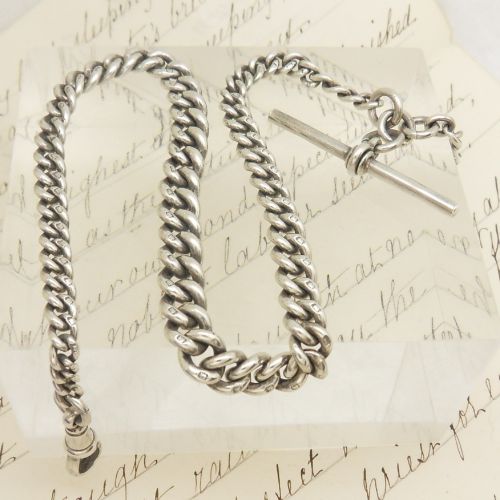
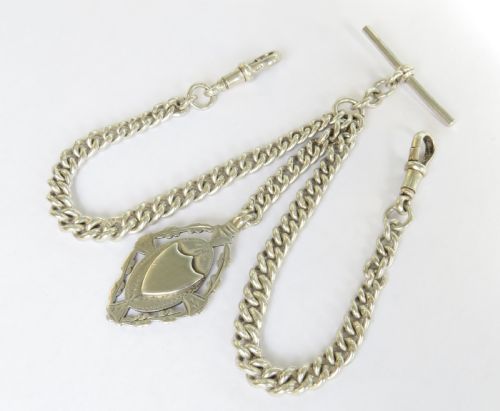
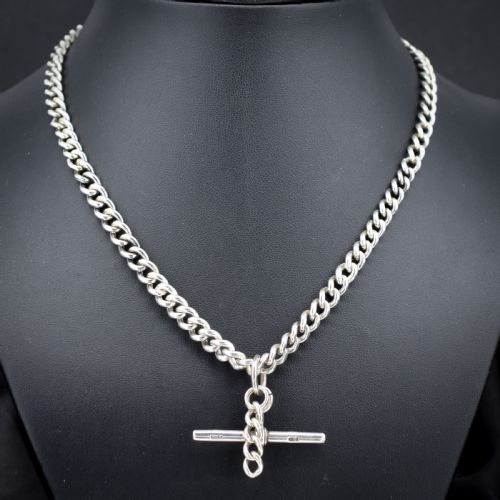
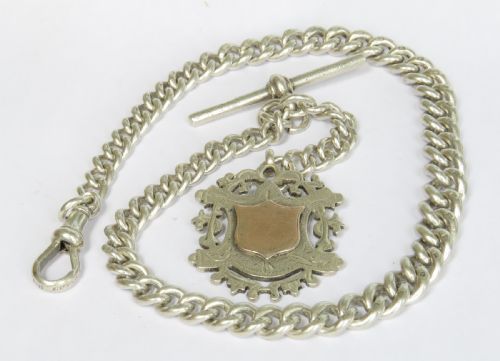
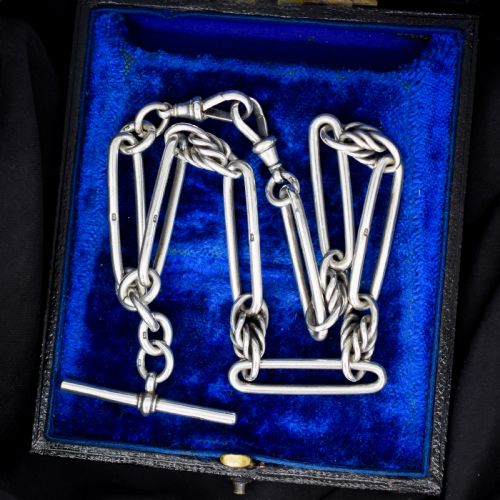
You are most likely to meet substantial double watch chains featuring uniform curb links, trombone links, love knots, dog clips, and T-bars. These functional ornaments reflect the rigorous standards of British assay offices, carrying clear silver hallmarks that confirm their metal purity and origin.
How they were made
The primary material across these pieces is sterling silver, supplemented by instances of gold, rose gold, and enamel. Silversmiths formed robust chains from interlocking links such as curb and trombone patterns, attaching swivel dog clips and T-bars by hand.
Makers stamped these items with official hallmarks to verify the silver standard, alongside dates and regional assay office marks. Heavier examples, such as chunky curb link chains and heavy gauge variants, demonstrate the substantial weight and durable construction demanded by period wearers.
Object types seen under this search include watch chains, jewellery, watch fobs, necklaces, and stamp cases alongside traditional silver tablespoons.
What varies in quality
Quality in a hallmarked silver albert rests upon the integrity of the links, the crispness of the hallmarks, and the original weight of the metal. Substantial mass, as seen in heavier gauge chains and massive fobs, separates robust examples from lighter pieces.
The presence of matching components, such as original dog clips, T-bars, and associated fobs, elevates a piece. Furthermore, the clarity of the assay office stamps and the preservation of engraved decoration determine the overall desirability of the item.
Albert Ernest Jenkins·Joseph And Albert Savory
The Hallmarked Silver Albert Glossary
- Hallmark
- An official stamp applied by an assay office to indicate the metal purity, origin, and year of manufacture for precious items. These marks provide a reliable method for dating British silver.
- T-bar
- A transverse bar attached to the centre of an albert chain, designed to slip through a waistcoat buttonhole to secure the chain. It often bears matching silver hallmarks.
- Dog clip
- A spring-loaded swivel clasp attached to the end of a watch chain for securing a pocket watch or fob. This mechanism allows the attached item to rotate freely without twisting the links.
- Curb link
- A style of chain composed of interlocking links that have been twisted to lie flat. Chunky variations of this link form the backbone of many heavy pocket watch chains.
- Trombone link
- A distinctive chain link pattern featuring alternating long rectangular links and small circular connectors. It appears frequently on nineteenth-century silver albert chains.
Hallmarked Silver Albert: Frequently Asked Questions
What is a hallmarked silver albert?
A hallmarked silver albert is a traditional pocket watch chain made from sterling silver, designed to secure a timepiece to a waistcoat. These chains date primarily from the nineteenth and early twentieth centuries and feature British assay office hallmarks.
Today, many people wear these chains as necklaces or bracelets due to their robust links, dog clips, and T-bars. They represent a durable category of antique silver jewellery.
How do I wear an albert chain today?
You can wear a hallmarked silver albert as a necklace by fastening the dog clip directly to a link or by removing the T-bar. Their substantial length and weight make them striking standalone neckpieces.
Alternatively, collectors continue to use them with waistcoats in the traditional manner, utilising the T-bar and dog clips as originally intended.
What do the hallmarks tell me?
The hallmarks stamped onto the links, T-bars, or fobs indicate the sterling silver standard, the town of the assay office, and the exact year of manufacture. These small stamped symbols provide an authenticated history of the piece.
Reading these marks allows you to trace the origins of the item to specific British cities and decades, confirming its period authenticity.
What are watch fobs used for?
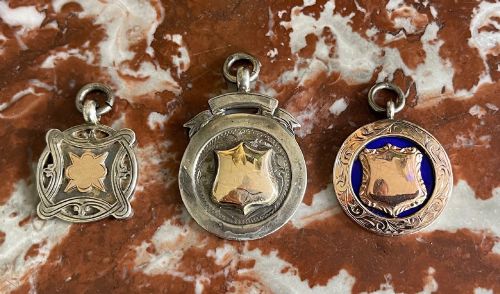
Watch fobs were ornamental pendants hung from pocket watch chains to add weight, decorative flair, or personal identification. They often incorporated stones, engraving, or miniature shields.
In modern collections, these fobs are frequently found attached directly to albert chains or worn separately as charms and necklace pendants.