



Vintage Silver Scissors
Vintage silver scissors encompass specialised grape shears, sugar tongs and sewing implements crafted across the Georgian, Victorian, Edwardian and mid-twentieth century periods.
Vintage Silver Scissors
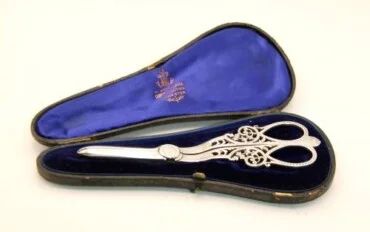
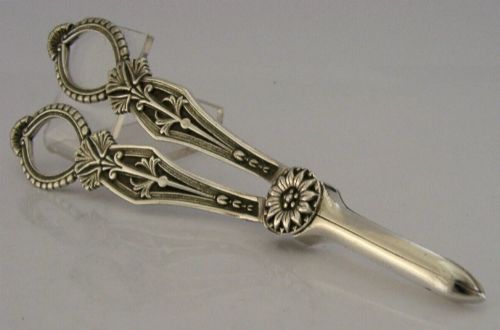
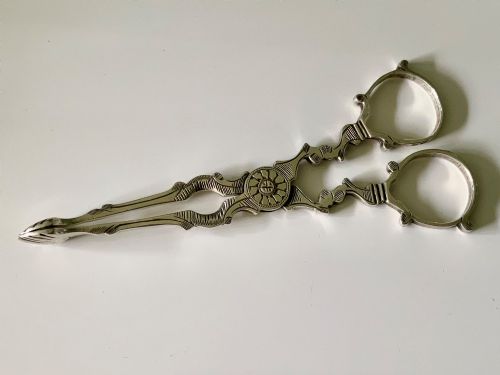
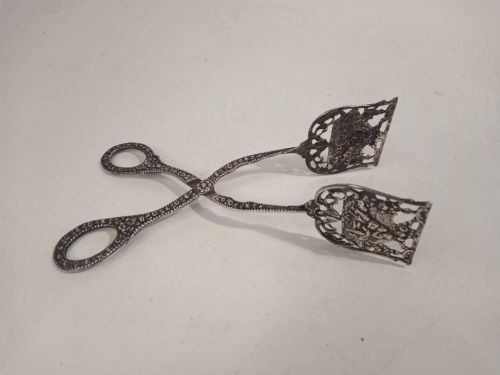
Vintage silver scissors span an array of domestic and dining implements, with grape shears appearing most frequently alongside sugar tongs, sewing sets and candle snuffers. These objects emerge from periods ranging from the Georgian era through the Victorian and Edwardian decades to the mid-twentieth century.
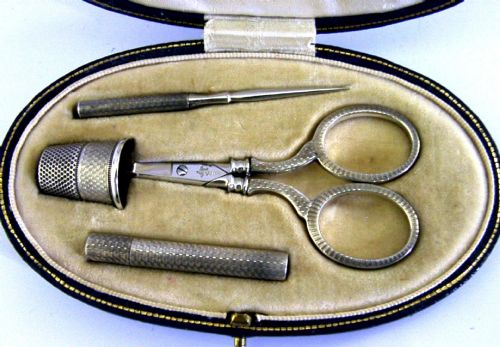
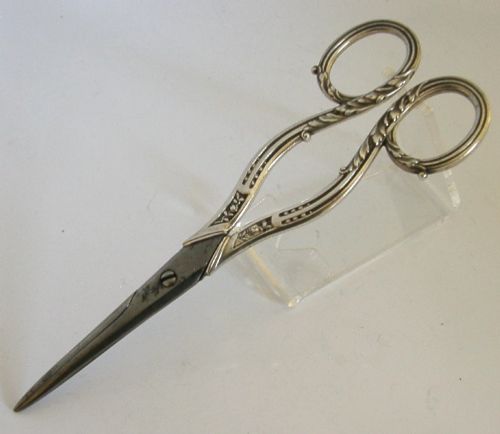
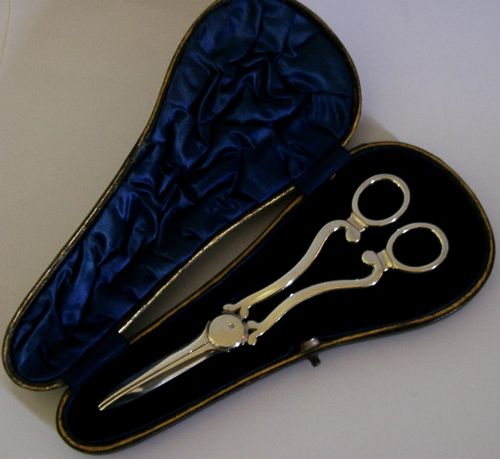
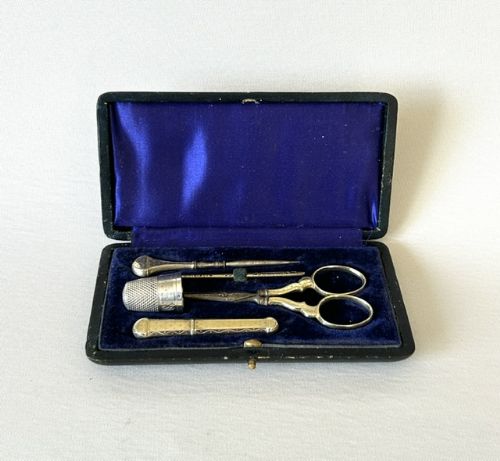
Dining table forms dominate the selection, particularly heavy cast grape scissors designed for severing fruit clusters. Sewing compendiums and vanity sets integrate smaller steel-bladed scissors fitted with silver handles or housed within leatherette and velvet-lined cases.
Origins stretch across English, French and German workshops, reflecting regional preferences in ornamentation and construction. Pieces frequently retain fitted presentation cases lined in silk or velvet, indicating their original status as gifts or luxury dining accessories.
Materials and construction
Makers utilised sterling silver and silver plate for handles, mounts and frames, frequently combining them with steel cutting blades to ensure a functional edge. Cast silver forms allow for deeply chased ornamentation, floral motifs and Gothic Revival detailing.
Internal spring actions and hinges rely on precision steel components concealed within precious metal housings. Interior fitted elements incorporate velvet, silk, leather and leatherette to cushion the delicate implements within their protective boxes.
Vintage Silver Scissors Retail Price Guide 2026
Typical asking prices for vintage silver scissors among the pieces listed under this phrase on Sellingantiques today, from the lower quarter to the upper quarter. They describe what is for sale here now, not the wider market.
Design styles span Georgian, Victorian, Edwardian, William IV, Belle Epoque, Gothic Revival and mid-century modern aesthetics.
Distinctions in quality
Superior examples display crisp, deep casting and engraving that retain sharp relief across ornate fruit and floral scrollwork. Weight serves as an indicator of substance, particularly in grape shears where substantial gauge silver prevents flexing during use.
The integration of maker marks and clear city hallmarks distinguishes premier workshops from unmarked or plated alternatives. Original fitted cases lined in silk or velvet add archival completeness to surviving matched sets.
Goldsmiths and Silversmiths Co·Charles Reily and George Storer·Paul Storr·Hukin and Heath·C.J. Vander
The Vintage Silver Scissors Glossary
- Sterling silver
- A silver alloy containing 92.5 percent pure silver by mass, with the remainder composed of other metals, usually copper. This standard alloy provides the structural rigidity required for detailed silversmithing.
- Grape shears
- Specialised scissors designed specifically for cutting clusters of grapes at the dining table. They feature robust loop handles and long, blunt-tipped blades.
- Silver gilt
- Silver objects that have been coated with a thin layer of gold on their surfaces. This technique, also known as vermeil, provides a rich two-tone golden finish.
- Candle snuffers
- Hinged instruments used for extinguishing candle flames or trimming wicks. Georgian examples often operate with internal spring actions.
- Sugar tongs
- Small spring or pivot-action tongs utilised for transferring sugar lumps into tea cups. Forms range from simple twisted wire to ornate cast silver nips.
Vintage Silver Scissors: Frequently Asked Questions
What were vintage grape scissors used for?
These specialised shears sat upon formal dining tables specifically for severing individual portions of fruit from a larger cluster. Their design kept fingers clear of the fruit and prevented bruising.
Heavier cast examples provided the leverage needed to cut through woody stems cleanly. They remain functional dining accessories for modern table settings.
How do I date a pair of antique silver scissors?
Dating relies heavily upon the stamped hallmarks, which record the assay office, date letter and maker's mark on sterling pieces. Stylistic indicators such as Gothic Revival scrollwork or Edwardian proportions offer further chronological context.
Matching fitted cases and original velvet linings often correspond to the precise decade of manufacture. Comparative analysis of hinge construction and engraving styles assists when hallmarks are rubbed.
What is the difference between silver shears and sugar tongs?
Shears incorporate pivoting scissor blades operated by finger loops, engineered for cutting tasks like harvesting grapes or trimming candle wicks. Tongs utilise a tension spring or hinge to grip and transfer items without a cutting action.
Both categories appear within Victorian and Georgian dining collections but served entirely separate domestic functions. Sugar variants frequently take the form of nips with shell bowls.
How should I store boxed silver sewing sets?
Store fitted cases in a stable environment away from direct sunlight and excessive humidity to protect the delicate silk and velvet interiors. Leatherette and leather exteriors benefit from gentle cleaning without harsh chemical polishes.
Keep the steel blades lightly oiled to prevent oxidation while avoiding contact between cleaning agents and the textile linings. Proper housing preserves both the tools and their original presentation boxes.