




Vintage Silver Place Card Stands
These vintage silver place card stands bring polished refinement to formal dining, holding name cards and menus with small-scale sculptural charm.
Vintage Silver Place Card Stands
Vintage silver place card stands encompass small dining table accessories designed to display name cards, place markers, and menus. The selection on this page centres on Edwardian and Victorian examples alongside later pieces from the 1920s, 1930s, and 1950s.
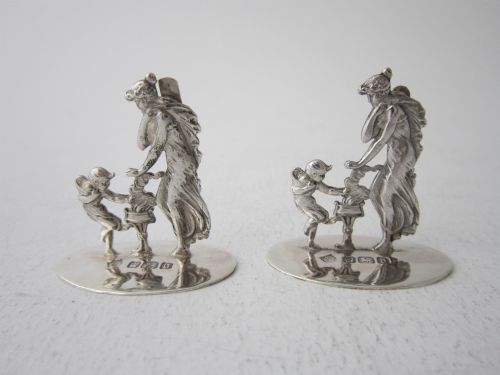
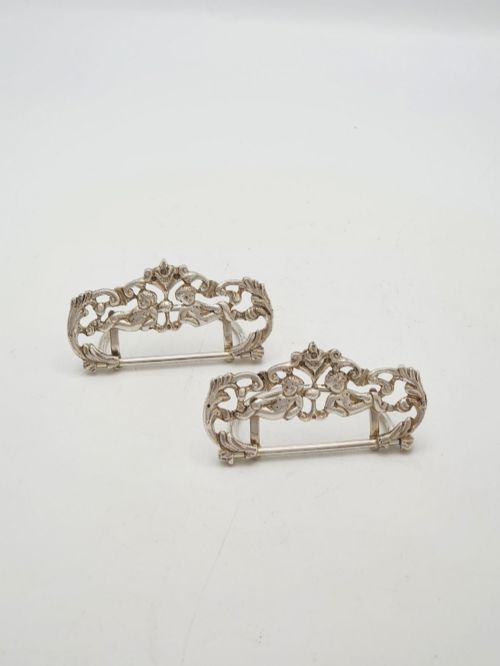
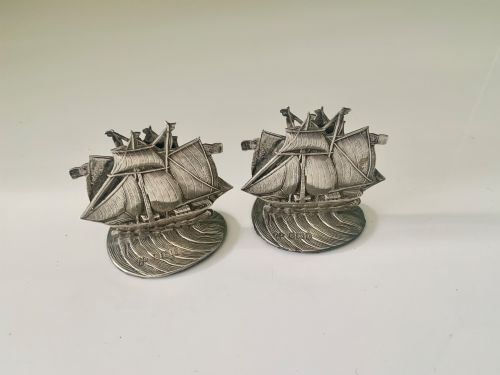
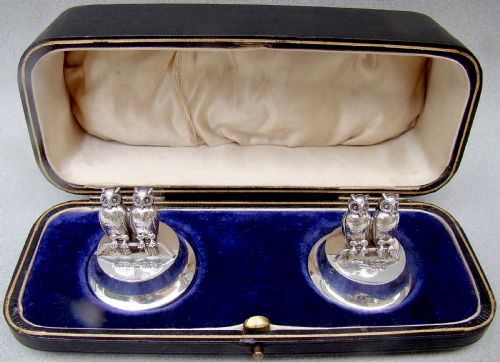
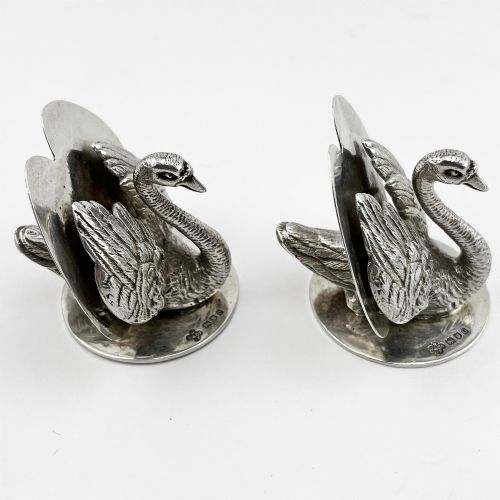
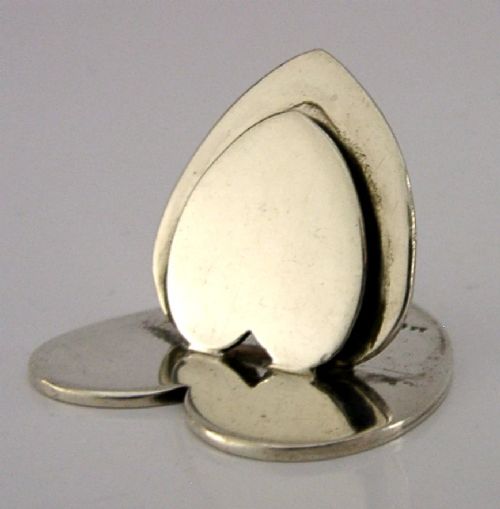
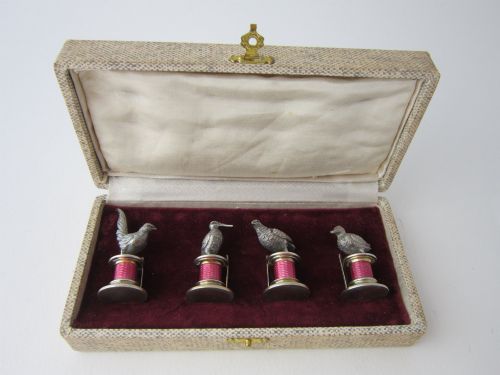
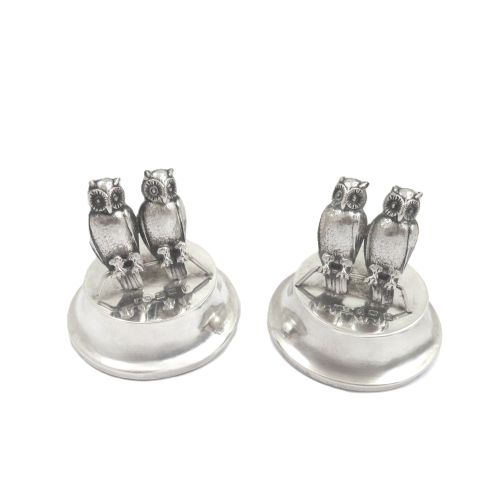
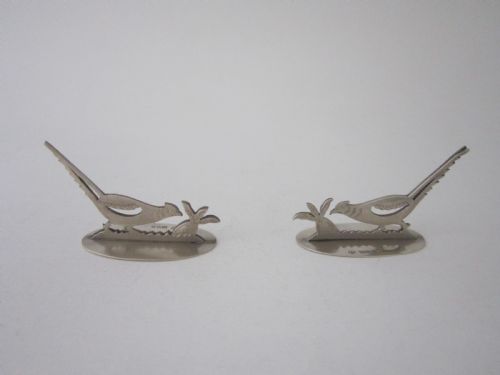
Makers produced these functional items in diverse forms, from plain geometric shapes to figural designs shaped as owls, swans, foxes, cherubs, and galleons. Collectors frequently encounter pairs and matched sets alongside single pieces.
Originating predominantly from British workshops, these tableware accessories reflect changing decorative tastes across multiple decades, shifting from ornate Edwardian motifs to streamlined George V and George VI iterations.
Materials and Manufacturing Techniques
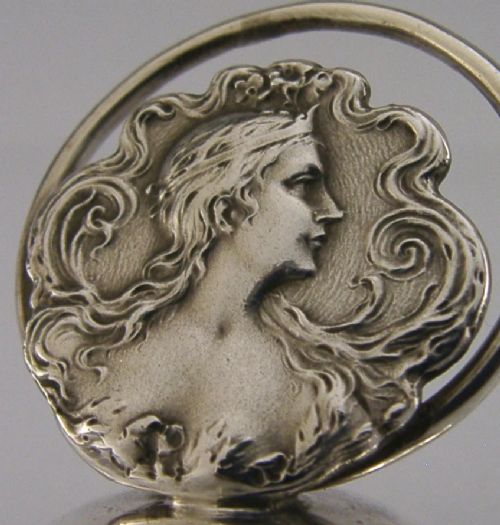
Silversmiths utilised sterling silver and silver plate as the primary structural materials, shaping them through casting, stamping, and hand-chasing. Many pieces incorporate supplementary materials such as enamel, guilloche enamel, velvet, silk, and leather within fitted presentation boxes.
Figural designs often relied on detailed casting to capture animal forms, military insignia, or character subjects like Alice in Wonderland. Artisans applied coloured enamels by hand to highlight flags, crests, and decorative surface details.
Vintage Silver Place Card Stands Retail Price Guide 2026
Typical asking prices for vintage silver place card stands among the pieces listed under this phrase on Sellingantiques today, from the lower quarter to the upper quarter. They describe what is for sale here now, not the wider market.
Current listings feature items spanning the Victorian, Edwardian, George V, and George VI periods, alongside mid-century silver plate.
Distinguishing Quality and Craftsmanship
The integrity of applied enamel work and the legibility of hallmarks stamped into the silver distinguish finer studio output from standard commercial production. Fitted boxes and matched sets across larger numbers demonstrate higher original commission value.
Sampson Mordan·Levi & Salaman·Asprey·Liberty
The Vintage Silver Place Card Stands Glossary
- Sterling silver
- A silver alloy containing 92.5 percent pure silver by mass and 7.5 percent other metals, usually copper. This standard composition is frequently stamped with official assay office marks.
- Menu holder
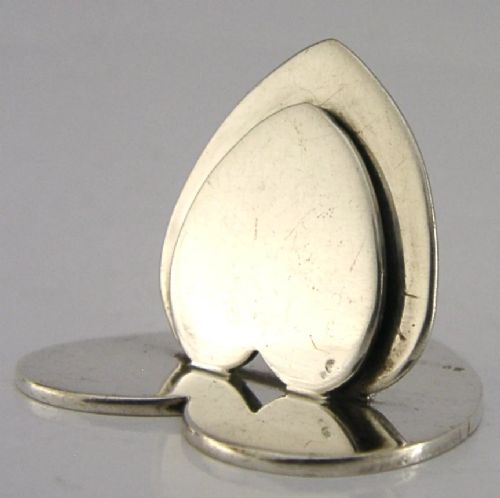
- A table accessory with a weighted base and a rear clip or slot designed to support a printed dinner menu or large place card.
- Guilloche enamel
- A decorative technique where an intricate mechanical pattern is engraved beneath a translucent layer of coloured enamel. This method creates a shimmering, reflective surface finish.
- Assay mark
- A stamp or group of stamps applied to precious metals indicating the purity standard, the place of testing, and the year of manufacture.
- Silver plate
- A base metal object coated with a thin layer of silver through electroplating or older fusion methods. It offers the appearance of solid silver at a different cost level.
Vintage Silver Place Card Stands: Frequently Asked Questions
What is the difference between a place card holder and a menu holder?
Place card holders are generally smaller and built to support a simple folded card bearing a guest's name.
Menu holders feature a slightly larger or heavier clip mechanism designed to hold a card listing the courses for the meal.
How do I identify the date of my silver stand?
British silver typically carries a series of hallmarks that include a date letter indicating the exact year of assay. Makers' marks and standard sterling symbols appear alongside these letters to confirm origin.
Items without full hallmarks require stylistic comparison against Edwardian, Victorian, or Art Deco design periods to estimate their decade of production.
Were these stands always sold in sets?
Makers retailed these items individually, in pairs, or as larger matched sets intended for grand dining tables. Complete sets of four, six, twelve, or twenty-four are less common than isolated pairs.
Single survivors often result from dispersed dining collections over decades of use.
How should I clean antique silver stands?
Maintenance requires a soft microfiber cloth and a mild, non-abrasive silver polish formulated to preserve fine details. Vigorous rubbing can wear down delicate hand-chased lines and thin enamel work.
Enamelled and fitted pieces require extra care to keep moisture away from fabric linings and vulnerable glass surfaces.