
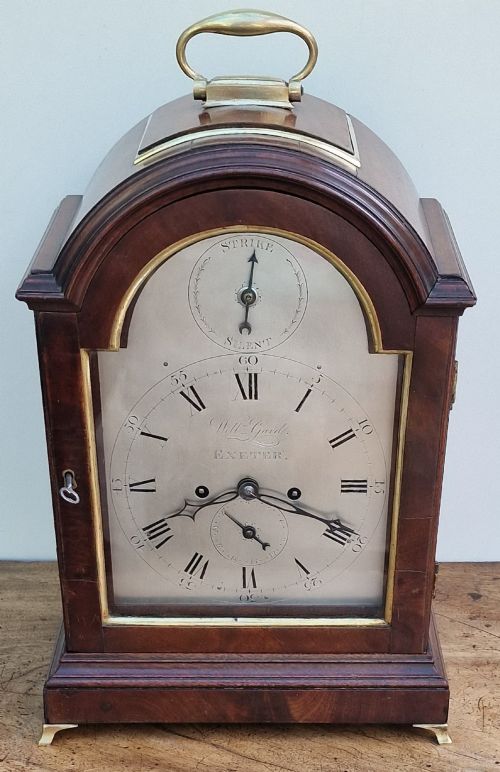

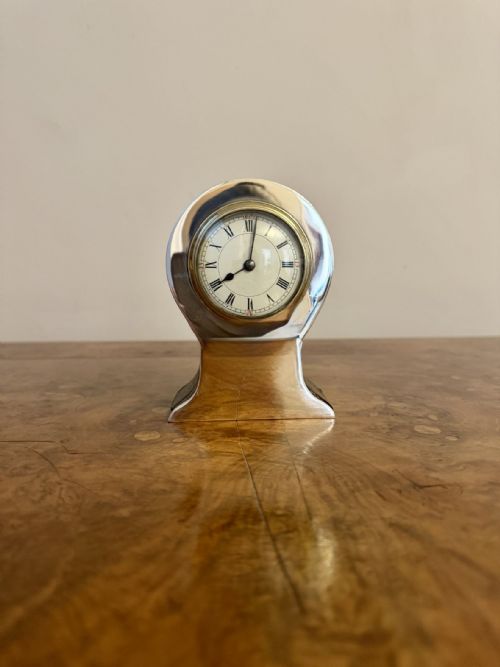
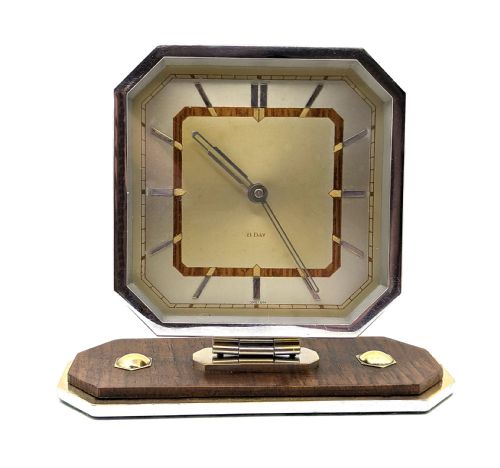
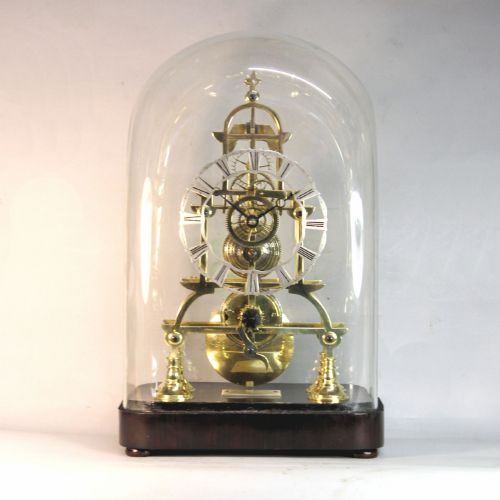


Vintage Silver Mantle Clock
A vintage silver mantle clock brings tactile weight and period character to a room, holding time in polished metal.
Vintage Silver Mantle Clock
When you search for a vintage silver mantle clock, you encounter timepieces housed in silver, silver-mounted, silver-plated, or silver-clad cases spanning the Georgian, Victorian, Edwardian, and Art Deco periods. These objects range from substantial bracket clocks and chiming mantel designs to small carriage clocks and boudoir timepieces.
The version you are most likely to meet on this page combines a metal or wooden core clad in silver or fitted with silver mounts, often driven by eight-day movements from English and continental makers. Styles stretch from ornate chased Edwardian cases to sleek Art Deco chrome and silver designs.
Materials and construction
Cases combine silver, brass, chrome, glass, enamel, and various woods such as mahogany, walnut, and rosewood. Silversmiths shaped and chased thin sheets of silver over wooden or metal carcasses, while clockmakers fitted mechanical movements driven by springs and escapements.
Movements came from established workshops and factories, utilising brass gears, steel pinions, and sometimes specialised mechanisms like Westminster chimes or platform escapements. Enamel dials and guilloche enamel panels added colour and contrast to the metallic lustre.
Napoleon Bonaparte occasionally makes an appearance riding his charger across the top of a mid-nineteenth-century French bronze and silver-plated clock.
Assessing quality and craftsmanship
Quality reveals itself in the crispness of the chasing on the silver case and the weight and finish of the underlying metal or timber. Finer examples display harmonious proportions, crisp dial markings, and movements by known makers that have been carefully maintained.
Lesser pieces may show softening in decorative silver relief, generic movements of simpler construction, or mismatched components. The integrity of the silver cladding or hallmarking and the original state of the dial significantly influence the standing of any given piece.
Mappin & Webb·David Veasey·Liberty & Co·Harrods of London·Smiths·Asprey·Paul Garnier·Winterhalder & Hofmeier·Bayard·Blangy
The Vintage Silver Mantle Clock Glossary
- Bracket clock
- A portable table or mantel clock originally designed to sit on a wall bracket. These substantial pieces often feature chiming or striking mechanisms.
- Carriage clock
- A small, spring-driven clock designed for travel, typically featuring a rectangular brass or silver case with glass panels and a swing handle.
- Guilloche enamel
- A decorative technique where intricate geometric patterns are engraved beneath translucent enamel. It provides depth and rich colour to small clock dials and panels.
- Hallmark
- An official stamp applied by an assay office to indicate the purity of precious metal content. British silver hallmarks often reveal the town of assay, date letter, and maker's mark.
- Strut clock
- A timepiece supported by a hinged prop or leg at the back for desk or mantel display. They frequently appear in silver-mounted or leather-backed formats.
- Timepiece
- A clock that tells the time without striking the hours or chiming. They rely on simpler gear trains than striking clocks.
Vintage Silver Mantle Clock: Frequently Asked Questions
What is an eight-day movement?
An eight-day movement is a clock mechanism designed to run for approximately eight days on a single winding. This reduced the frequency of winding required by the owner.
Such movements appear frequently in better quality desk and mantel clocks from the Edwardian and Art Deco eras.
How do I care for a silver clock case?
Silver cases require gentle cleaning with a soft cloth to maintain their polish without wearing away thin plating or delicate chasing. Avoid abrasive commercial cleaners that can damage enamel dials or glass panels.
Keeping the clock away from direct sunlight and damp environments preserves both the metal surface and the internal mechanism.
Are these clocks suitable for daily use?
Most vintage timepieces function well for daily timekeeping if they have been professionally serviced and handled with care. Spring-driven mechanisms simply require regular, gentle winding.
Mechanical clocks appreciate steady environments away from sudden temperature shifts to keep time accurately.
How do I identify the period of a clock?
The period is determined by a combination of stylistic cues, case materials, and any visible hallmarks or maker signatures. Art Deco pieces display geometric lines and chrome, while Edwardian examples often feature ornate silver chasing.
Examining the construction style of the internal movement provides further clues to the date of manufacture.