

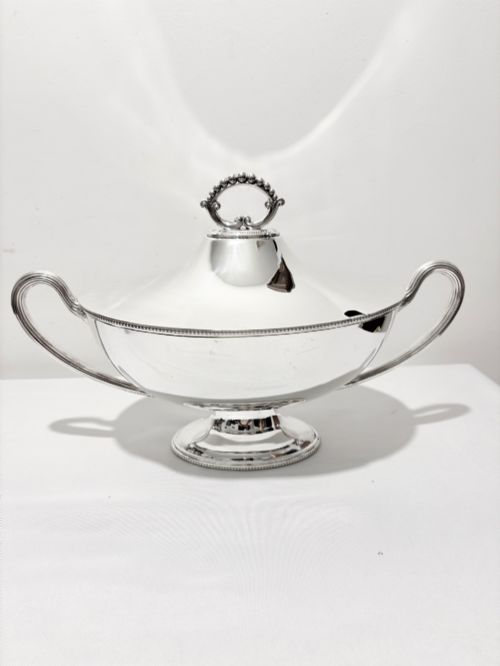


Vintage Silver Lid Tureen
A vintage silver lid tureen brings gravitas to the dining table, offering a substantial covered vessel designed to keep food warm and present it with distinction.
Vintage Silver Lid Tureen
When searching for a vintage silver lid tureen, a buyer encounters a range of large serving dishes designed for formal dining tables from past centuries. These vessels typically comprise a deep container, a fitted lid, and occasionally a matching base or warming stand.
The most common examples on this page date from the Edwardian period and the nineteenth century, reflecting formal domestic dining habits of those eras. Forms vary from rectangular and oval entree dishes to sauce tureens and warming dishes.
Materials and construction
Production relies heavily on silver plate, electroplated nickel silver, and Old Sheffield plate over a base of copper or nickel silver. These plated methods allowed makers to achieve the visual weight of solid silver through skilful application.
Early nineteenth-century examples often utilise Old Sheffield plate, fusing a thin layer of silver to a copper core, which produces a distinctive warm tone. Later Victorian and Edwardian pieces utilise electroplating techniques such as EPNS, ensuring a durable and uniform metallic finish.
Certain items incorporate additional components like wooden handles or accents, contrasting with the polished metallic surfaces of the body and lid. Construction methods focused on durability for frequent domestic use in large households.
Vintage Silver Lid Tureen Retail Price Guide 2026
Typical asking prices for vintage silver lid tureen among the pieces listed under this phrase on Sellingantiques today, from the lower quarter to the upper quarter. They describe what is for sale here now, not the wider market.
Listings feature items spanning the Georgian, Victorian, Edwardian, and Art Deco periods, utilising silver plate, copper, and wood.
Assessing quality and craftsmanship
Distinction between pieces rests on the weight of the metal base and the crispness of applied borders, handles, and cast crests. Heavier metal gauge denotes superior construction that resists denting during decades of service.
The preservation of the original plating layer dictates the visual integrity of the surface. Pieces showing minimal wear to the underlying copper or nickel reveal careful handling and superior initial plating thickness.
Maker attribution elevates certain examples, particularly those bearing the marks of established silversmiths or workshops from Sheffield, London, or Paris. Design complexity, such as fitted warming stands or detailed crest engraving, separates standard utilitarian serveware from high-status dining items.
Hamilton and Inches·Walker and Hall·Matthew Linwood·Christofle·Gallia
The Vintage Silver Lid Tureen Glossary
- Silver Plate
- A base metal coated with a thin layer of silver. This technique provided an accessible alternative to solid silver for large dining vessels.
- Old Sheffield Plate
- An early fusing method where a sheet of silver is fused to a copper ingot before rolling. This process creates subtle hints of copper showing through at high points.
- Entree Dish
- A shallow covered serving vessel designed for the second course of a formal meal. These dishes often feature removable handles to allow the lid to double as an extra serving dish.
- Sauce Tureen
- A small vessel specifically shaped for holding gravies or sauces, usually equipped with an attached or matching undertray. They often mirror the decorative motifs of larger dining tureens.
- Warming Dish
- A specialised serving vessel featuring a compartment for hot water or a heating element beneath the food container. This kept dishes warm throughout long formal dinners.
Vintage Silver Lid Tureen: Frequently Asked Questions
What is a vintage silver lid tureen used for?
These vessels were originally designed to keep soups, vegetables, and meats warm at the dining table while presenting food elegantly. Today, collectors use them as decorative centrepieces or functional serveware for dinner parties.
The deep body and tight-fitting lid help retain heat, making them practical for serving hot dishes. Many buyers also appreciate their aesthetic contribution to a traditional dining room setting.
How do I clean a silver plated tureen?
Cleaning requires a soft cloth and a specialised silver polish formulated for plated items rather than harsh abrasives. Gentle application preserves the remaining silver layer over the base metal.
Rinsing with warm water and drying immediately prevents residue buildup in crevices and chased ornamentation. Regular, light dusting is often sufficient for pieces kept on display.
How can I tell Old Sheffield plate from later electroplate?
Old Sheffield plate often reveals a faint reddish copper tone along exposed edges where the outer silver layer has thinned through use. This fusion technique predates modern electroplating.
Electroplated items, common in Edwardian and later pieces, display a uniform silver colour across all surfaces without visible copper lines underneath. Maker marks also help date the technology used in production.
Are these tureens safe for modern food use?
Most silver plated tureens remain suitable for serving food provided the interior plating is intact and free from excessive wear. Checking the condition of the inner surface ensures the base metal is not exposed to food.
Acidic foods should not be stored in plated vessels for extended periods. Hand washing is essential to protect the historical finish.