

Vintage Silver Jewellery Chain
These vintage silver jewellery chain pieces span distinct periods from Victorian origins to Mid-Century Modern designs, offering durable craftsmanship and wearable history.
Vintage Silver Jewellery Chain
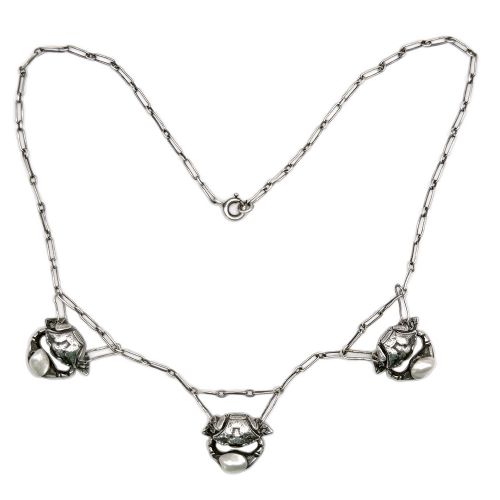
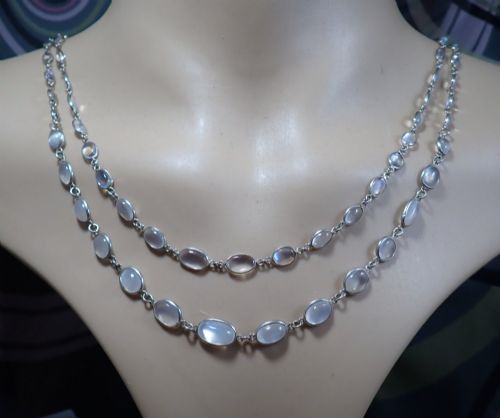
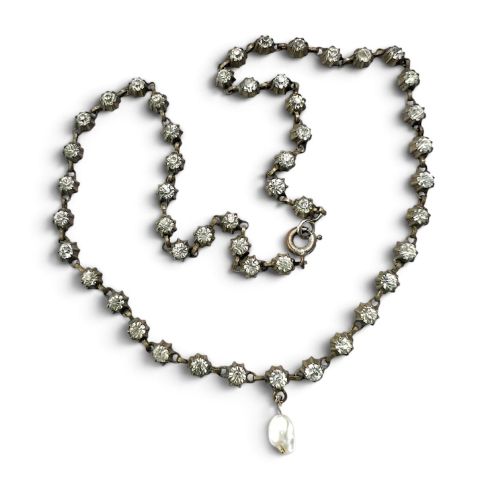
A vintage silver jewellery chain selection encompasses various forms such as necklaces, pocket watch chains, bracelets, and bangles originating from the nineteenth century through the mid-twentieth century.
Buyers encountering this search phrase find domestic and continental pieces featuring styles from Victorian and Edwardian periods, through Arts and Crafts and Art Deco, up to Mid-Century Modernism.
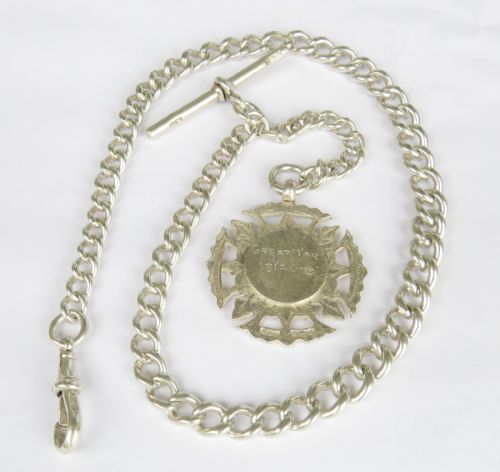
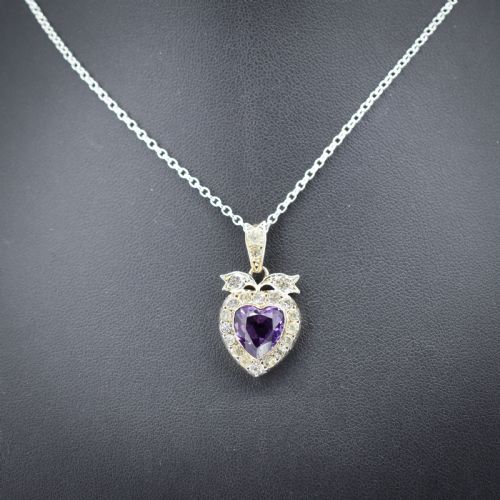
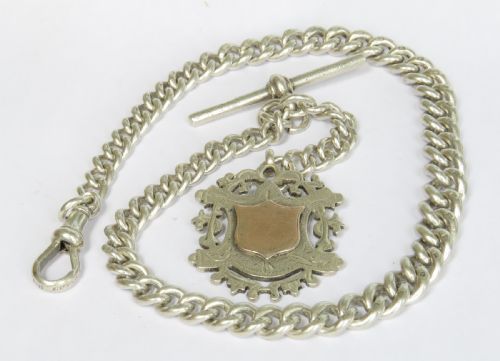
Many items combine sterling silver links with gemstone drops, enamel panels, or fob attachments, transforming utilitarian watch chains into versatile neckwear and distinct accessories.
How They Were Made
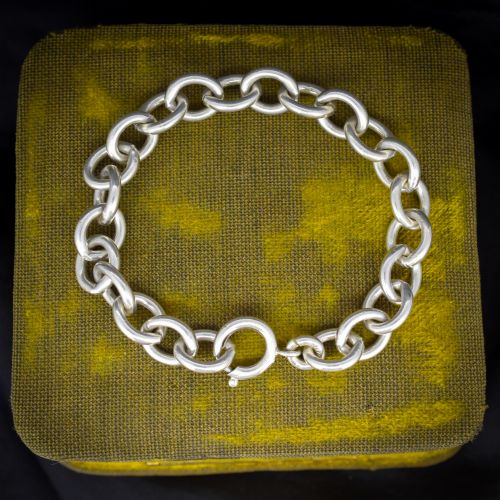
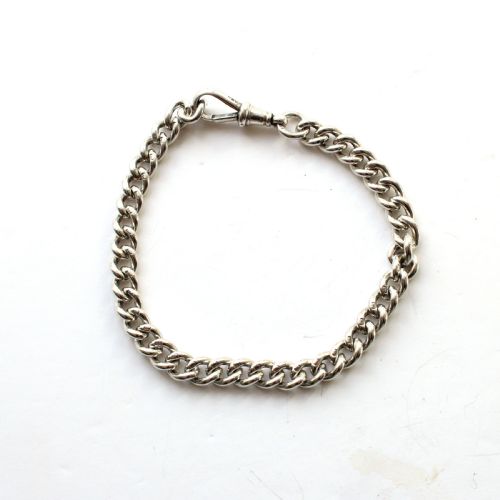
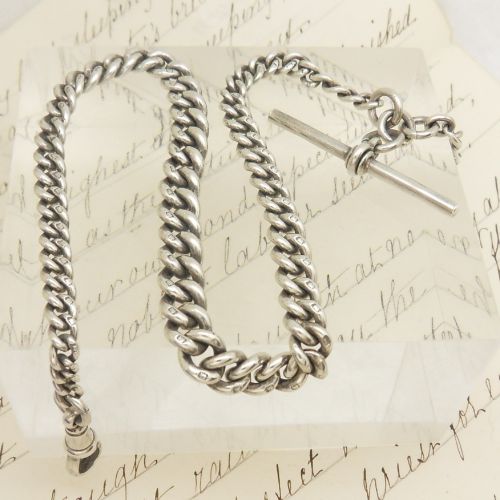
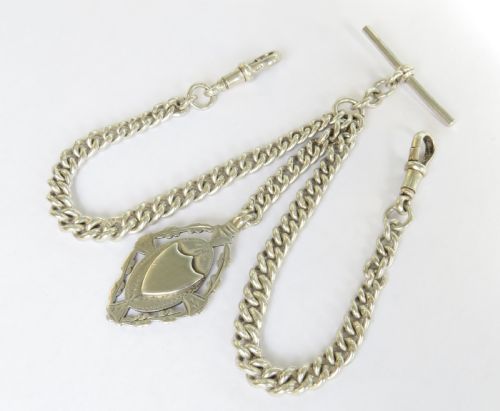
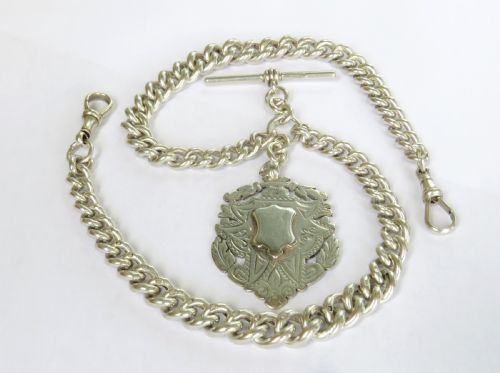
Silversmiths utilised sterling silver and standard silver to form structural elements like curb links, trombone links, and uniform chains, often integrating dog clips and T-bars.
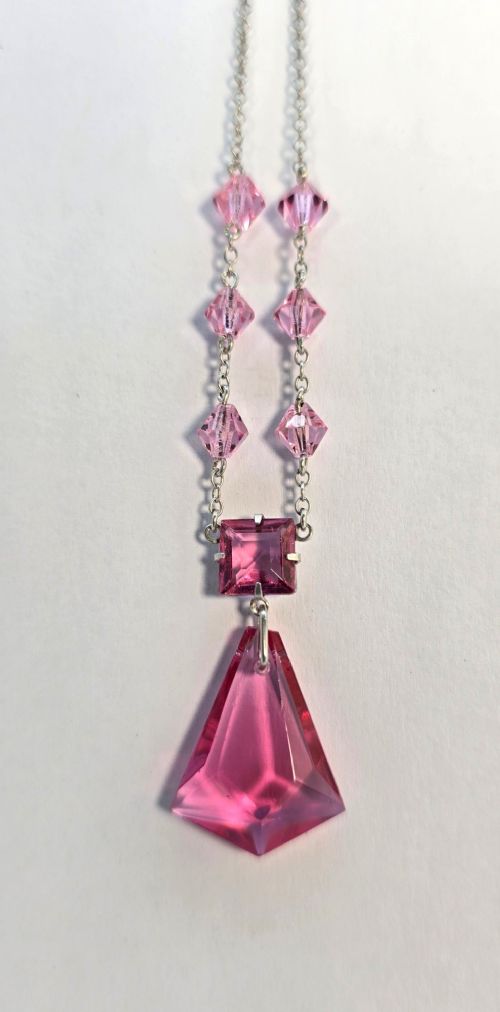
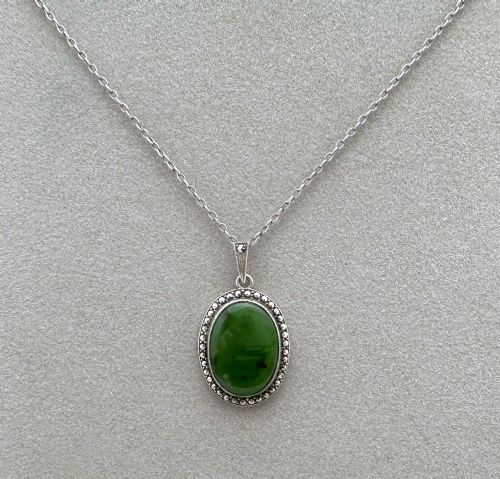
Decorative elements incorporate natural materials including moonstone, amber, pearl, jade, malachite, opal, turquoise, amethyst, and blue topaz set alongside paste glass and hand-cut crystal.
Enamelling, niello work, and hand engraving add surface detail to bracelets, bangles, and pendants, reflecting the aesthetic priorities of periods from Art Nouveau to the 1960s.
Listings span from nineteenth century Victorian pieces through Edwardian, Arts and Crafts, Art Deco, and 1960s modernist designs.
What Varies in Quality
The standard of execution in links and clasps distinguishes standard production items from masterworks, particularly where hand engraving and intricate geometric panel links are involved.
The selection and treatment of set materials - such as genuine moonstones, opals, and fired enamel work - create notable distinctions across different makers and regional workshops.
Georg Jensen·Walker & Hall·G. Hoppe·The Gaskins·TOPAZIO
The Vintage Silver Jewellery Chain Glossary
- Albert chain
- A pocket watch chain designed to attach to a waistcoat, frequently repurposed today as a necklace.
- Dog clip
- A spring-loaded swivel fastening commonly found securing watch chains and charm bracelets.
- T-bar
- A transverse bar attached to the centre of a watch chain, originally used to secure the chain through a buttonhole.
- Niello
- A black metallic alloy used as an inlay on engraved silver surfaces to highlight decorative patterns.
- Paste glass
- Hand-cut and polished glass utilised historically to imitate precious gemstones in period jewellery.
Vintage Silver Jewellery Chain: Frequently Asked Questions
How do I wear a pocket watch chain as a necklace?
Many antique albert chains feature original dog clips and T-bars that allow the chain to be fastened securely around the neck as a flexible necklace.
You can position the T-bar to hang as a front drop or remove specific fob attachments depending on your preferred length and styling.
What is the difference between curb links and trombone links?
Curb links consist of uniformly interlocking, slightly flattened links that sit flat against the skin when worn as a chain.
Trombone links feature alternating long rectangular links and small circular connectors, mimicking the visual rhythm of musical instrument parts.
How can I date my silver jewellery chain?
Dating relies upon stylistic markers such as the organic motifs of Art Nouveau or the clean geometric lines characteristic of Art Deco pieces.
Assay marks, hallmarks, and specific structural components like dog clips and fob medals also help narrow down the exact period of manufacture.
Are these chains made of solid silver?
The majority of pieces utilise sterling silver or continental silver standards, often indicated by specific stamps or the inherent weight of the metal.
Heavier examples, such as chunky curb link albert chains, showcase substantial solid silver construction designed for daily utility.