



Vintage Silver Insect Brooch
These vintage silver insect brooches bring together delicate winged forms and precious metals, offering a wearable piece of natural history.
Vintage Silver Insect Brooch
When you search for a vintage silver insect brooch, you encounter winged and multi-legged creatures rendered in metal across several distinct eras. The selection ranges from Victorian scarab and butterfly designs to Edwardian diamond-set bar brooches and Art Deco butterfly wing creations.
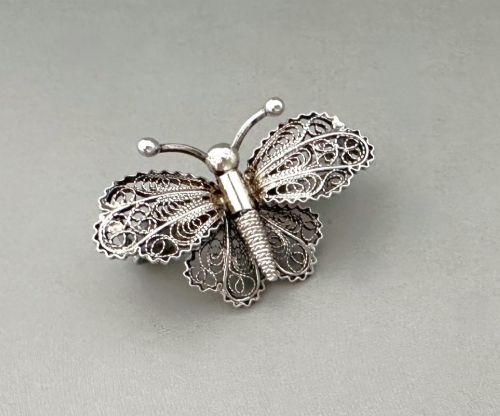
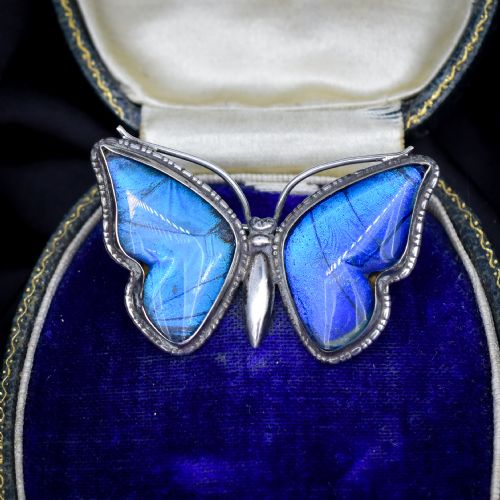
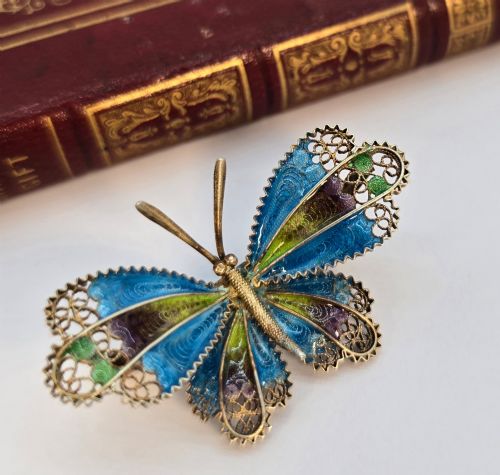
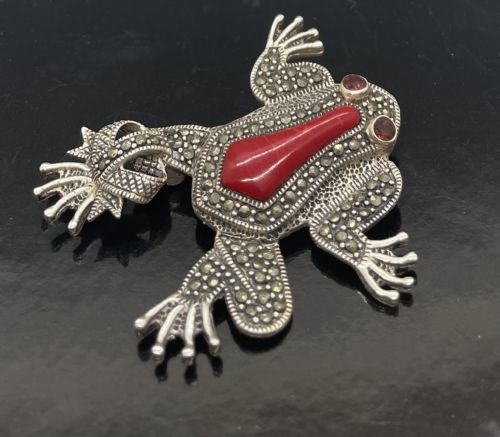
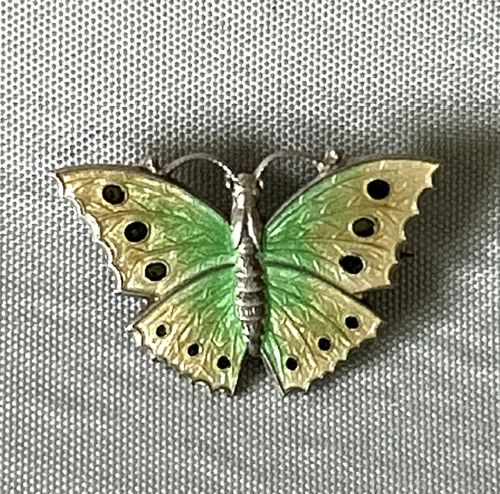
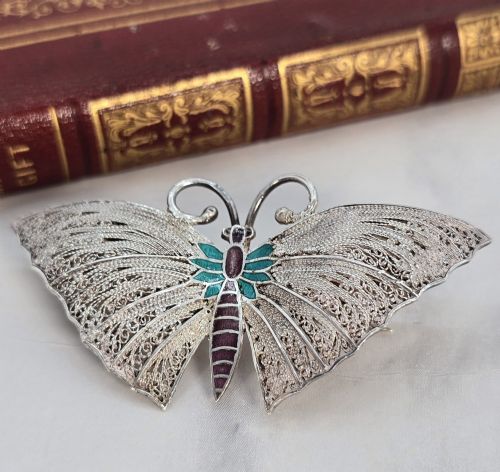
You are most likely to meet butterfly motifs from the 1930s on this page, often worked in silver filigree with colourful enamel or tropical butterfly wing panels. Frogs, dragonflies, scorpions, and bees also appear in sterling silver, sometimes accented with marcasite or moonstone.
Materials and construction
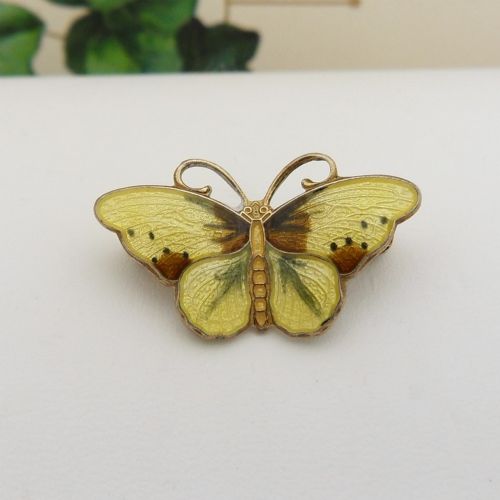
Silversmiths shaped these pieces using sterling silver, silver gilt, and pewter, frequently employing fine filigree wirework to define wings and bodies. Enamel techniques, including guilloche work, added vibrant colour to butterfly and insect wings during the early twentieth century.
Natural materials and gemstones such as butterfly wings, diamonds, rubies, pearls, glass, and moonstones were set into the silver frames. Designers utilised specialised mounts to secure delicate wing panels and gemstones without damaging the fragile organic elements.
Distinctions in quality
The standard of a vintage silver insect brooch depends heavily on the precision of the metalwork and the preservation of any enamel or wing panels. Finer examples display meticulous filigree solder points and clean, translucent enamel free from chips or heavy crazing.
Maker attribution and the inclusion of precious gemstones elevate certain pieces above standard production work. Signed Scandinavian enamel pieces and Edwardian stone-set bar brooches demonstrate superior craftsmanship compared to unmarked commercial items.
Hroar Prydz
The Vintage Silver Insect Brooch Glossary
- Filigree
- Fine wirework soldered together in delicate open patterns. This technique creates lightweight, intricate wings and bodies on many butterfly brooches.
- Guilloche enamel
- Decorative enamel applied over a mechanically engraved metal surface. It produces translucent, patterned colour across wings and bodies.
- Silver gilt
- Silver that has been coated with a thin layer of gold. This finish adds warmth and a rich tone to the underlying silver insect design.
- Marcasite
- Small faceted polished pyrite stones set into silver. They provide a dark, metallic sparkle resembling cut steel on frog and insect brooches.
- Butterfly wing
- Iridescent wing scales preserved beneath glass panels. Popularized in the Art Deco era, these create shimmering blue and green tropical effects.
Vintage Silver Insect Brooch: Frequently Asked Questions
How do I wear a vintage insect brooch?
Pin these small silver pieces onto lapels, collars, or thick knit sweaters to secure the weight of the metal and stones properly.
Heavier bar brooches with diamonds or pearls sit best on tailored coats and structured jackets where the fabric prevents sagging.
How were these brooches used originally?
Victorian and Edwardian ladies wore insect pins as ornamental fasteners for lace collars, scarves, and heavy wool shawls.
By the Art Deco and mid-century periods, the function shifted towards pure decorative adornment on dresses, hats, and lapels.
How do I date a silver insect brooch?
Examine the stylistic clues and materials, such as butterfly wings and geometric enamel work pointing to the 1920s and 1930s.
Victorian and Edwardian pieces often feature older clasp mechanisms, natural pearls, and intricate gemstone pavé settings like old-cut diamonds.
How do I care for enamel and butterfly wing brooches?
Keep these delicate pieces away from water, harsh chemical cleaners, and prolonged direct sunlight to protect the fragile wings and enamel.
Store them separately in lined boxes to prevent the silver filigree or stones from scratching neighbouring pieces.
Are these brooches made of solid silver?
Many listings specify sterling silver or standard silver construction, while others incorporate silver gilt or pewter bases.
Makers frequently combined the silver frameworks with glass, enamel, or natural specimens rather than relying solely on a single metal.