






Vintage Silver Gilt Spoons
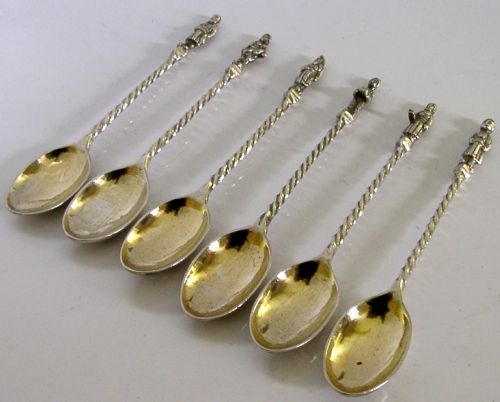
These vintage silver gilt spoons bring bright gold-plated surfaces and enamel to the table, offering a decorative lift to afternoon tea and coffee.
Vintage Silver Gilt Spoons
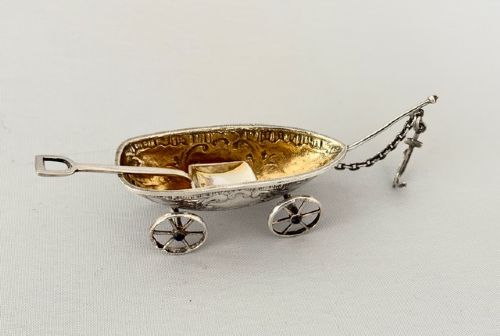
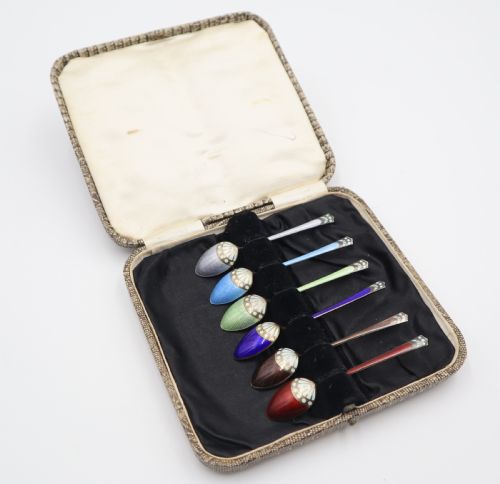
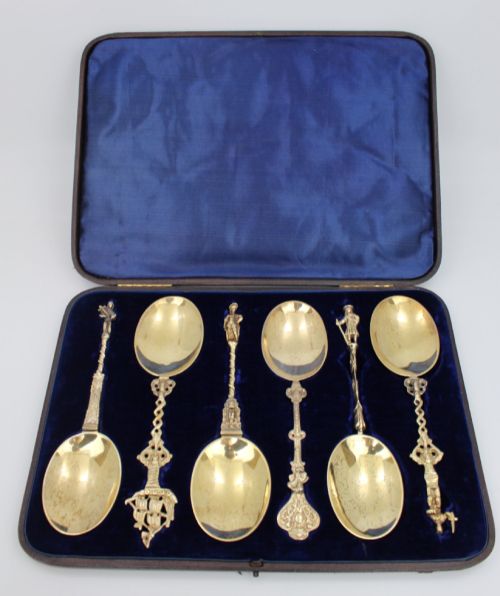
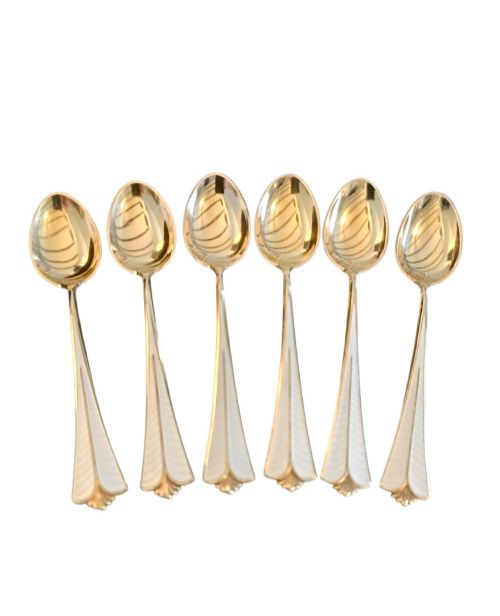
When you search for vintage silver gilt spoons, you encounter a range of functional flatware coated in a layer of gold, alongside pieces featuring vibrant coloured enamel work. The selection spans distinct eras from the nineteenth century through the mid-twentieth century, capturing shifts in design from ornate Victorian engraving to clean Art Deco and Mid-Century Modern lines.
The most common forms you meet on this page are coffee spoons and caddy spoons, frequently found as matched sets housed in fitted presentation cases lined with velvet or silk. Individual condiment spoons, fruit sets, and souvenir pieces also appear, reflecting domestic dining habits and travel habits of past decades.
How they were made
The foundation of these items is sterling silver or solid silver, subjected to a gilding process that bonds a thin layer of gold to the surface to impart a rich yellow lustre. Many examples incorporate vitreous enamel fired onto the metal bowl or handle, fusing powdered glass at high temperatures to create intricate patterns and bright colour fields.
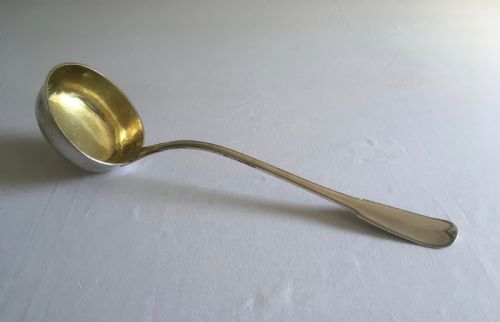
Maker marks, town marks, and date letters stamped into the silver provide precise clues to the origin and year of creation, linking the pieces to workshops in Birmingham, Scandinavia, and beyond. Specialised tools applied hand-engraved motifs, cast figural details, or shaped the bowls for specific uses such as sugar sifting and serving.
Vintage Silver Gilt Spoons Retail Price Guide 2026
Typical asking prices for vintage silver gilt spoons among the pieces listed under this phrase on Sellingantiques today, from the lower quarter to the upper quarter. They describe what is for sale here now, not the wider market.
Medical kits with silver fittings remind us that past Victorians liked to travel prepared for sudden ailments while taking tea.
What varies in quality
The distinction between standard utility flatware and superior pieces rests on the crispness of the hand-engraving and the structural integrity of the applied gold wash or enamel. Enamel work that remains intact without chipping or hairline fractures elevates a set, whereas worn gilding reveals the underlying silver metal through heavy handling.
David Andersen·Deakin & Francis
The Vintage Silver Gilt Spoons Glossary
- Silver gilt
- Silver that has been coated with a thin layer of gold on its surface. This technique provides the rich appearance of solid gold while utilising a silver base.
- Caddy spoon
- A short-handled spoon specifically designed for measuring loose tea leaves from a caddy. These often feature decorative bowls shaped like leaves or shells.
- Apostle spoon
- A spoon featuring the figure of an apostle or saint cast on the end of the handle. These traditional presentation pieces date back centuries but appear in later commemorative sets.
- Sugar sifter
- A pierced spoon used for dusting powdered sugar over fruit or desserts. The perforated bowl allows excess lumps to remain behind.
- Vitreous enamel
- Glass powder fused to a metal surface through high-temperature firing. It creates a durable, glossy coloured decoration on handles and bowls.
Vintage Silver Gilt Spoons: Frequently Asked Questions
How do I clean silver gilt spoons?
Use warm water and a mild dish soap with a soft microfibre cloth to remove oils and dust. Avoid harsh chemical dips and abrasive polishes that will strip the thin gold layer from the silver.
Pat the spoons completely dry with a soft towel after washing to prevent water spots. Store them in a tarnish-resistant cloth wrap or their original fitted box away from direct sunlight.
Are these spoons safe for daily use?
Most of these spoons function adequately for occasional coffee, tea, or dessert service. Hand washing is mandatory to protect both the gold plating and any delicate enamel work.
Avoid placing them in automatic dishwashers, as the harsh detergents and high heat will ruin the finish. Enamelled pieces require extra care to prevent scratching against harder metals in a drawer.
What is the difference between silver and silver gilt?
Solid silver objects consist entirely of silver alloy throughout the structure, such as sterling silver. Silver gilt starts with a solid silver base that undergoes a chemical or electrolytic gilding process to coat the exterior in gold.
This method combines the durability of silver with the warm yellow appearance of gold. Over long periods of use, the gold layer may thin in high-contact areas, revealing the silver underneath.
How do I date an antique spoon?
Look closely at the reverse side of the handle or bowl for stamped hallmarks. These tiny symbols typically include a maker mark, a purity mark, a town mark, and a date letter.
Matching the date letter to published assay office records reveals the exact year of testing. stylistic clues like Art Deco geometric lines or Victorian floral engraving also help narrow down the production era.