



Vintage Silver Fruit Knife
These vintage silver fruit knives combine polished metal blades with tactile handles, offering a refined tool for dining.
Vintage Silver Fruit Knife
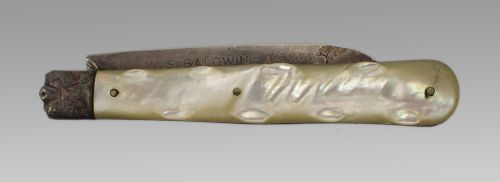
A vintage silver fruit knife is a specialised piece of cutlery designed for slicing fruit cleanly without staining the metal from acidic juices. These pocket-sized instruments and table pieces appear across various eras, including the Victorian, Edwardian, and George V periods.
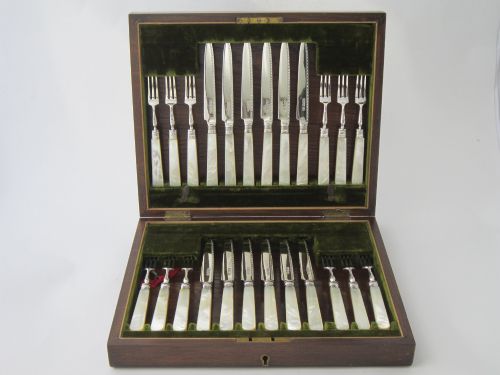
Most examples found here combine precious metal elements with organic handle materials like mother of pearl or agate. Buyers frequently encounter single folding pocket implements alongside matched canteen sets meant for formal dessert courses.
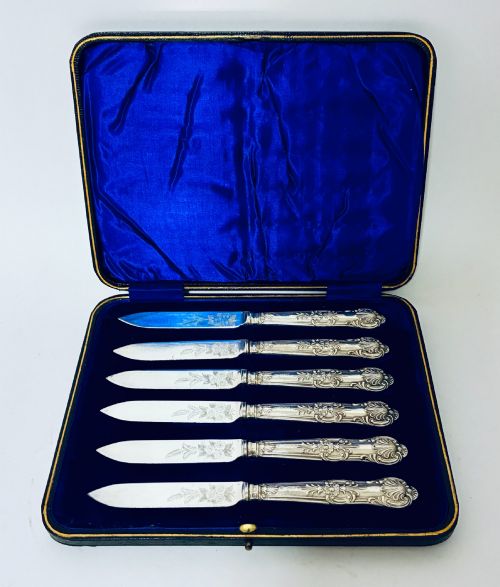
The assortment spans English craftsmanship alongside continental European pieces, including nineteenth-century Dutch and Southern Netherlands examples. Certain listings present complete boxed services housed in fitted oak canteens lined with velvet or silk.
How they were made
Makers shaped the cutting edges from sterling silver, solid silver gilt, or steel, pairing them with distinct handle materials. Mother of pearl scales feature prominently, shaped and pinned neatly to metal tangs.
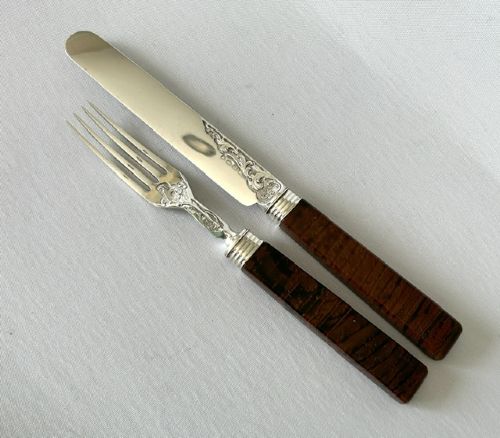
Some specialised serving pieces employ cast silver blades with decorative detailing on the metal surfaces. Natural stones like agate appear on select handles, secured alongside metal bolsters and ferrules.
Vintage Silver Fruit Knife Retail Price Guide 2026
Typical asking prices for vintage silver fruit knife among the pieces listed under this phrase on Sellingantiques today, from the lower quarter to the upper quarter. They describe what is for sale here now, not the wider market.
Materials recorded across current items include mother of pearl, velvet, silver, steel, sterling silver, wood, agate, and silk.
What varies in quality
Quality depends upon the material integrity of the handle and the preservation of the metal blade. Mother of pearl panels that remain free from hairline cracks and deep chips retain greater visual appeal.
The presence of original fitted cases, such as oak canteens with velvet or silk interiors, elevates the completeness of a set. Finer examples display crisp hallmarks and secure joints where blade meets handle.
The Vintage Silver Fruit Knife Glossary
- Sterling silver
- A silver alloy containing 92.5 percent pure silver by mass, standard for quality tableware. This metal provides a bright finish suited to dining implements.
- Mother of pearl
- The iridescent inner layer of certain mollusc shells, utilised extensively for knife handles. It offers a smooth, tactile grip with natural shimmering variations.
- Gilt
- A thin layer of gold applied to the surface of silver, creating a warm golden appearance known as silver gilt. This treatment protects the underlying metal from certain types of tarnish.
- Agate
- A decorative quartz variety used for handles, displaying natural banded patterns. Each stone piece possesses unique geological markings.
- Canteen
- A fitted box or case designed to store a set of cutlery securely. These wooden enclosures often feature specialised internal slots lined with fabric.
Vintage Silver Fruit Knife: Frequently Asked Questions
What is a vintage silver fruit knife used for?
These utensils were created specifically for peeling and slicing fresh fruit at the dining table. The silver composition prevents the acidic juices from reacting and discoloring the blade.
Folding versions were carried in pockets for personal use, while larger variants formed part of formal dessert services.
How do I care for silver fruit knives?
Hand wash these pieces gently using warm water and mild soap, drying them immediately with a soft cloth. Avoid abrasive cleaners that might scratch the metal or damage the handle inlays.
Store them in dry conditions, preferably within fitted cases or anti-tarnish rolls, to preserve their finish.
How do I date a Victorian fruit knife?
Examine the piece for official silver hallmarks stamped into the metal, which indicate the assay office and year of creation. Stylistic markers such as handle shaping and engraving techniques also point toward specific decades.
Victorian examples frequently display distinct floral or scroll motifs characteristic of nineteenth-century design.