

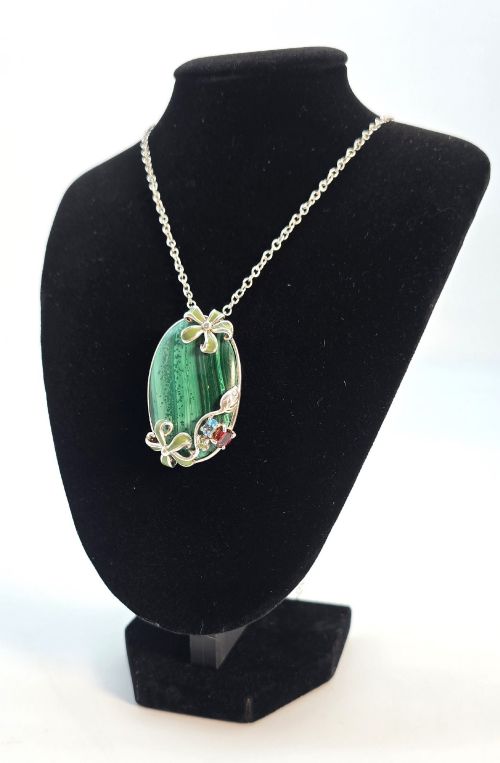
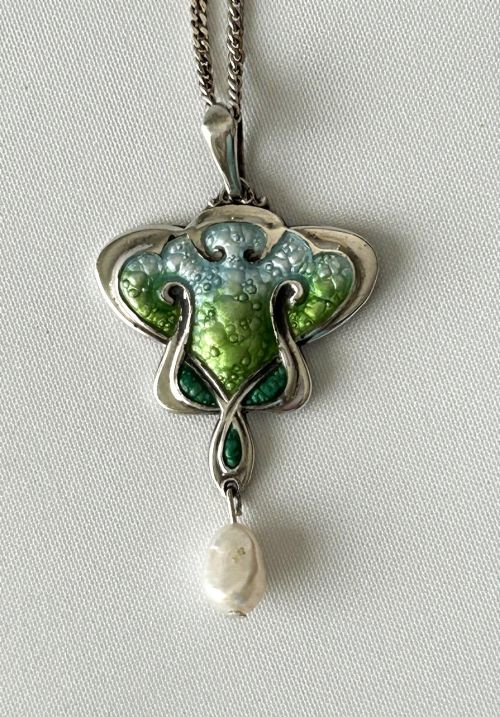
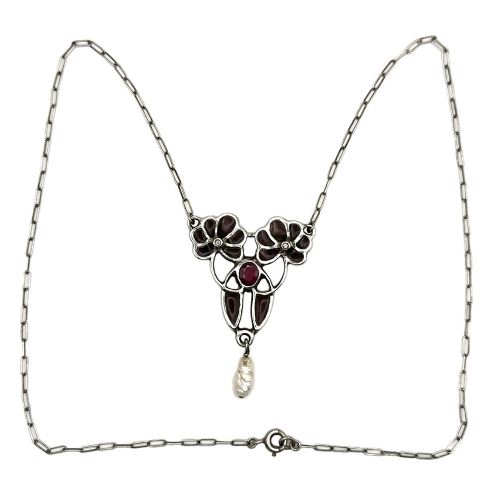
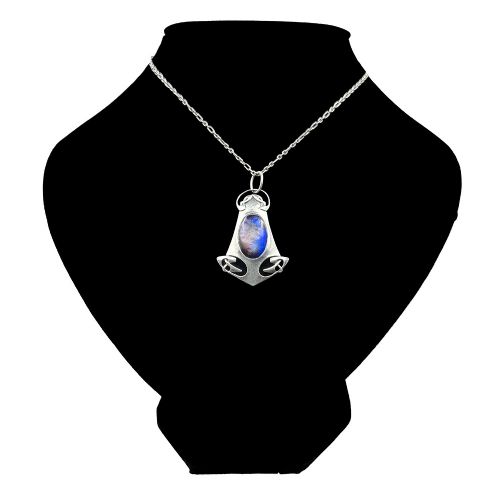


Vintage Silver Enamel Necklace
A vintage silver enamel necklace brings together precious metalwork and fired glass colour, offering a wearable piece of history from the early twentieth century.
Vintage Silver Enamel Necklace
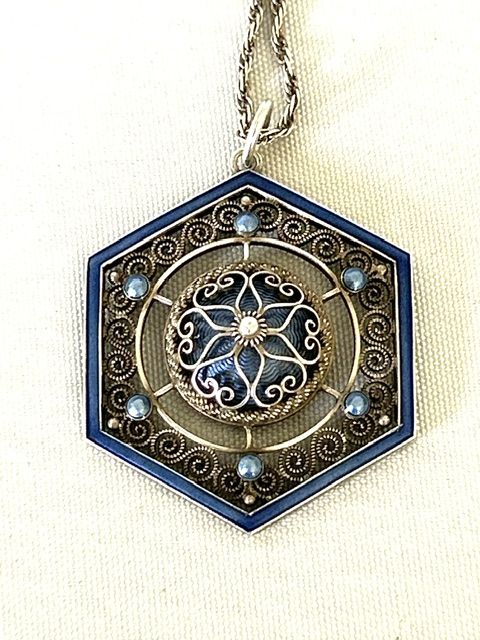
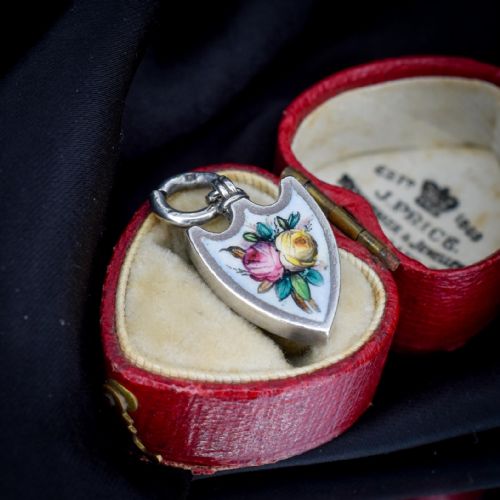
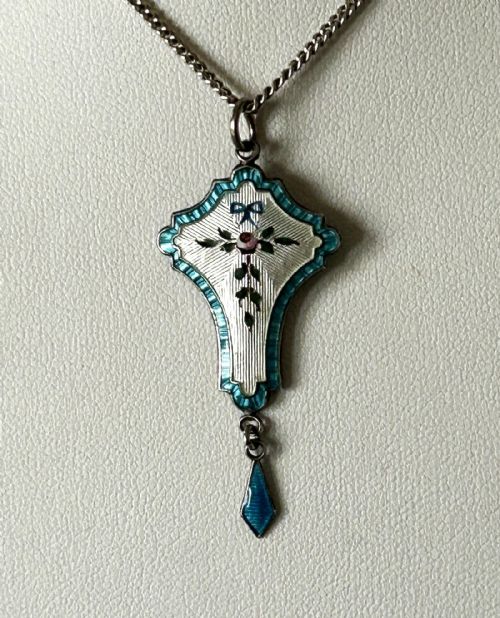
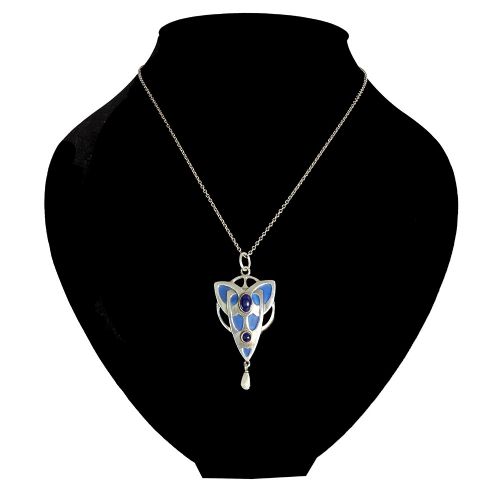
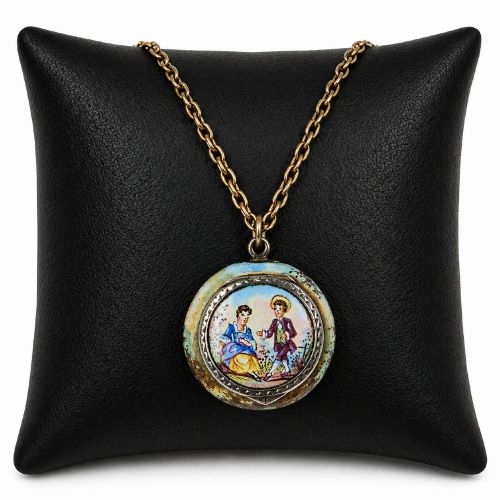
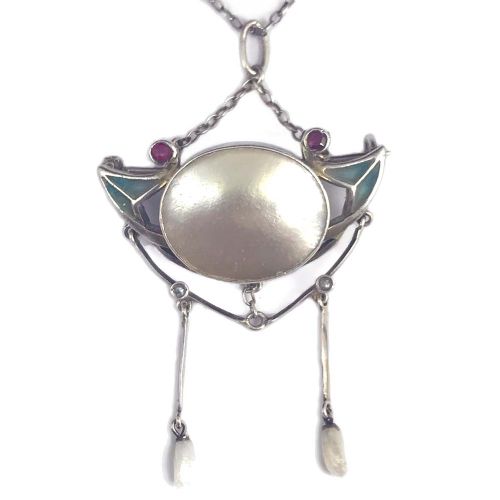
When you search for a vintage silver enamel necklace, you encounter pendant necklaces, charms, and festoon arrangements created across several distinct design movements. The selection on this page leans heavily into the early twentieth century, drawing from Art Nouveau, Arts and Crafts, and Scandinavian workshops.
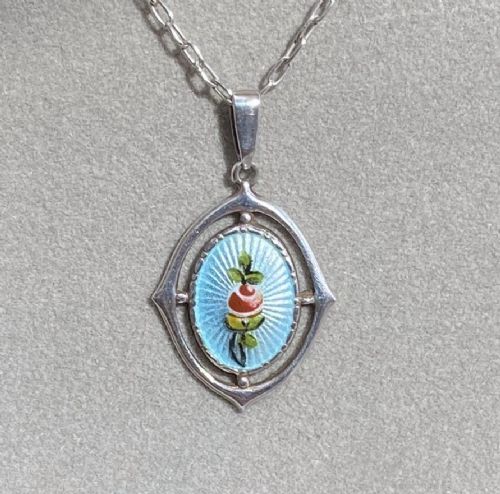
Forms range from floral shields and geometric eggs to delicate butterflies and botanical motifs suspended from silver chains or torques. Materials extend beyond standard silver to include gilt finishes, cultured pearls, chalcedony, citrine, and diamonds.
The aesthetic vocabulary shifts from the organic whiplash lines of the Edwardian era to clean mid-century modernism and later Scandinavian creations. Buyers find both delicate, translucent plique-à-jour work and solid guilloche or cloisonne designs originating from Britain, Norway, Denmark, Austria, and Russia.
How they were made
Silversmiths constructed the foundational frames using sterling silver, sometimes applying a gilt wash to highlight intricate wirework. Pendants were cast, hammered, or pierced to hold the recessed cells that would receive the powdered glass.
Enamelling techniques varied considerably across the periods, incorporating vitreous enamel, engine-turned guilloche patterns beneath translucent coats, and translucent plique-à-jour that resembles stained glass without a backing. Artisans fused these glass pastes in kilns at high temperatures before polishing the surfaces flush with the metal partitions.
Many designs incorporate natural gemstones and organic elements set directly into the silver framework alongside the enamel work. Pearls, blister pearls, turquoise, malachite, amethyst, and chrysoprase appear as drops, central cabochons, or delicate accents complementing the fired glass.
Vintage Silver Enamel Necklace Retail Price Guide 2026
Typical asking prices for vintage silver enamel necklace among the pieces listed under this phrase on Sellingantiques today, from the lower quarter to the upper quarter. They describe what is for sale here now, not the wider market.
Several makers transformed humble insects and garden flowers into permanent treasures, immortalising tiny butterflies and violet petals in shimmering glass.
What varies in quality
Quality rests primarily on the technical mastery of the enamelling and the sophistication of the silversmithing. Finer pieces demonstrate precise control during kiln firing, resulting in glass surfaces free from excessive pitting, cloudiness, or unwanted bubbling.
The complexity of the metal mounting also distinguishes standard production from exceptional studio output. Hand-forged settings with detailed wirework, integrated gemstone bezels, and well-preserved plique-à-jour cells demand a higher degree of craftsmanship than simpler stamped metal components.
Attribution to documented makers and designers elevates the standing of a piece within the market. Signed work from notable workshops retains clearer provenance and showcases distinctive artistic ambition that separates mass production from bespoke artistry.
Marius Hammer·Archibald Knox·Liberty and Co·Murrle Bennett·David-Andersen·Heinrich Levinger·Charles Horner·Eduard Loss·Martin Mayer·Theodor Fahrner·Jakob Bengel·V Bahner
The Vintage Silver Enamel Necklace Glossary
- Guilloche enamel
- A decorative technique where a metal surface is mechanically engraved with precise geometric patterns before a translucent enamel layer is applied over the top. This allows the underlying pattern to shimmer through the coloured glass.
- Plique-a-jour
- An enamelling technique resembling miniature stained glass where the enamel is fired into open wire cells without a metal backing. Light passes directly through the translucent colours.
- Cloisonne
- A method of decorating metalwork objects by affixing flat silver or gold wires to the surface to create compartments, which are then filled with enamel paste and fired.
- Torque
- A rigid, circular neck ring that sits open or fastens at the front, often holding a central pendant or drop rather than hanging from a flexible chain.
- Cabochon
- A gemstone shaped and polished with a smooth, convex top rather than faceted edges, commonly set securely into silver bezels on early twentieth-century jewellery.
Vintage Silver Enamel Necklace: Frequently Asked Questions
How do I care for silver enamel?
Store your necklace separately in a soft pouch to prevent the enamel from scratching against other jewellery items. Avoid using abrasive dips or harsh silver polishes that can permanently damage glass surfaces.
Clean the piece gently using a damp cloth and mild soap, then dry it thoroughly. Keep enamel jewellery away from prolonged direct sunlight and sudden extreme temperature changes.
Are these necklaces fragile?
Vitreous enamel is essentially glass fused to metal, meaning it can chip or crack if dropped onto hard surfaces or subjected to sharp impacts. Extra care is required with plique-à-jour designs because the unsupported glass areas have no metal backing.
Despite this glass composition, these pieces have survived for a century or more through careful handling. Normal daily wear is entirely suitable provided you remove the necklace before physical sports or heavy work.
How can I date my necklace?
Examine the stylistic markers, such as the flowing organic curves typical of 1900 Art Nouveau pieces or the clean geometric lines associated with 1930s Art Deco and mid-century modernism. Hallmarks stamped onto the silver reverse can also provide specific assay office marks and date letters.
Matching the construction style with known workshop signatures helps narrow the decade of production. Comparative research against documented pieces from firms like Liberty or David-Andersen offers further chronological precision.
What is guilloche enamel?
Guilloche involves machine-turning a geometric pattern into a silver base plate before applying a transparent layer of coloured enamel over the engraving. The light catches the underlying carved metal lines, creating a deep, shimmering visual texture.
This technique gained immense popularity during the Edwardian era and the 1920s across Scandinavian and British workshops. Popular colours include pale blue, violet, and rich white.