
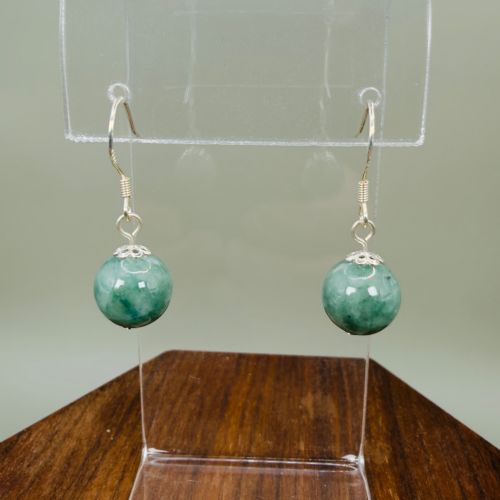
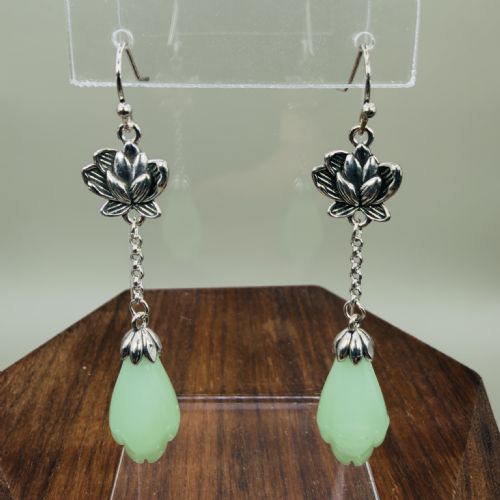
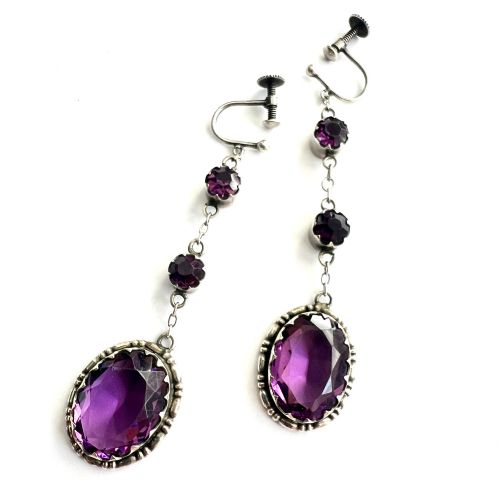
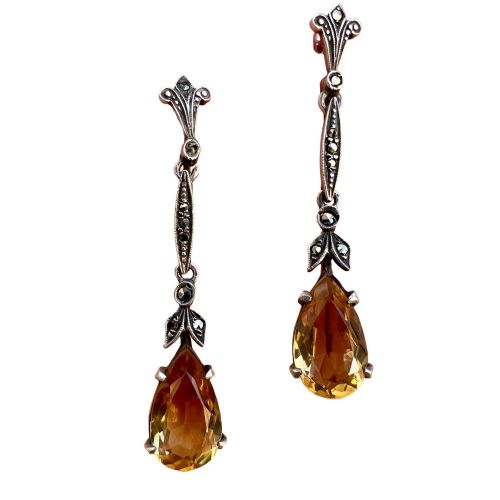


Vintage Silver Dangle Earrings
Vintage silver dangle earrings bring together centuries of intricate metalwork and suspended gemstones for movement that catches the eye.
Vintage Silver Dangle Earrings
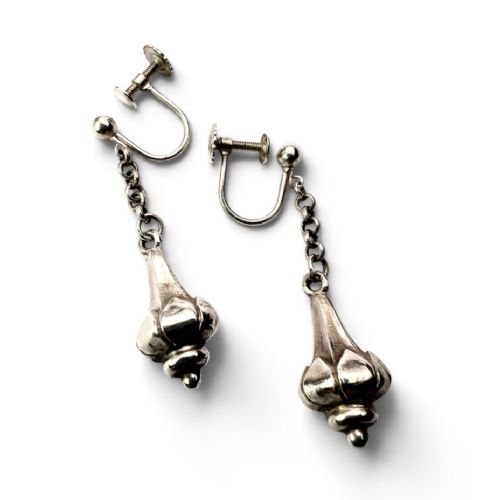
Vintage silver dangle earrings span multiple eras from the Georgian period through the Victorian and Edwardian decades into the Art Deco and mid-century modern years. These pieces hang below the lobe, utilising hooks, screwbacks, or hinge backs to create movement with every turn of the head.
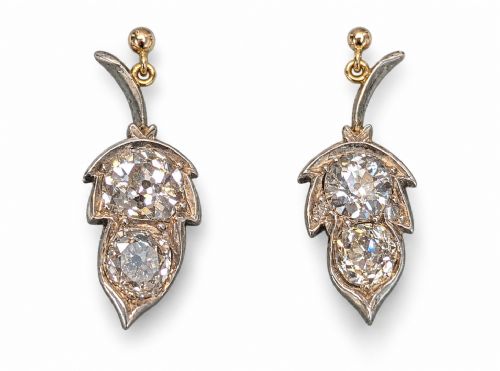
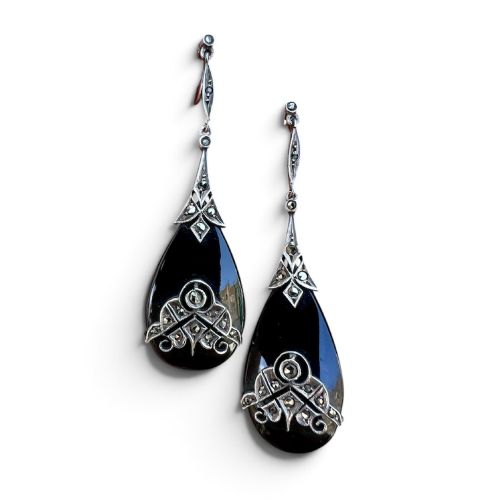
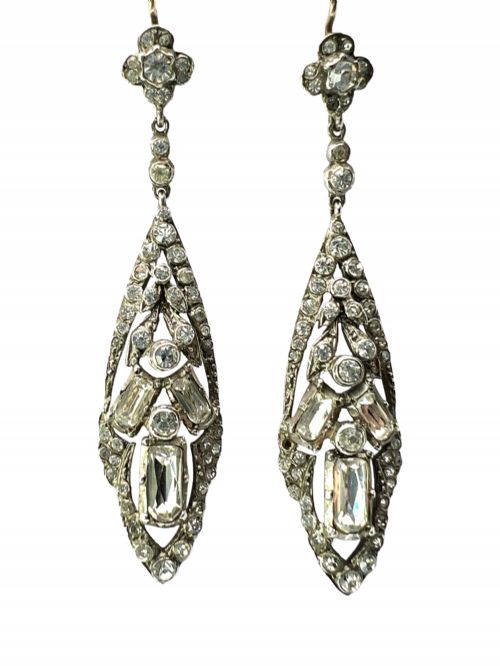
The selection here includes geometric Art Deco drops set with marcasite and paste glass alongside ornate Victorian clusters featuring diamonds, turquoise, and rock crystal. Tribal pieces such as Turkmen gulak tenecir sit alongside refined botanical revival and modernist designs.
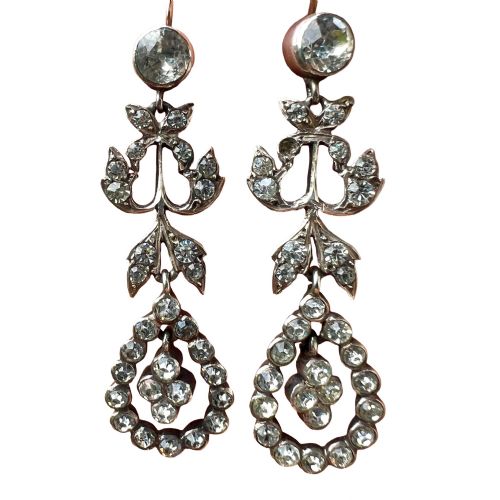
Makers utilised sterling silver, silver gilt, and platinum alongside gold accents to mount natural pearls, aquamarines, citrines, and jade beads. Whether you seek the precise symmetry of 1930s chrome and silver or the dark romance of 19th-century paste chandelieres, the variety reflects distinct historical tastes.
Materials and construction
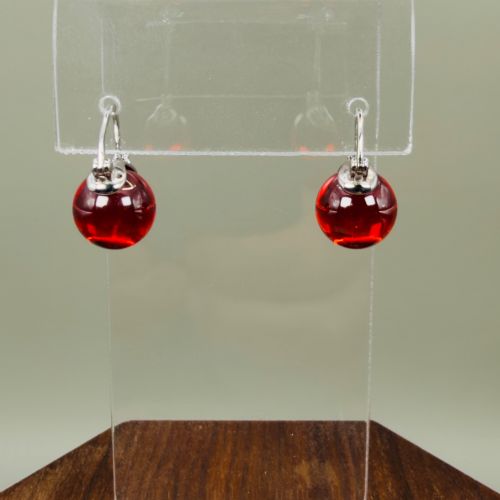
Silversmiths combined sterling silver and silver-gilt with precious metals like gold and platinum, often using mixed-metal settings to highlight old-cut diamonds and coloured gemstones. Pierced framework, prong settings, and bezel mounts secure stones ranging from natural pearls to synthetic rubies.
Turkmen gulak tenecir earrings were designed to chime softly with movement, ensuring the wearer announced their presence long before entering a room.
Assessing craftsmanship and condition
The standard of a pair rests on the precision of the metalwork, from the uniformity of tiny marcasite settings to the crispness of Art Deco geometric stampings. Hand-cut stones, such as old European and old mine cut diamonds, display superior light return compared to ordinary glass paste.
Original fixings, whether screwbacks, lever-backs, or hook wires, indicate whether a piece remains intact or has undergone later alterations. The integration of backing metals, such as gold frontings on silver mounts, demonstrates the ambition of the original workshop.
Knoll & Pregizer·Teke Tribes
The Vintage Silver Dangle Earrings Glossary
- Marcasite
- Small, faceted iron pyrite stones polished and set closely into silver channels to create a sparkling, metallic frame. This technique gained immense popularity during the Art Deco period.
- Screwback
- A mechanical earring fitting utilising a threaded post and a small screw cap to secure the piece to unpierced lobes. It became standard through the Victorian and early twentieth centuries.
- Old cut diamond
- A hand-faceted diamond shape predating modern brilliant cuts, characterised by a smaller table, higher crown, and open culet. These stones catch candlelight with a softer glow.
- Chandelier drop
- An elaborate, multi-tiered earring design featuring cascading elements that fan outwards below the ear. They rely on articulated joints for fluidity.
Vintage Silver Dangle Earrings: Frequently Asked Questions
How do I care for vintage silver earrings?
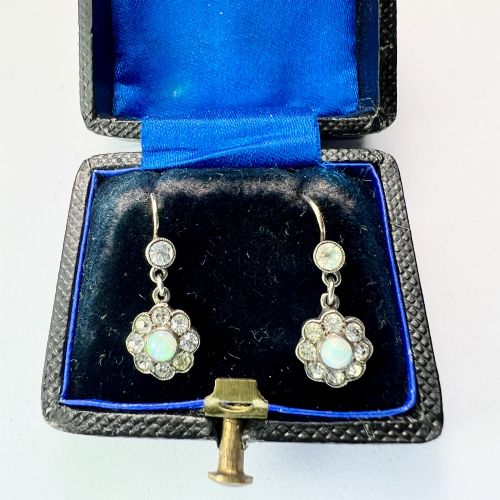
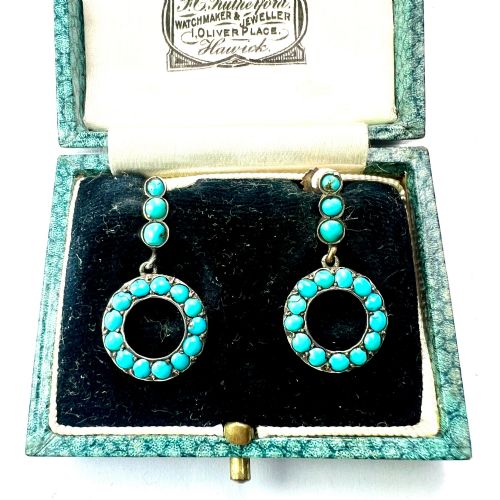
Store silver and gemstone earrings in dry, padded boxes away from direct sunlight and humidity to protect delicate stones like turquoise, amber, and pearls.
Avoid using liquid chemical dips on pieces containing paste glass, foil-backed stones, or marcasite, as moisture trapped behind settings causes permanent discolouration.
Can screwback earrings be converted for pierced ears?
Many jewellers can convert vintage screwback fittings to modern posts or hooks by working carefully with the existing hinge or loop without harming the main drop.
However, leaving original mechanics intact preserves the historical integrity of Georgian and Victorian pieces for those who prefer unalterable authenticity.
How do I date an Art Deco drop earring?
Art Deco pieces from the 1920s and 1930s typically feature rigid geometric motifs, calibrated black onyx, synthetic ruby accents, and shimmering marcasite or chrome.
These designs favour strong vertical lines and streamlined modernist silhouettes that break sharply from the softer, curved floral aesthetics of the preceding Edwardian era.