




Vintage Silver Card Stand
These vintage silver card stand pieces are charming table accessories that organise seating and dining details with period elegance.
Vintage Silver Card Stand
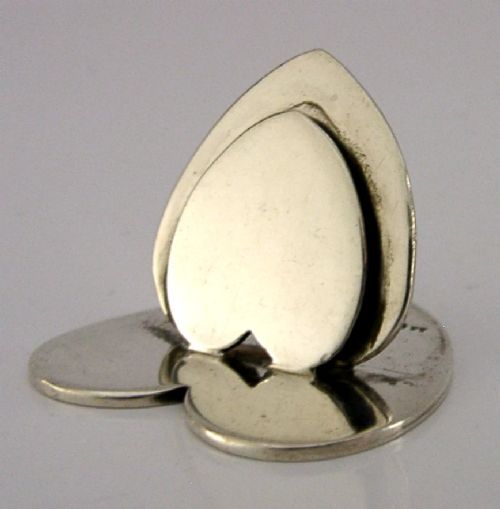
When you search for a vintage silver card stand, you are looking at small tabletop accessories designed to hold place cards, menu cards, or table numbers during formal dining. The selection includes individual holders, matched pairs, and larger sets made for dining tables.
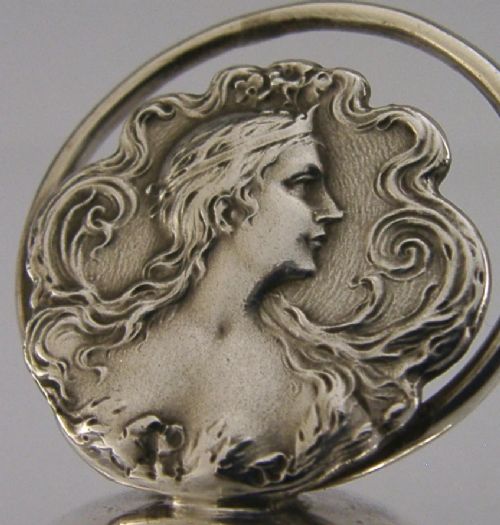
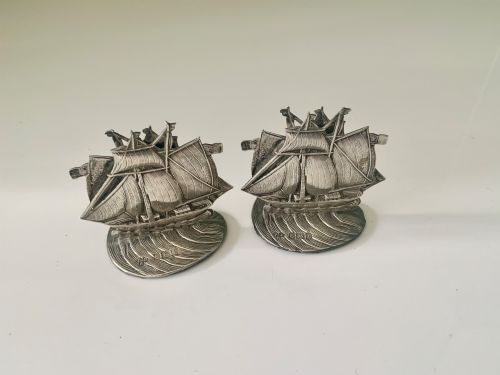
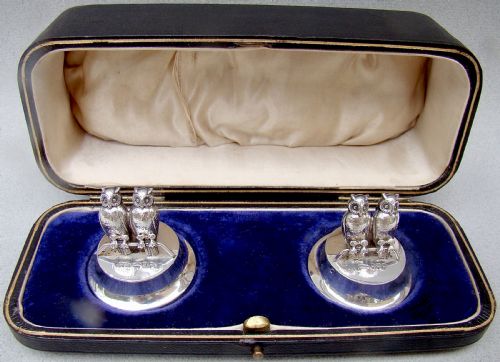
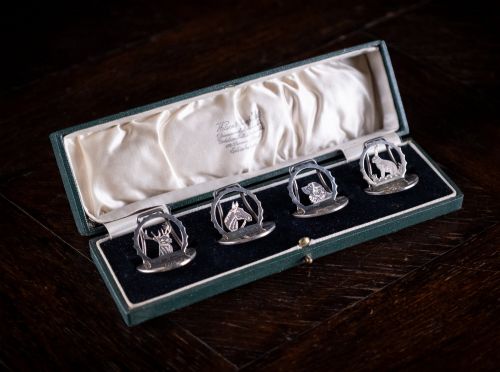
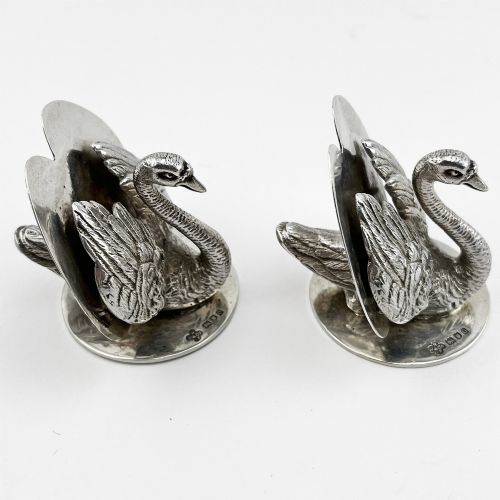
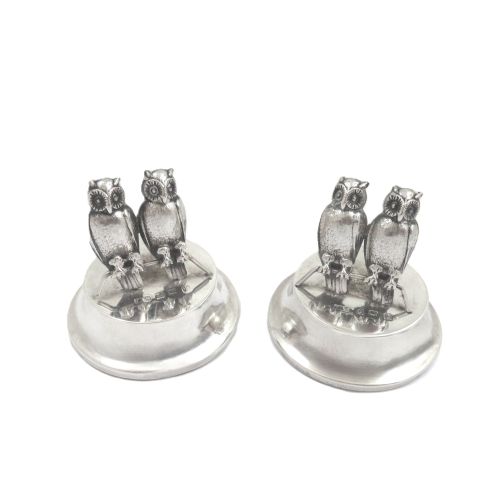
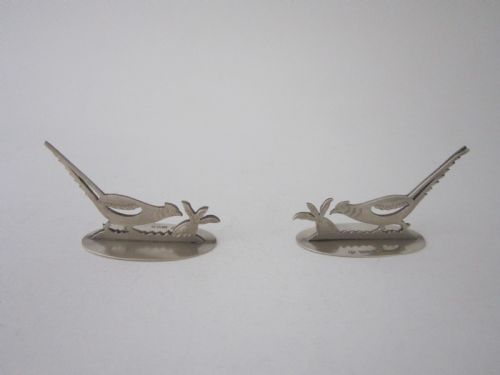
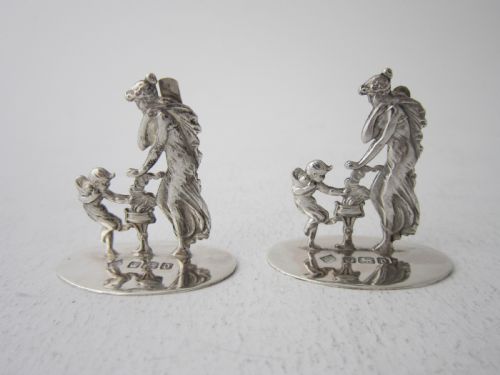
The pieces on this page appear in various forms, most commonly as menu holders, place card holders, and desk accessories. You will encounter figural designs shaped as owls, swans, foxes, horses heads, and galleons, alongside enamel flags and Alice in Wonderland motifs.
Originating across several decades, these items span the Edwardian era, the 1920s, and the 1930s, reflecting the social dining customs of their respective periods. They function primarily to display cards clearly to guests while adding a decorative touch to table settings.
Materials and construction
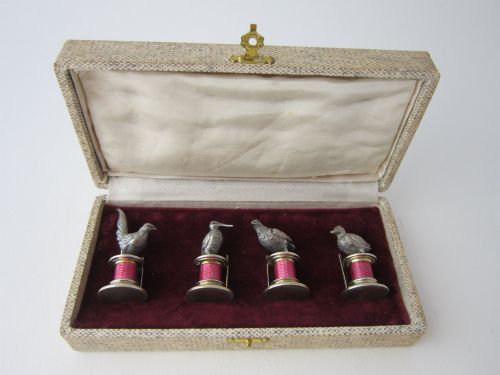
These items are constructed predominantly from sterling silver and silver plate, often utilising casting and stamping techniques to achieve detailed figural shapes. Metals are shaped into animals, birds, and military insignia with integrated clips or slots for paper cards.
Enamel work frequently appears alongside the metal, particularly guilloche enamel, adding colour to flag motifs and decorative plates. Some designs incorporate secondary materials such as velvet, silk, leather, and glass components to support the primary silver structure.
Alice in Wonderland characters occasionally join the dining table to hold menus alongside traditional silver animals.
Factors of quality
Quality in these items rests on the crispness of the casting and the definition in figural subjects such as birds, animals, and character figures. Finer examples display sharp feather and fur details, clean hand-finished chasing, and secure hinge or slot mechanisms for holding cards.
Maker marks and clear hallmarking contribute significantly to the standing of a piece, distinguishing standard commercial production from workshop output. The preservation of applied enamel and the structural integrity of the base determine the overall standard.
Levi and Salaman·A Wilcox·Sampson Mordan·Asprey·WMF·Liberty
The Vintage Silver Card Stand Glossary
- Sterling silver
- A silver alloy containing 92.5 percent pure silver by mass and 7.5 percent other metals, usually copper. This standard composition provides the durability required for small table ornaments.
- Guilloche enamel
- A decorative technique where a precise pattern is mechanically engraved into metal beneath a translucent layer of enamel. It creates a repeating geometric shimmer on coloured surfaces.
- Menu holder
- A small upright display stand used on dining tables to hold the menu card for guests to read. They often match the design of surrounding place card holders.
- Hallmark
- An official stamp applied by an assay office indicating the purity of the metal, the maker, and the year of testing. These marks verify the origin of British silver items.
- Figural
- Representing a human, animal, or object form rather than relying on abstract or purely geometric ornament. These pieces often depict owls, foxes, horses, or literary characters.
Vintage Silver Card Stand: Frequently Asked Questions
What were silver card stands used for?
These pieces were placed on dining tables to hold printed menu cards, individual place name cards, or table numbers. They helped guests identify their seats and read the courses being served.
In larger dining settings, sets of matching holders maintained a cohesive theme across multiple tables during formal dinner parties.
How do I identify Edwardian pieces?
Edwardian items date from the reign of King Edward VII between 1901 and 1910, often displaying hallmarks from this specific decade. The style frequently draws on earlier Georgian and Victorian motifs with lighter, refined craftsmanship.
Common visual indicators include naturalistic animal figures, floral motifs, and detailed cast silver bases stamped with traditional assay office marks.
Can these be used for modern dining?
They function effectively for modern dinner parties, weddings, and special events to hold place cards or menus. Their compact size makes them practical for contemporary tables.
Care should be taken when inserting cards to avoid straining the original metal clips or scratching delicate enamel surfaces.
What is the difference between sterling silver and silver plate?
Sterling silver consists of solid precious metal throughout the object, meeting a strict purity standard of 92.5 percent silver. These pieces bear hallmarks indicating the standard and the maker.
Silver plate involves a thin layer of silver bonded to a base metal core, such as copper or brass, offering the appearance of silver at a different production level.