




Vintage Shop Display Jars
These vintage shop display jars bring genuine mercantile character into a home, offering tactile history through old apothecary and sweet containers.
Vintage Shop Display Jars
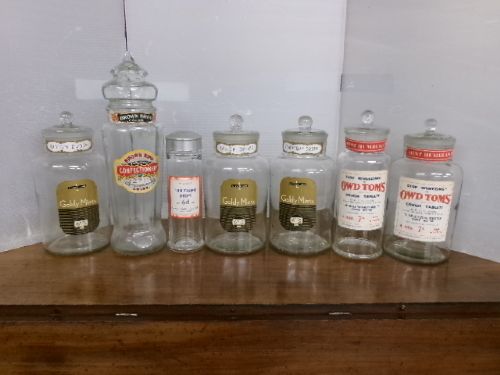
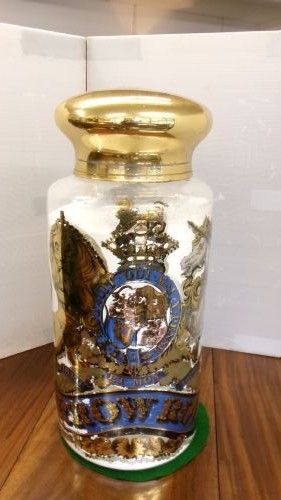
When you search for vintage shop display jars, you are looking at utilitarian vessels originally built for chemists, grocers, and sweet shops during the nineteenth and early twentieth centuries. These containers were designed to showcase wares attractively on counters and shelves while keeping contents protected behind fitted covers.
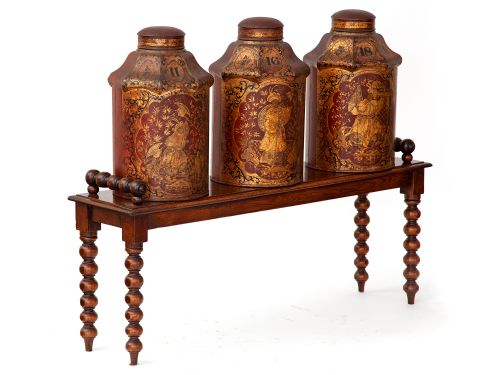
You are most likely to meet Victorian and Edwardian examples on this page, spanning large apothecary storage jars to tall sweet containers. The selection also includes French nineteenth-century pieces alongside tea canisters featuring distinctive styles.
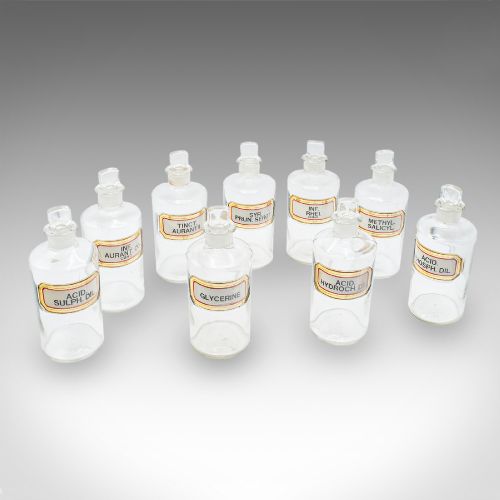
Many of these containers retain their original labels, painted lettering, or gilt paper details naming contents like arrowroot or gelatine. Their forms range from simple cylindrical chemist bottles to pagoda style china canisters.
How they were made
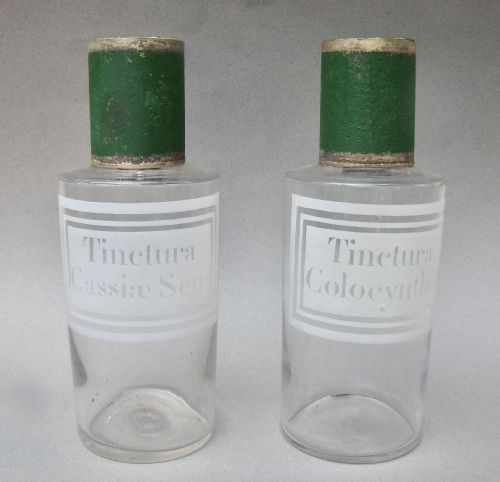
Makers fashioned these pieces primarily from heavy clear glass, mercury glass, and ceramic, pairing them with matching lids to create airtight seals for dry goods and compounds. Glass bodies were frequently blown, moulded, or etched by hand.
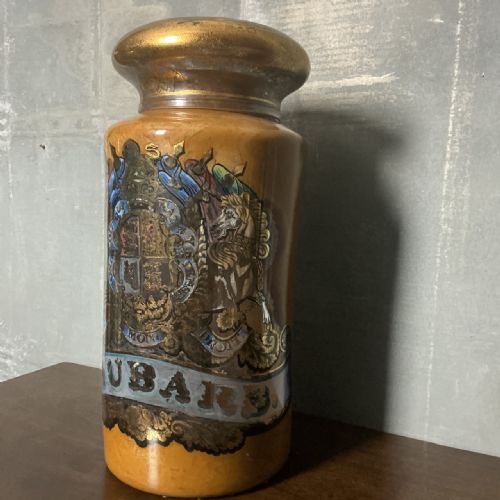
Decoration relied on applied gold leaf, enamel paint, and paper labels adhered to the exterior surfaces. Brass elements appear occasionally on fittings, while specialised items utilised multi-coloured paint finishes to achieve distinct decorative styles such as Chinoiserie.
Vintage Shop Display Jars Retail Price Guide 2026
Typical asking prices for vintage shop display jars among the pieces listed under this phrase on Sellingantiques today, from the lower quarter to the upper quarter. They describe what is for sale here now, not the wider market.
The listings on this site span the Victorian and Edwardian periods, featuring glass, mercury glass, and ceramic materials.
What varies in quality
The distinction between ordinary and exceptional pieces lies in the clarity of the glass, the crispness of any etching, and the survival of original decorative elements. Vessels featuring intact gold leaf, original paper labels, or well-preserved enamel paint command greater attention from collectors.
Proportion and scale also dictate worth, as unusually large apothecary jars or complete sets display a stronger visual presence than isolated single containers. Pieces retaining their matching original covers show greater completeness.
The Vintage Shop Display Jars Glossary
- Apothecary jar
- A heavy glass vessel originally utilised by chemists to store medicinal herbs, powders, and liquids. These jars typically feature a broad base and a snug-fitting stopper or cover.
- Mercury glass
- A blown double-walled glass filled with a silvering mixture through a pontil hole, then sealed to create a reflective mirror-like finish. It was widely used for ornamental and display containers.
- Chinoiserie
- A European artistic style reflecting Chinese motifs and decorative techniques, frequently seen on tea canisters and decorative storage vessels from the nineteenth century.
- Gold leaf
- Extremely thin sheets of beaten gold applied to glass or ceramic surfaces for lettering and ornamentation. It provides a luminous metallic contrast against painted backgrounds.
Vintage Shop Display Jars: Frequently Asked Questions
What were vintage shop display jars used for originally?
Merchants utilised these vessels to store and showcase dry goods, sweets, herbs, and medicinal compounds on shop counters and shelves. The transparent glass and labelled exteriors allowed customers to view contents easily.
Over time, chemists and grocers relied on them to keep staples fresh and protected from moisture while maintaining an organised, professional storefront appearance.
How do I date a Victorian apothecary jar?
Dating these jars involves examining the manufacturing techniques, such as pontil marks on the base, glass thickness, and bubble distribution. Earlier nineteenth-century examples often exhibit heavier, hand-blown characteristics.
Original paper labels, typography styles, and specific stopper shapes also provide reliable clues for placing a piece within the Victorian or Edwardian eras.
Can I use these glass jars for food storage today?
Most glass display containers remain structurally sound and suitable for holding dry goods, kitchen ingredients, or small household items. Care should be taken with pieces featuring delicate interior silvering or fragile exterior painted labels.
Hand washing in lukewarm water preserves surviving gold leaf, enamel paint, and paper labels far better than machine washing.
What is the difference between an apothecary jar and a tea canister?
Apothecary jars are typically formed from clear glass designed to display medicinal contents, powders, or sweets with maximum visibility. Tea canisters, by contrast, frequently utilise ceramic or opaque materials decorated with styles like Chinoiserie.
Canisters often feature tighter lids to protect loose tea leaves from light and air exposure, whereas display jars focused heavily on visual merchandising.