
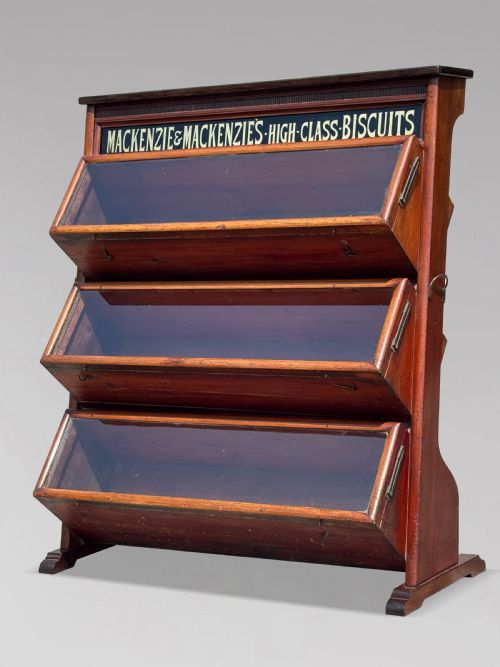


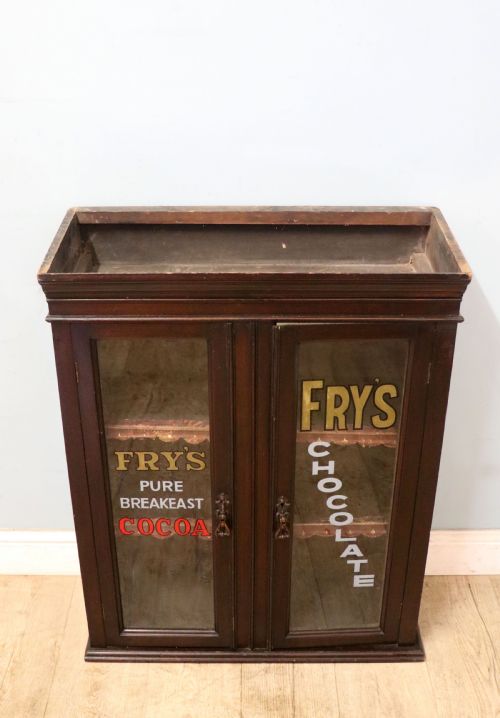


Vintage Shop Advertising Cabinet
A vintage shop advertising cabinet brings the bold lettering and glazed timber of the historic high street directly into a modern interior.
Vintage Shop Advertising Cabinet
When you search for a vintage shop advertising cabinet, you are looking at glazed timber enclosures built to merchandise confectionery, cigars, and sewing materials on nineteenth and twentieth-century retail counters.
The pieces on this page span the Victorian and Edwardian eras through to the interwar period, taking the form of countertop display units, wall-hanging cases, and tabletop boxes.
Most examples you will meet combine clear glass viewing panels with maker's lettering or hand sign-written decoration for brands such as Fry's, Cadbury's, and Rowntree's.
How they were made
Cabinet makers constructed the frames using solid hardwoods like mahogany, oak, and American walnut, ensuring the timber could withstand daily commercial handling in busy shops.
Display panels utilise glass for maximum visibility, whilst surface details often incorporate gold leaf lettering, paper labels, and hand sign-writing directly onto the wood or glass.
A weather-conscious haberdasher could buy an aneroid barometer supplied by Zambrene Weatherproof Clothing to hang beside the cotton displays.
What varies in quality
The standard of a piece rests primarily on the integrity of its timber frame and the originality of its glazed panels, as commercial hardware frequently endured heavy knocks.
Quality also hinges on whether the advertising sign-writing is contemporary to the cabinet's manufacture or applied later, which shifts the historical character of the display.
Mackenzie's Biscuits·Fry's Chocolate·Ermen & Roby·H. Upmann·Cadbury's Cocoa·Aitchison
The Vintage Shop Advertising Cabinet Glossary
- Sign-written
- Painted lettering applied directly to wood or glass surfaces to promote a commercial brand. This technique defines the advertising character of many surviving retail cabinets.
- Countertop display
- A compact cabinet designed to sit upon a shop counter at eye level for customers. These units encouraged impulse purchases of chocolate, tobacco, and small goods.
- Vitrine
- A glass-fronted display case used for showing valuable or delicate items. In commercial settings, these protect stock while maintaining full visibility.
- Hardwood
- Timber derived from broad-leaved deciduous trees, such as mahogany and oak. Such dense woods provided the structural durability required for nineteenth-century shopfittings.
Vintage Shop Advertising Cabinet: Frequently Asked Questions
What were advertising cabinets used for?
Shopkeepers utilised these glazed timber units to display perishable and desirable goods such as chocolate, cigars, and sewing threads directly on the counter.
The glass protected the stock from dust and handling while letting customers view the products and brand lettering clearly before making a purchase.
How do I date a shop cabinet?
Dating relies on observing the timber species, construction joints, and the typographic style of the lettering on the glass or wood.
Victorian and Edwardian pieces typically display heavier mouldings and distinct joinery, whereas 1930s interwar examples often feature cleaner geometric lines.
Where should I place one at home?
These cabinets suit kitchen worktops, living room sideboards, or hallways where their glass panels can catch the light and display collections.
Because they were built for commercial retail, their proportions work well on top of existing furniture rather than standing alone on the floor.
Are the advertising signs original?
Some cabinets bear sign-writing applied during their original retail life, while other pieces received later hand-lettered decoration for specific brands.
Both original commercial markings and later sign-writing appear across the surviving inventory recorded on this page.