
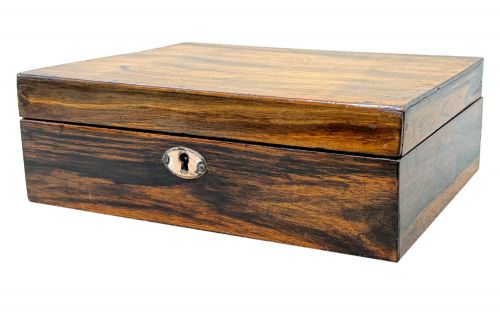


Vintage Sewing Storage
These vintage sewing storage pieces keep needles, threads and notions organised in timber boxes, tables and cabinets crafted across the nineteenth and twentieth centuries.
Vintage Sewing Storage
Vintage sewing storage comprises boxes, tables and cabinets designed to contain sewing implements, cottons and haberdashery. These items date from the Regency period through to the Interwar Commercial era and mid-century modern designs, reflecting changing domestic habits.
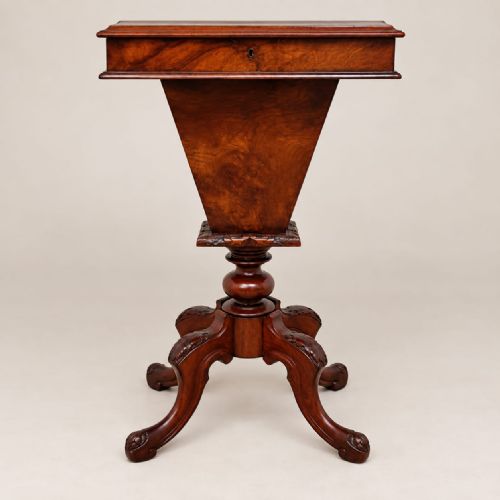
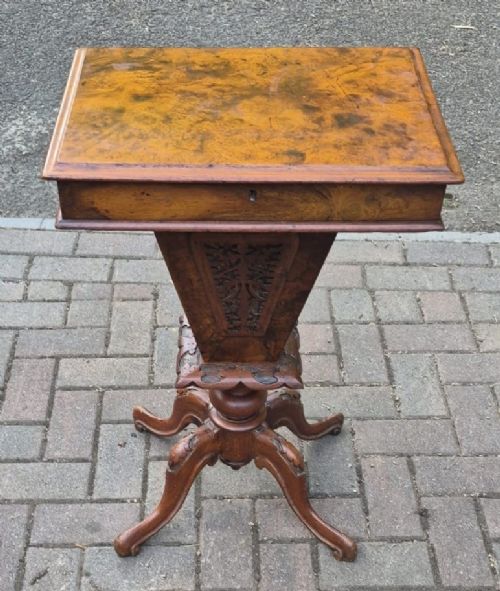
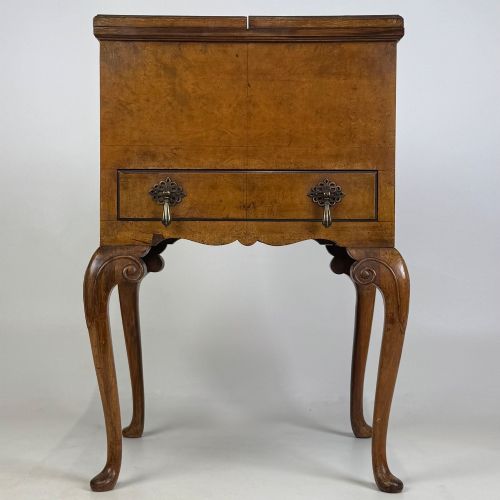
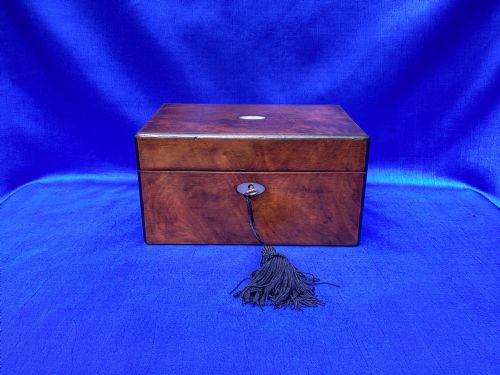
Buyers encountering this search phrase find table-top work boxes, freestanding work tables and countertop drawer units. Common forms include rosewood and mahogany work boxes alongside oak and pine stands or shop display cabinets.
The objects serve both functional and decorative roles, with many pieces incorporating fitted interior trays or compartments for specialised sewing tools. Origins span vernacular handmade items to sophisticated commercial shop displays.
Materials and construction
Cabinet makers utilised dense hardwoods such as rosewood, walnut, mahogany and burr walnut, frequently applying fine veneers and decorative inlays including mother of pearl and Tunbridge Ware. Secondary timbers like pine appear in simpler stands and interior compartments.
Construction techniques combine traditional joinery for boxes and tables with specialised cabinetry for multi-drawer haberdashery units and tiered stands. Surfaces receive polished finishes that highlight the natural grain of the timber.
Listings feature items spanning the Regency, Victorian and Edwardian eras, constructed from rosewood, walnut, mahogany and oak.
Distinctions in quality
Quality separates simple utility items from pieces featuring complex decorative techniques such as Tunbridge Ware mosaic work, silver stringing or intricate mother of pearl inlay. The choice of primary timber, from plain pine to figured burr walnut and rosewood, dictates the grade of the piece.
The integrity of interior fittings, including original compartmentalised trays and functioning brass hardware, influences the overall standard of construction. Superior examples retain their complete internal architecture and original surface patination.
Waring & Gillow
The Vintage Sewing Storage Glossary
- Tunbridge Ware
- Woodworking technique involving tiny mosaic tiles of naturally coloured woods to form pictorial or geometric decoration. This meticulous craft creates detailed surface patterns on small boxes and caskets.
- Haberdashery Cabinet
- Multi-drawer storage unit originally utilised in shops for organising small sewing goods, ribbons and fastenings. These pieces feature multiple shallow drawers for sorting small items.
- Work Box
- Portable container fitted with compartments and trays for holding sewing tools and materials. They range from plain wooden boxes to heavily inlaid luxury examples.
- Work Table
- Freestanding table incorporating a storage box or suspended fabric bag beneath the top for sewing projects. They combine surface utility with enclosed storage space.
- Mother of Pearl
- Iridescent inner layer of mollusc shell used for decorative inlay and escutcheons on nineteenth-century boxes. Small pieces are shaped and set flush into the wooden surface.
Vintage Sewing Storage: Frequently Asked Questions
What is a work box?
A work box is a portable container designed to hold sewing implements, threads and small materials. These boxes usually feature fitted internal trays with compartments for needles and reels.
Historically used by ladies for domestic needlework, they sit on tabletops or desks and often include locking lids with keys.
How do I use a haberdashery cabinet?
Haberdashery cabinets provide shallow drawer storage well suited for organising craft supplies, jewellery, stationery or small collections. The multiple drawers allow sorting by category or size.
Position them on countertops or tabletops where the glass or timber fronts remain visible and accessible.
What is Tunbridge Ware?
Tunbridge Ware is a form of decorative woodwork originating from Kent, featuring mosaic patterns built from tiny blocks of various coloured timbers. These geometric or pictorial designs adorn the lids of small boxes.
Inspect the surface closely to appreciate the microscopic precision of the wood mosaic work.
How do I date a sewing table?
Dating relies on timber choices, leg styles, handle designs and construction methods. Regency and Victorian examples often feature turned legs, mahogany or rosewood veneers, and brass fittings.
Later Edwardian and 1920s pieces typically show simpler oak or pine construction or lighter satinwood banding.