


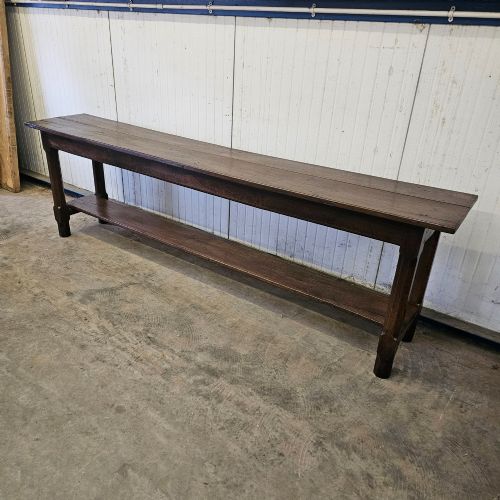
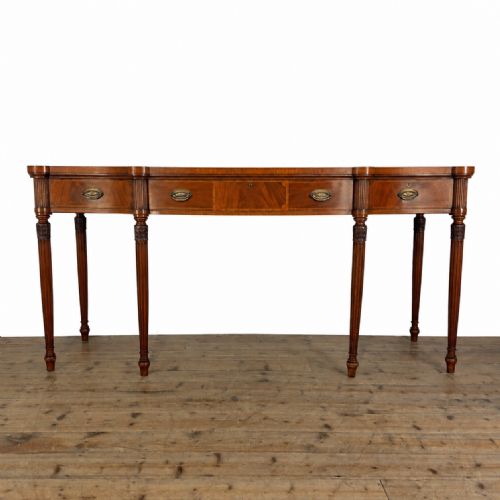
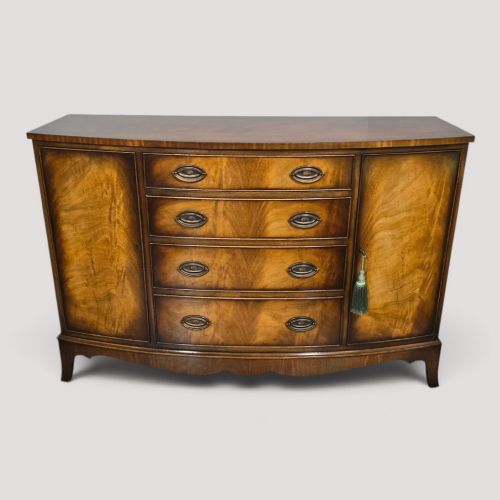
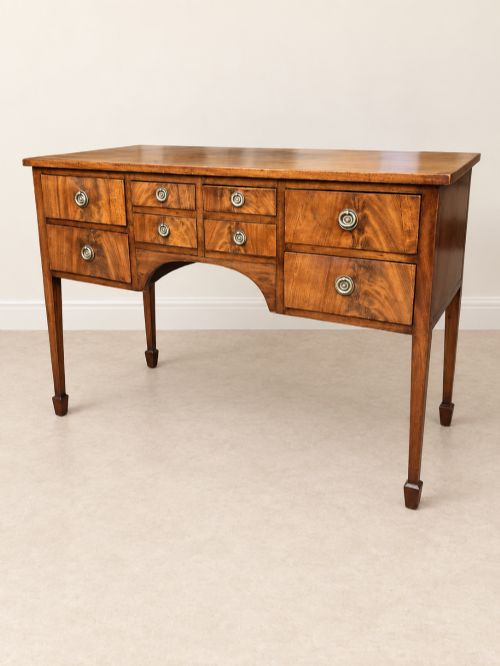
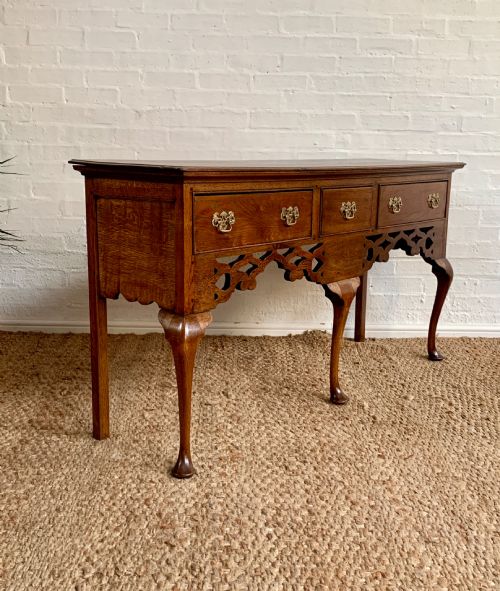
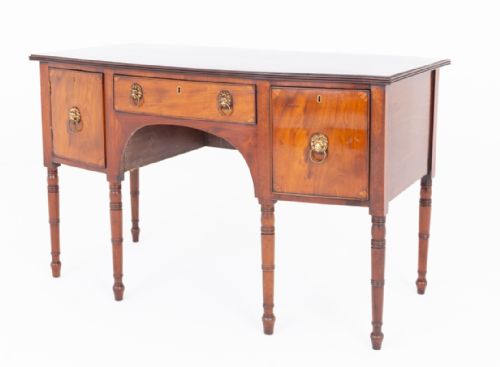
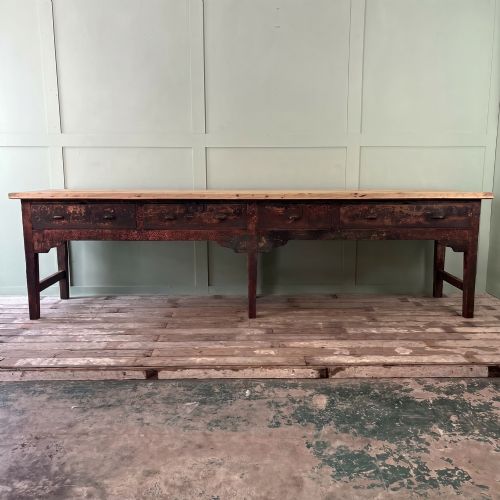
Vintage Serving Sideboard
A vintage serving sideboard organises a dining room with practical surface space and period timber character.
Vintage Serving Sideboard
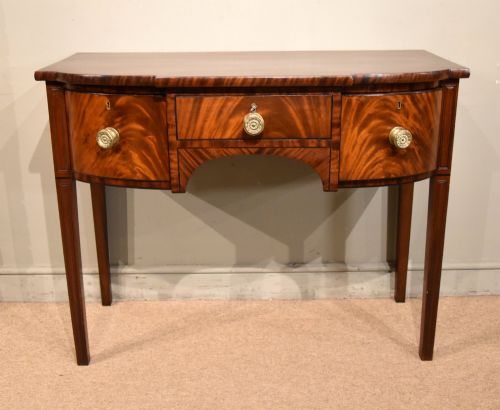
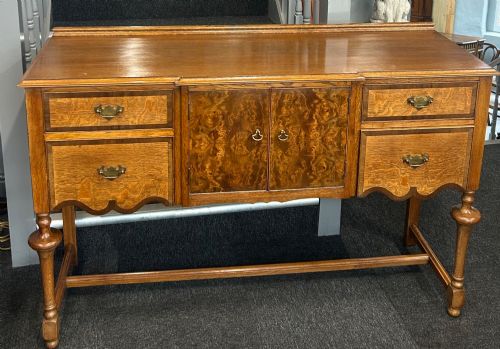
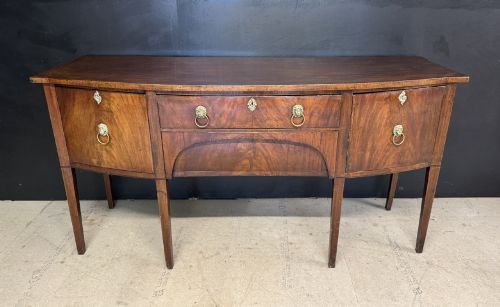
A vintage serving sideboard combines the practical duties of a server, buffet, or dresser base with the fitted proportions of dining room furniture. These pieces provide surface area for food preparation alongside storage in drawers and cupboards.
The selection ranges from Georgian and Regency mahogany designs to Edwardian inlaid examples, rustic oak pieces, and Art Deco walnut creations. Buyers encounter everything from formal pedestal sideboards to simpler painted servers and serving tables.
Origins stretch from the nineteenth century through the Edwardian era into the nineteen-thirties, with English country, Sheraton Revival, and Arts and Crafts styles appearing frequently across the inventory.
Materials and construction
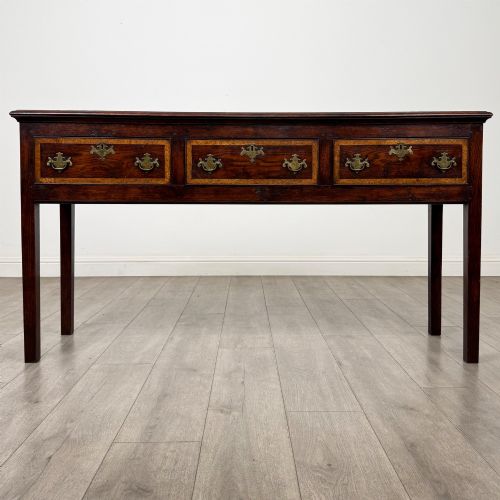
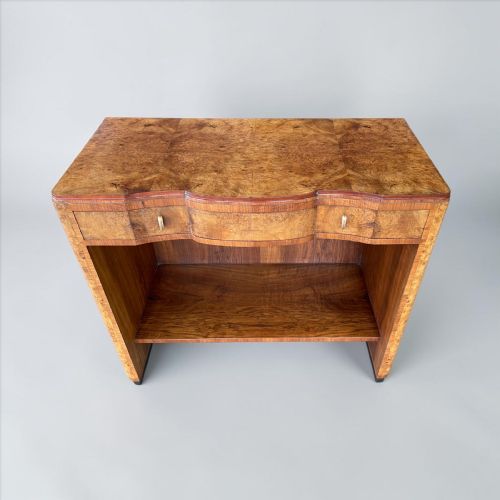
Cabinet makers relied primarily on mahogany, oak, and walnut, often accentuating the surfaces with burr walnut veneers, satinwood stringing, or brass handles and gallery rails. Pine and cherrywood served for regional pieces and country furniture.
Metal items utilise silver plate, copper, and pewter, reflecting traditional manufacturing techniques from firms like James Deakin and Liberty and Co. Timber pieces display dovetail joints, inlaid detailing, and hand-carved ornamentation.
Vintage Serving Sideboard Retail Price Guide 2026
Typical asking prices for vintage serving sideboard among the pieces listed under this phrase on Sellingantiques today, from the lower quarter to the upper quarter. They describe what is for sale here now, not the wider market.
Some serving items carry the evidence of decades of Victorian afternoon teas, quietly holding their polished metal shine through the generations.
Assessing quality and craftsmanship
The distinction between standard items and superior examples lies in the selection of timber and the precision of the cabinet work. Matched veneers, crisp inlay work, and robust internal framing separate workshop pieces from mass-produced alternatives.
Proportion and decorative restraint dictate the aesthetic hierarchy. Pieces following documented design traditions, such as those after George Hepplewhite or produced by Maurice Adams and Epstein, show superior handling of scale and material.
James Deakin·Maurice Adams·Hugh Wallis·Liberty and Co·Padley Parkin·Epstein
The Vintage Serving Sideboard Glossary
- Pedestal sideboard
- A form featuring distinct pedestals flanking a central section, common in Georgian and Regency periods. These units provide substantial storage and strong architectural presence.
- Dresser base
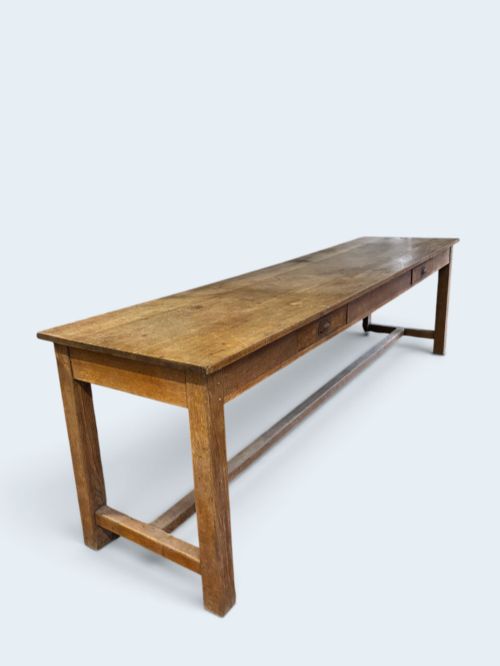
- A low wooden unit with drawers and cupboards, utilised originally in country houses for food preparation and serving. They typically feature solid oak or pine construction.
- Gallery tray
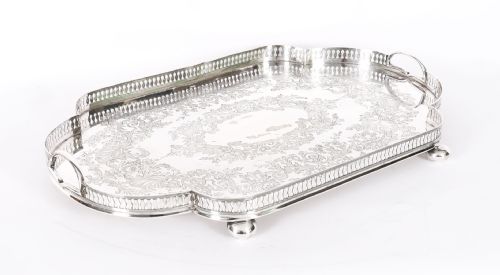
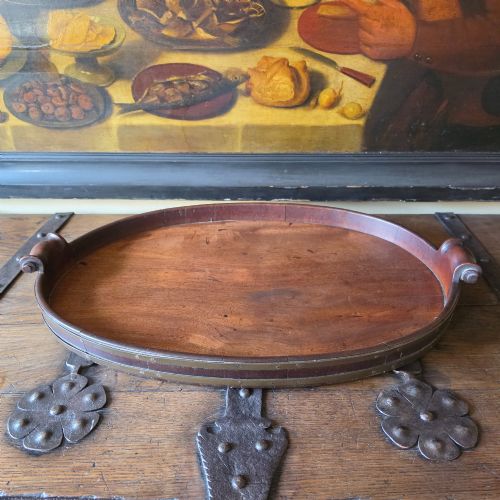
- A serving tray fitted with an elevated raised rim or metal rail around the edge to prevent items sliding. Edwardian examples often incorporate silver plate and pierced decoration.
- Enfilade
- A long sideboard or cabinet format associated with French dining furniture. They often incorporate marble tops and carved oak panels.
- Inlay
- A decorative technique where contrasting timbers or materials are inserted into the primary wood surface. Sheraton Revival and Edwardian pieces frequently use this method for geometric borders.
Vintage Serving Sideboard: Frequently Asked Questions
How do I choose the right size sideboard?
Measure your dining room floor space carefully, allowing adequate clearance for drawers to open fully and guests to circulate around the furniture during meals.
Consider the visual weight of the timber against your existing dining table and chairs to maintain balanced proportions in the room.
Were these sideboards used for dining?
These pieces served as staging surfaces for dishes, cutlery, and glassware before service, keeping the dining table clear of clutter.
Lower cupboards and drawers accommodated linen and heavy serving platters when meals concluded.
How do I care for antique mahogany timber?
Dust surfaces regularly with a soft cloth and apply quality beeswax periodically to nourish the grain and maintain the natural lustre.
Keep wooden furniture away from direct heat sources and strong sunlight to prevent the timber from drying out or fading over time.
What is the difference between a server and a sideboard?
Servers generally present a lighter, more compact profile with fewer cupboards, designed specifically for holding dishes during a meal.
Sideboards offer more extensive storage capacity with deeper drawers and larger cabinet spaces for household items.