

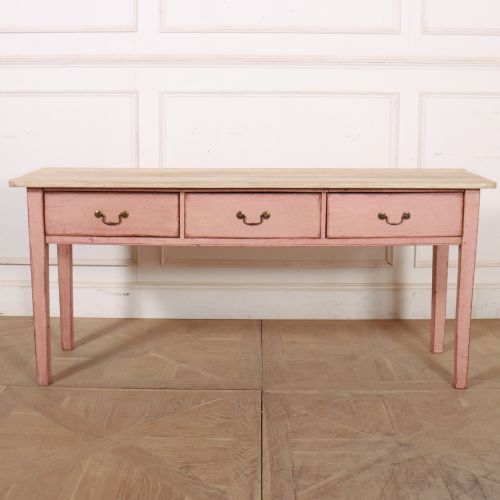
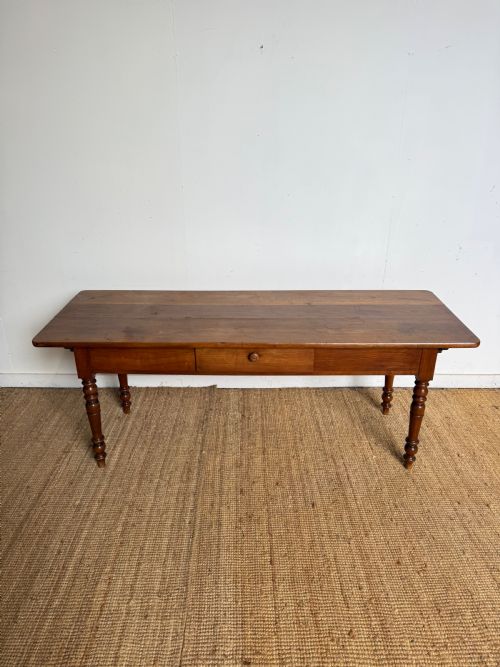
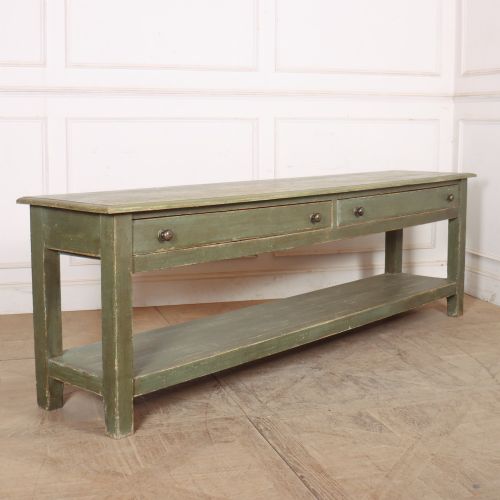
Vintage Serving Console
A vintage serving console bridges the gap between dining room utility and architectural presence, offering a surface for display and hospitality.
Vintage Serving Console
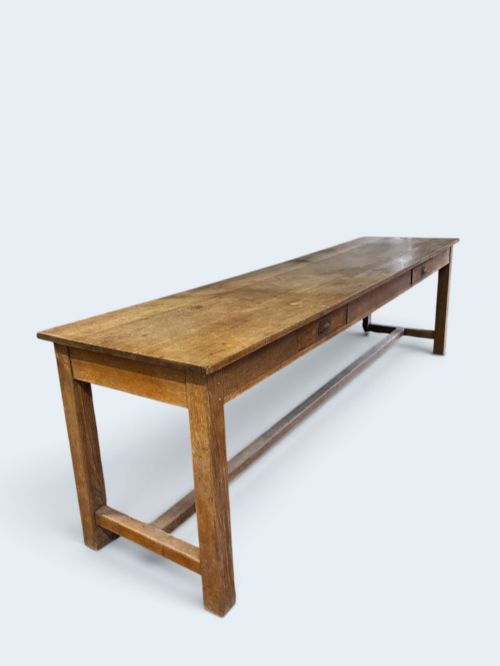
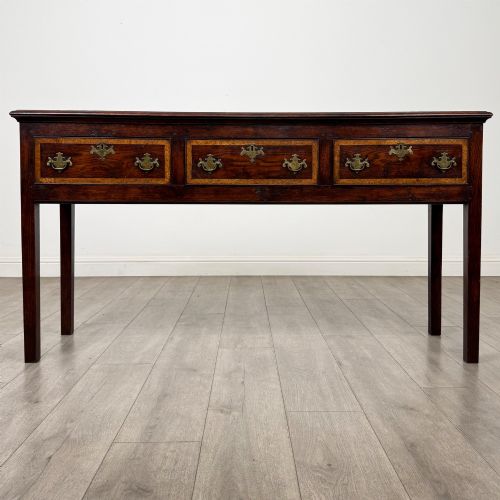
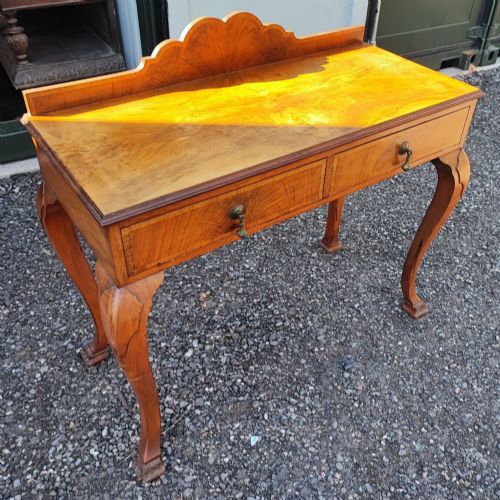
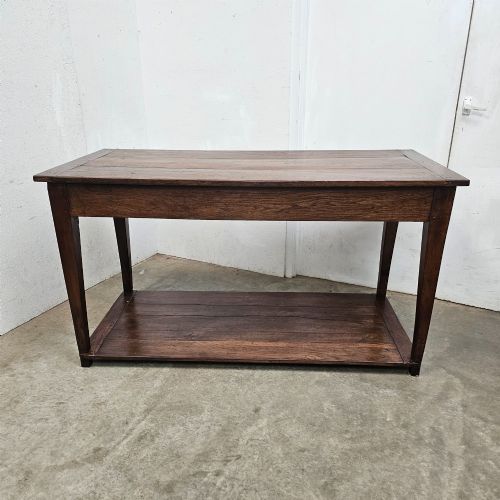
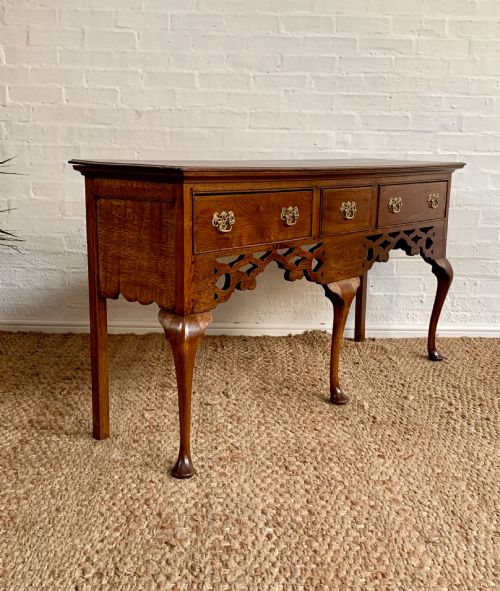
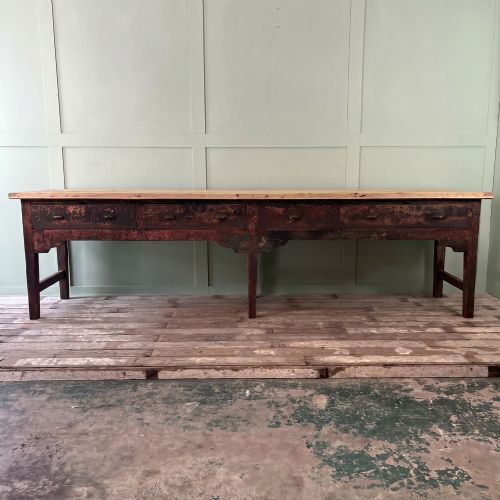
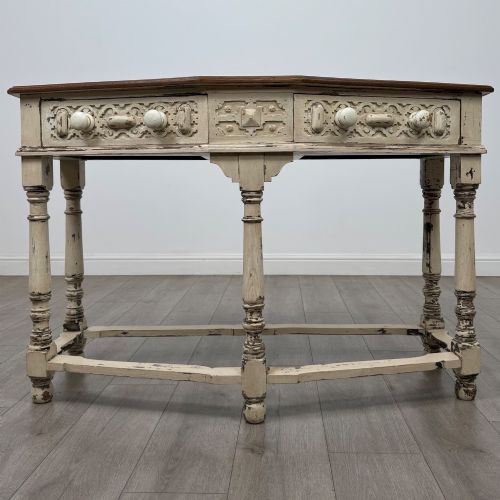
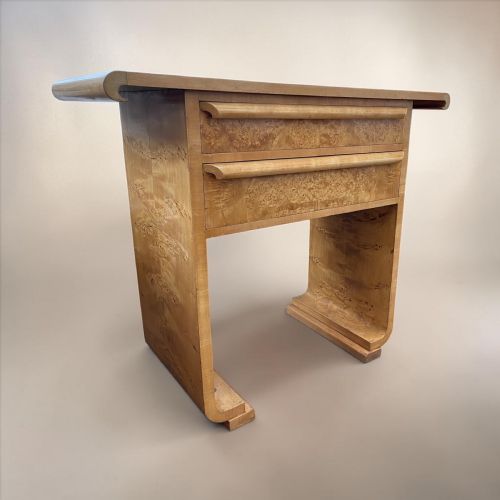
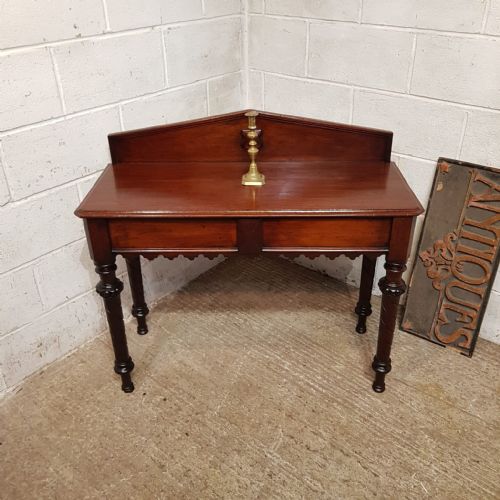
A vintage serving console encompasses practical dining room servers, dresser bases, and hall tables drawn from the nineteenth and early twentieth centuries. These forms merge the functional height of a sideboard with the shallow footprint of a console, designed to stand against a dining room or hallway wall.
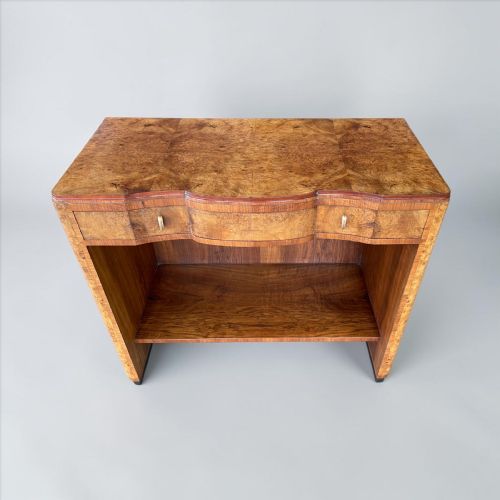
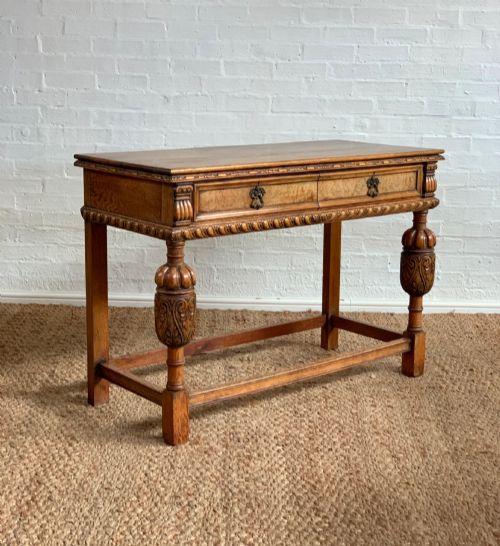
The pieces appearing on this page span diverse stylistic revivals, including Jacobean, Edwardian, and Art Deco interpretations. Oak, mahogany, and walnut dominate the structural choices, alongside painted pine and cherrywood variants.
Makers and workshops range from standard cabinetmakers to notable retailers and designers like Maurice Adams, Beresford and Hicks, and Fortnum and Mason. Regional country house pieces and French drapers tables frequently cross over into this category.
Construction and materials
Cabinetmakers relied heavily on solid hardwoods like oak, mahogany, and walnut for primary frames and drawer linings, often utilising burr walnut veneers for decorative surfaces. Pine and cherrywood served both regional English and French workshop traditions.
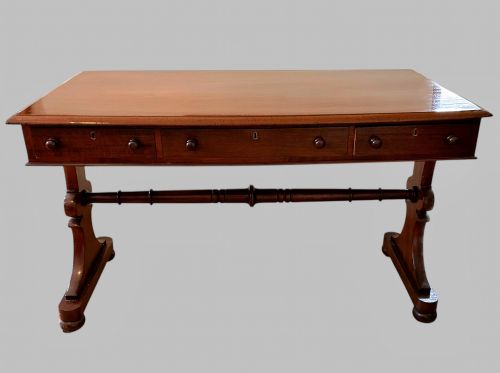
Joinery methods reflect traditional hand-cut techniques such as dovetailing in drawers and pegged mortise and tenon joints in heavier oak refectory and dresser frames. Applied carvings, bobbin turnings, and brass hardware complete the construction of these tables.
Listings feature oak, mahogany, walnut, and pine across Victorian, Edwardian, and Art Deco styles.
Judging quality and integrity
Quality rests upon the selection of timber and the crispness of hand-carved detailing, distinguishing standard utility furniture from bespoke commissions by notable makers. Timber thickness in tops and drawer construction reveals whether a piece was built for heavy domestic service.
Originality of surface finish and hardware also dictates value, where untouched patinated oak or polished mahogany holds greater integrity than later alterations. Structural stability in legs, stretchers, and metamorphic mechanisms separates superior examples from lesser pieces.
Maurice Adams·Beresford and Hicks·Fortnum and Mason·Epstein
The Vintage Serving Console Glossary
- Dresser base
- The lower section of a traditional kitchen or dining dresser featuring cupboards and drawers, frequently utilised as a serving surface.
- Potboard
- An open lower shelf fitted beneath a serving table, traditionally used for storing pots and serving dishes.
- Metamorphic
- Describing furniture designed to transform its function, such as a table that converts into a buffet or server.
- X frame stretcher
- Intersecting diagonal stretchers beneath a table that provide lateral stability while adding a decorative architectural element.
- Bobbin turning
- A form of woodturning characterised by a series of rounded spheres or discs resembling bobbins, common on seventeenth-century revival frames.
Vintage Serving Console: Frequently Asked Questions
What is a vintage serving console?
A vintage serving console is a functional table or low sideboard designed for dining room service, featuring shallow proportions to sit flush against a wall.
These pieces draw from nineteenth and early twentieth-century traditions, including Georgian revivals, Edwardian oak designs, and French drapers tables.
How were serving consoles used?
Historically, these tables held dishes, glassware, and silverware during large meals when the main dining table lacked space.
They also served as decorative sideboards in hallways and dining rooms for displaying silver, plants, and ceramics.
Are these tables suitable for daily use?
Solid hardwood construction in oak, mahogany, and walnut provides the durability required for everyday dining room or hallway service.
Their sturdy frames and practical drawer storage make them ideal for contemporary living spaces needing surface area.
How do I identify the period?
Period identification relies on matching wood types, hardware styles, and construction methods to eras like the Victorian, Edwardian, or Art Deco periods.
Stylistic revivals often borrow earlier motifs, such as Jacobean linenfold or Gothic carvings, requiring careful examination of joinery.