





Vintage Serpentine Server
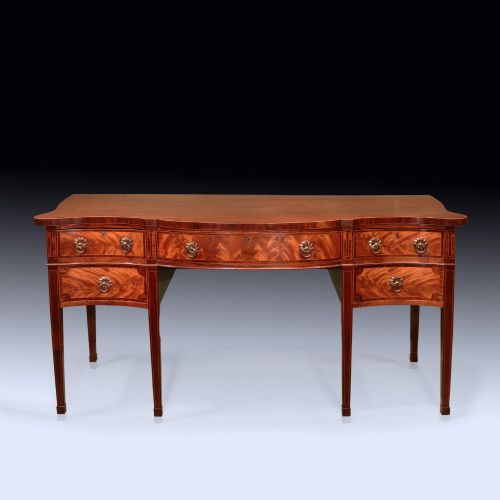
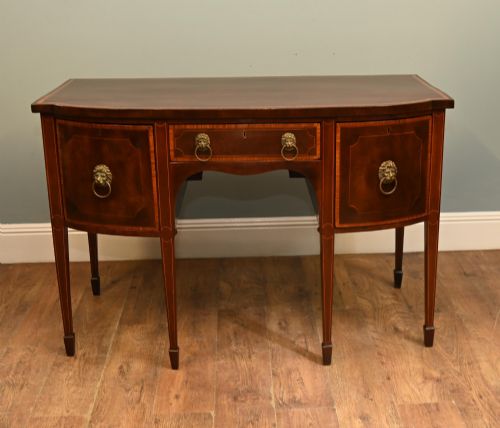
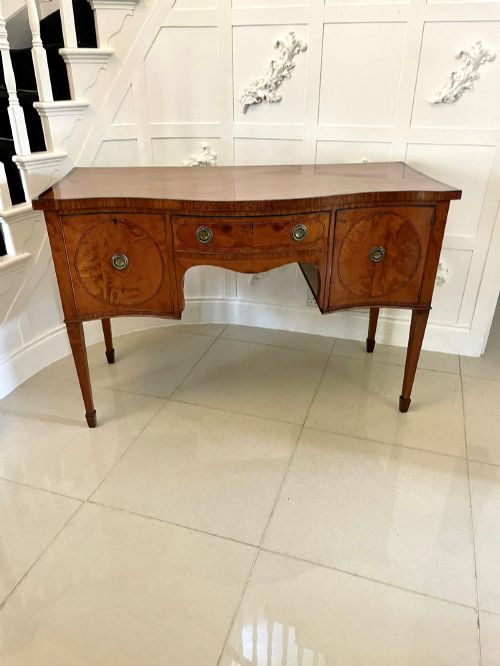
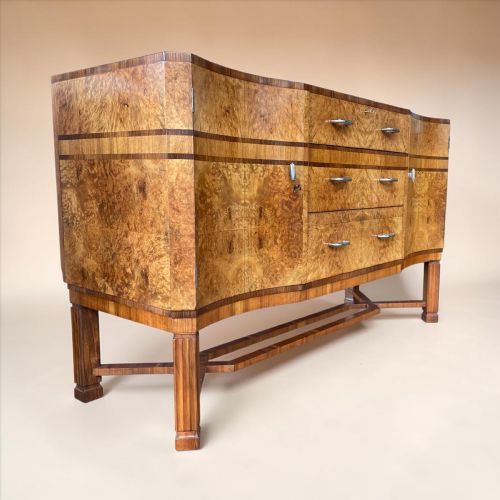
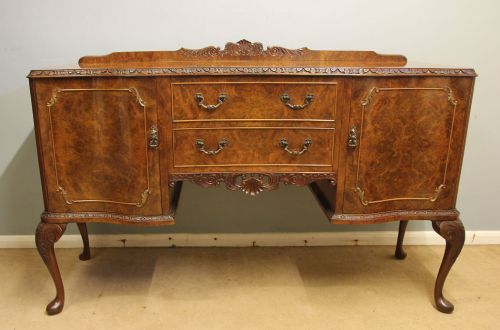
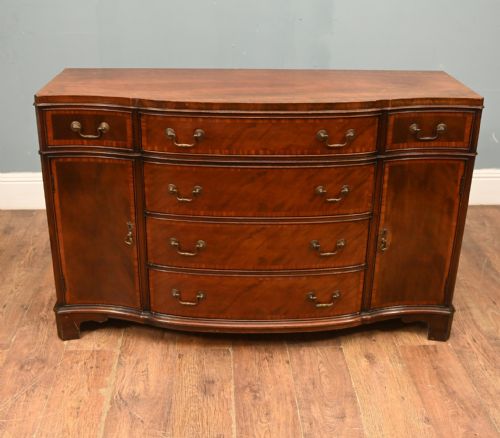
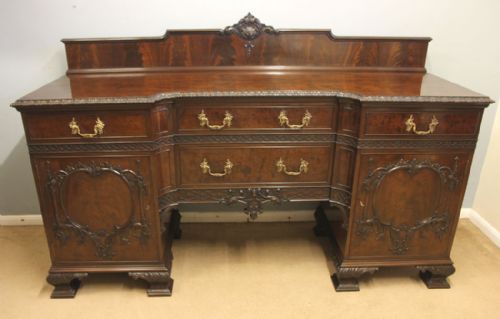
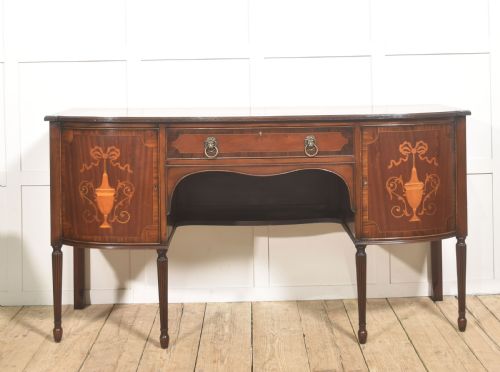
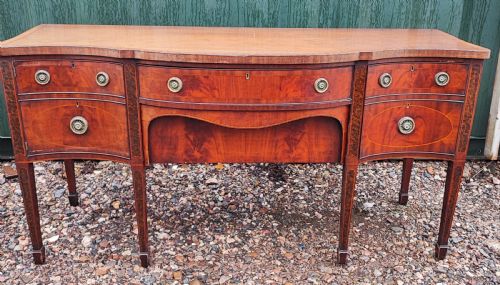
A vintage serpentine server brings sweeping curves and rich mahogany timber to a dining room, offering both practical surface space and distinct period character.
Vintage Serpentine Server
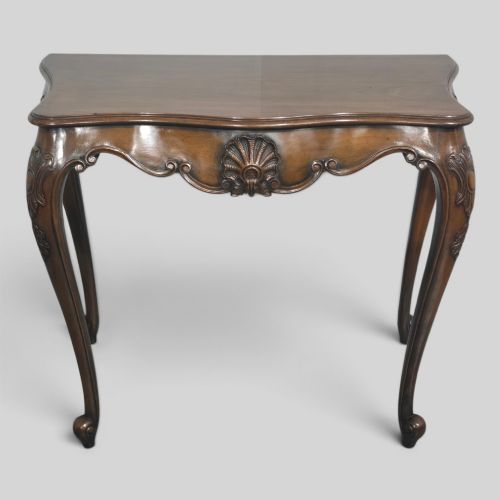
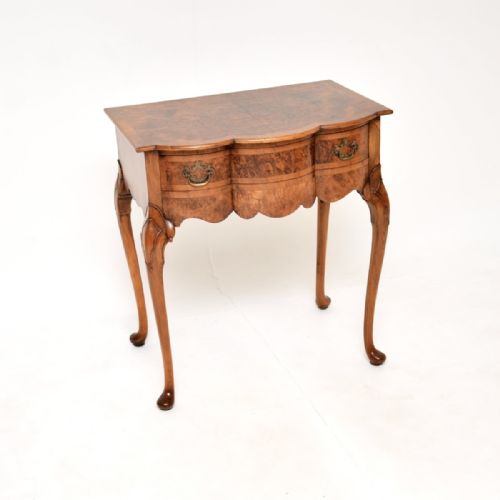
A vintage serpentine server combines the undulating, multi-curved front profile characteristic of 18th-century cabinet making with the sturdy construction of later revival periods. When you search for a vintage serpentine server, you encounter forms that function primarily as sideboards, serving tables, and console cabinets for dining and reception rooms.
The examples gathered here draw predominantly from Edwardian and early 20th-century production, alongside occasional 19th-century and 18th-century pieces. Makers of these periods adopted Georgian, Sheraton, Chippendale, and Queen Anne revival styles to shape large mahogany and walnut timbers into graceful serving furniture.
Most pieces present a generous surface for food and drink presentation above enclosed storage cupboards or drawers. The distinctive serpentine contour gently bows outward at the centre and curves inward toward the flanks, creating a dynamic visual rhythm that straight-fronted sideboards lack.
Materials and construction methods
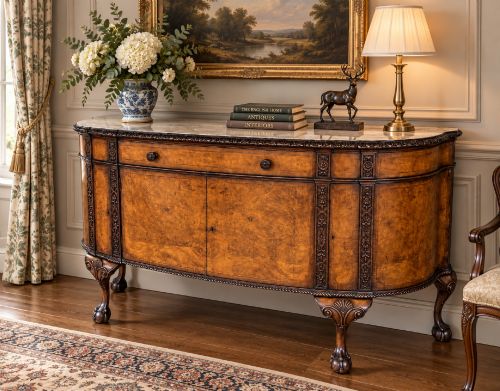
Craftsmen relied heavily on solid mahogany and figured walnut, often selecting burr walnut veneers for striking grain patterns on drawer and cupboard fronts. Hardwood carcases provide structural stability, whilst lighter timbers such as satinwood and boxwood supply delicate contrasting stringing and decorative inlay.
Shaping the characteristic serpentine curve required skilled timber bending and precise sawing of thick solid wood or laminated blocking. Cabinet makers applied fine hand-cut dovetails to drawer construction and fitted decorative brass handles and backplates to complete the facade.
Vintage Serpentine Server Retail Price Guide 2026
Typical asking prices for vintage serpentine server among the pieces listed under this phrase on Sellingantiques today, from the lower quarter to the upper quarter. They describe what is for sale here now, not the wider market.
One walnut sideboard thoughtfully arrives with its own twelve-piece cutlery set, ready for an impromptu dinner party.
Evaluating craftsmanship and detail
The distinction between standard production and top-tier execution rests in the selection of timber veneers and the intricacy of the inlay work. Finer pieces display matched burr walnut figures or elaborate satinwood and boxwood banding that follows the difficult contours of the curved front without buckling.
Structural integrity also separates individual examples, particularly in how the curved drawers and doors operate within their frames over decades of use. Superior cabinets maintain tight corner joints, smooth drawer runners, and heavy brass hardware that complements the substantial weight of the hardwood carcase.
Epstein
The Vintage Serpentine Server Glossary
- Serpentine
- A furniture front shaped with a central convex curve flanked by two concave curves. This undulating profile requires advanced woodworking skill to execute properly.
- Inlay
- A decorative technique where contrasting pieces of wood such as satinwood or boxwood are inserted into recesses in the primary mahogany or walnut surface.
- Revival
- A design movement where late 19th-century and early 20th-century makers deliberately copied historical Georgian, Chippendale, and Sheraton aesthetics.
- Sideboard
- A long dining room cabinet designed for serving food, storing cutlery, and displaying tableware. These pieces often feature cupboards flanking central drawers.
- Dovetail
- A traditional interlocking woodworking joint used to construct sturdy drawer corners. Hand-cut variations indicate older, higher-quality cabinet making.
Vintage Serpentine Server: Frequently Asked Questions
How do I style a serpentine server in a modern dining room?
Pair the sweeping mahogany curves of the server with a simple, uncluttered wall and minimal surrounding furniture to let the undulating front profile stand out. Use the top surface to display ceramic serving pieces or a low tray rather than cluttering the wood with too many small decorative items.
Allow enough clearance around the curved flanks so the distinctive shape remains fully visible from multiple angles in the room. The rich timber tones work well alongside both neutral painted walls and exposed plaster finishes.
What is the difference between a server and a sideboard?
Servers generally emphasise a lighter, more compact console or table format designed primarily for presenting food during meals. Sideboards frequently incorporate heavier enclosed cupboards and multiple deep drawers for storing heavy crockery and linens.
In revival pieces, the distinction often blurs as cabinet makers adapted traditional proportions to suit Edwardian and 20th-century dining spaces. Both forms utilise the serpentine front profile to soften the visual weight of large timber furniture.
How do I care for antique mahogany and walnut wood?
Protect the timber surfaces by dusting regularly with a soft, dry cloth and avoiding silicone-based sprays that build up a greasy film over time. Apply a quality beeswax polish sparingly once or twice a year to nourish the grain and maintain a natural lustre.
Keep these cabinets away from direct heat sources and strong sunlight to prevent the mahogany or burr walnut veneers from drying out and cracking. Using felt pads under objects placed on the serving surface prevents scratches to the polished finish.
How can I tell a 19th-century server from a 20th-century revival piece?
Examine the interior drawer construction and secondary woods used inside the carcase for clues regarding manufacturing age. 18th and 19th-century pieces often display irregular hand-cut dovetails and timber choices typical of regional British workshops.
Revival pieces from the Edwardian era or the 1930s frequently feature machine-planed internal components whilst mimicking earlier Georgian or Sheraton aesthetic styles. Inspecting the backboards and lock mechanisms provides further evidence of the specific period of manufacture.