
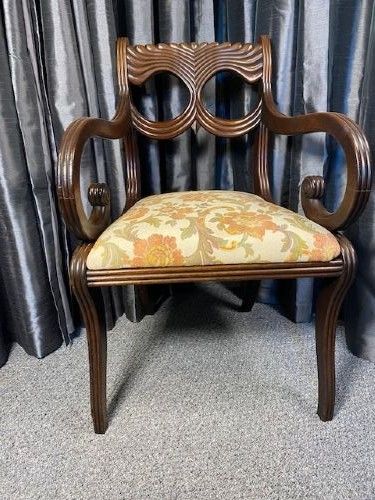


Vintage Scroll Arm Chair
A vintage scroll arm chair brings classic form and deep seating into a room, drawn from nineteenth-century and later traditions.
Vintage Scroll Arm Chair
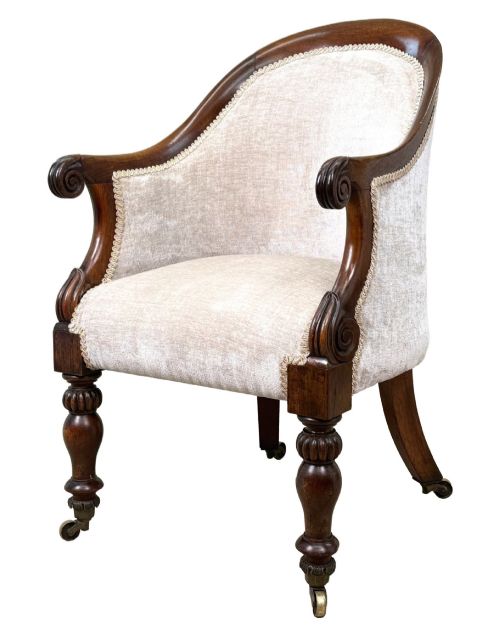
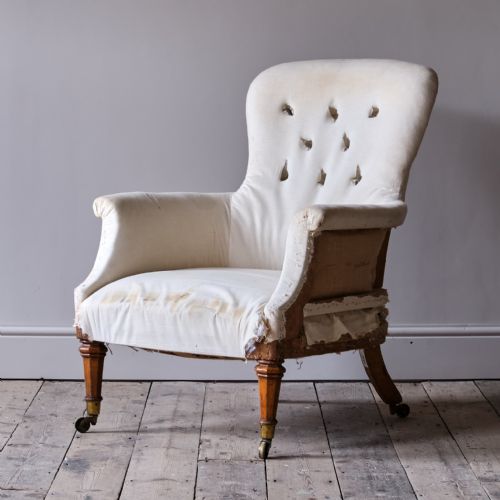
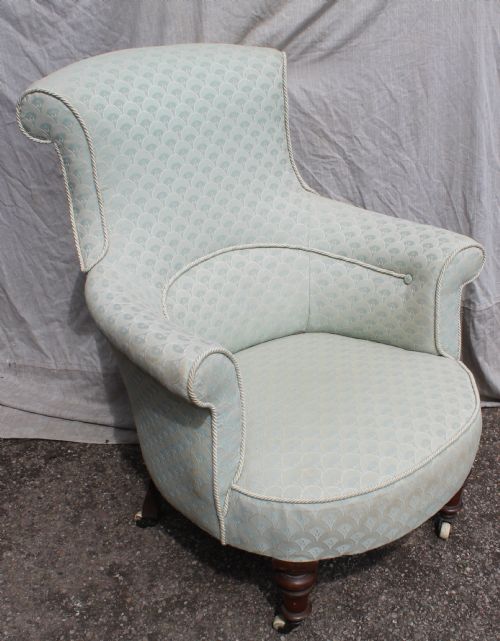
When you search for a vintage scroll arm chair, you encounter a variety of seating forms spanning the nineteenth century, the Regency and Victorian eras, and the 1920s. These pieces include library armchairs, carver chairs, elbow chairs, and deep-seated country house designs.
The most common versions on this page are mahogany and rosewood armchairs featuring upholstered seats and distinctive swept or scrolled arm supports. They range from formal Regency desk chairs to relaxed Edwardian and country house seating.
How they were made
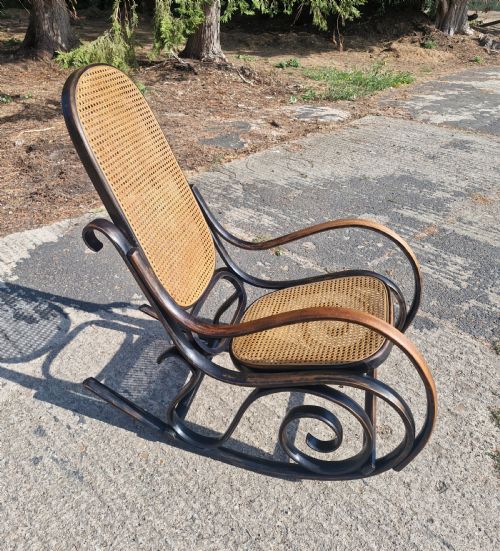
Cabinet makers utilised dense hardwoods such as mahogany, rosewood, and ebonised timber to build the structural frames, often incorporating brass inlay, gilding, or bentwood techniques. These hardwoods provided the necessary strength for sweeping arm designs and sabre legs.
Upholstery forms an essential part of the construction, utilising fabrics, leather, velvet, and traditional stuffing to create supportive deep seats and padded arms.
Golfers take note: this collection includes armchairs originating directly from the Royal and Ancient Golf Club of St Andrews.
What varies in quality
The distinction between tiers rests upon the selection of timber and the precision of the joinery in the frame. Finer examples display carefully figured mahogany or rosewood alongside refined brass inlay and well-executed scrollwork.
Proportion and comfort also dictate standing, as pieces with deeply sprung seats and balanced frames demonstrate superior craftsmanship from their respective periods.
Howard and Sons·Hampton and Sons·Gillows
The Vintage Scroll Arm Chair Glossary
- Carver chair
- An armchair, usually with wooden arms, designed to match a set of dining chairs. These often served at the head of a table or as a desk chair.
- Bergere
- An enclosed upholstered armchair with wooden framing exposed around the sides and back. The back and panels are frequently filled with cane work.
- Sabre leg
- A curved, outwardly tapering chair leg resembling a cavalry sabre. This form appears frequently on Regency furniture.
- Tub armchair
- An upholstered seat where the arms curve continuously into a rounded back. This shape encloses the sitter for added comfort.
- Ebonised
- Wood treated with a dark stain or finish to imitate ebony. This technique gained popularity during the Victorian period for accentuating frames.
Vintage Scroll Arm Chair: Frequently Asked Questions
How do I identify a Regency period chair?
Regency chairs typically display classical influences, utilising mahogany, brass inlay, and sabre legs. These elements reflect the early nineteenth-century design aesthetic.
Maker styles from this era often echo classical Greek and Roman forms, prioritising clean lines alongside polished hardwoods.
Where were these armchairs used historically?
These seating pieces served primarily in libraries, studies, and drawing rooms of large country houses and urban residences. They were built to accommodate reading, writing, or resting.
Deep-seated versions provided comfort in private sitting rooms, while carver chairs functioned at desks or dining tables.
What timber is most common?
Mahogany appears most frequently in the framework of these chairs, valued for its durability and rich grain. Rosewood also occurs regularly in finer nineteenth-century examples.
Other materials include ebonised hardwoods and bentwood, depending on the specific decade of production.