





Vintage Sauce Boat
A vintage sauce boat brings a graceful pour to the table, and these pieces span centuries of silver, porcelain and ironstone.
Vintage Sauce Boat
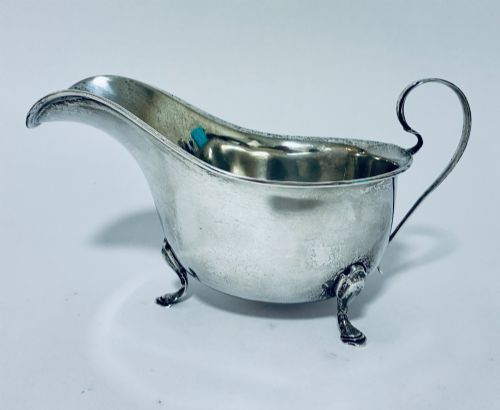
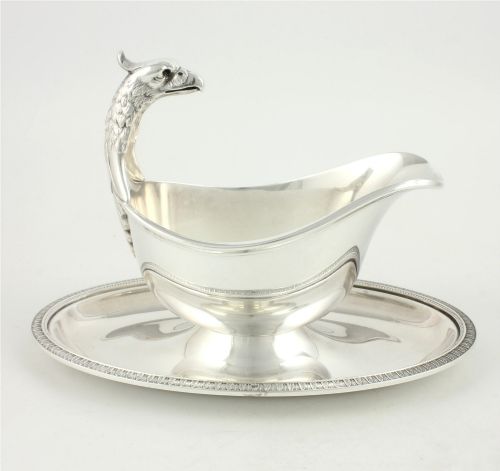
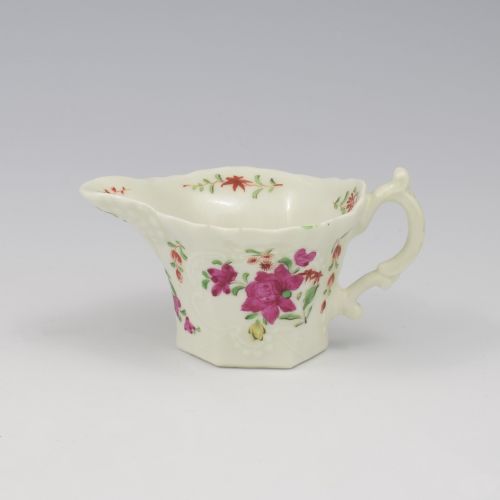
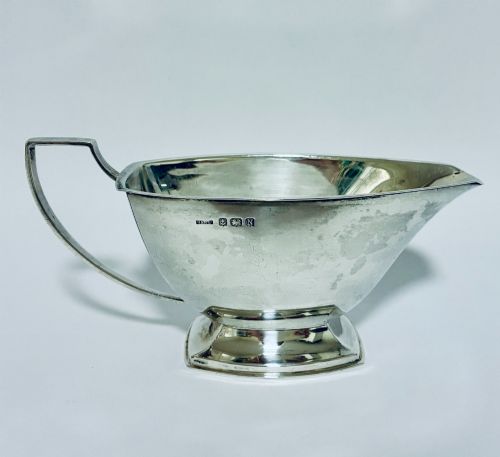
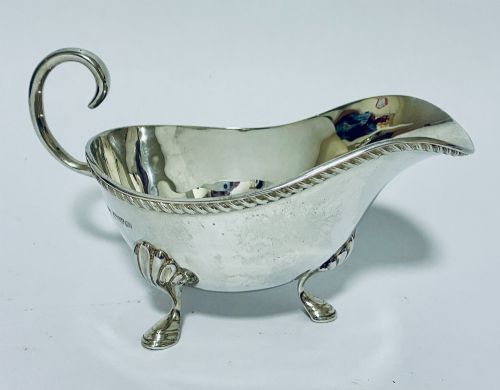
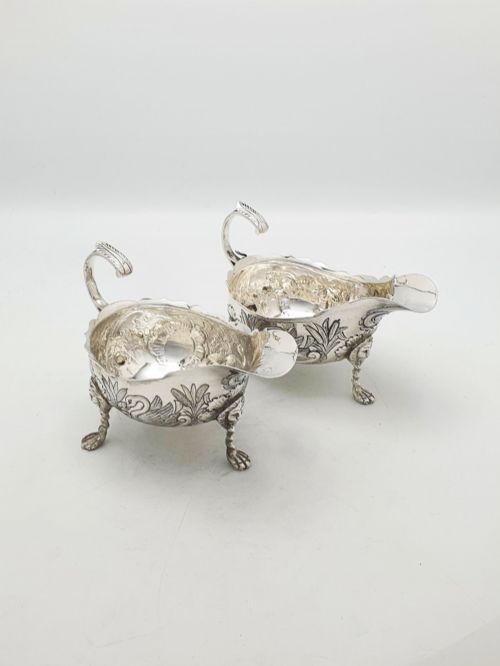
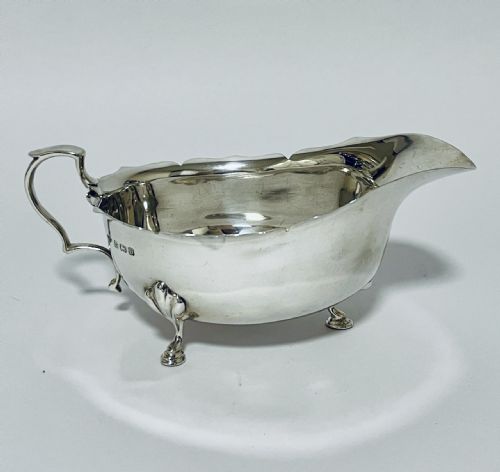
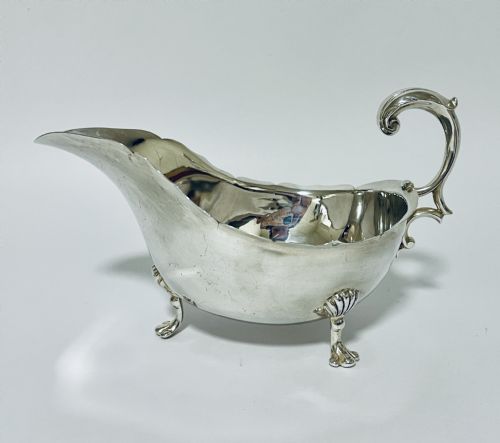
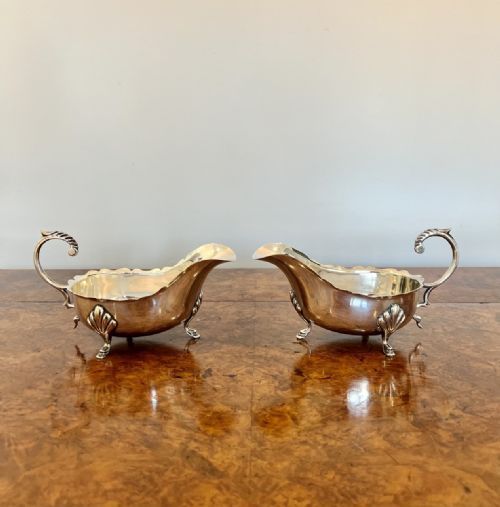
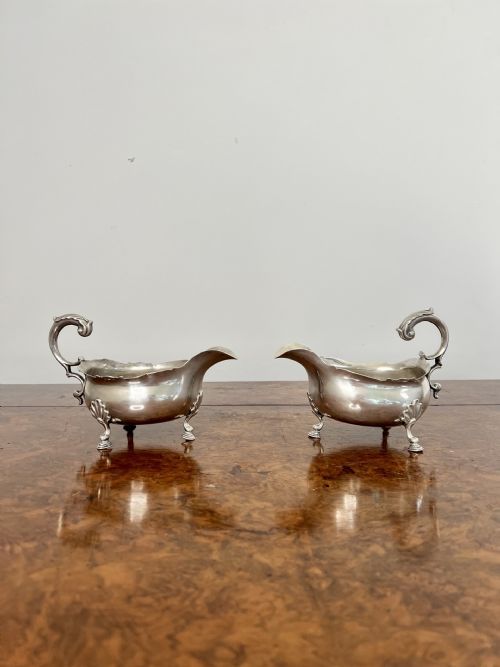
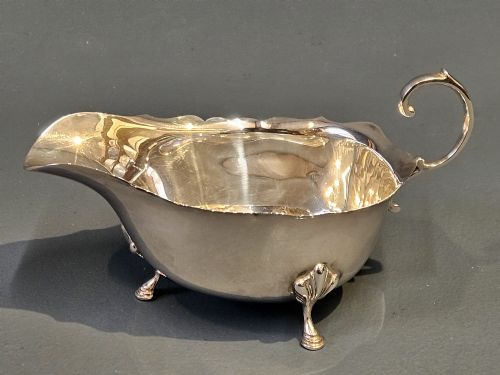
A vintage sauce boat serves gravies, creams and condiments, taking shapes from George II curves to Art Deco angles. The examples on this page range from Georgian sterling silver vessels to Edwardian plated pairs and 18th century porcelain.
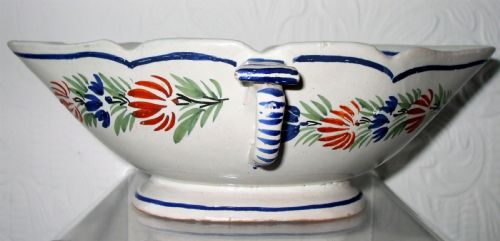
Porcelain versions include Worcester blue and white patterns and French faience double sauceboats. Metal varieties encompass sterling silver, silver plate and ironstone tureens equipped with ladles.
Origins stretch across English workshops, Scottish smiths, French potteries and German manufacturers like Meissen. Buyers encounter single vessels alongside matched pairs and complete dining services.
Materials and construction methods
Silversmiths hammered and cast sterling silver and Old Sheffield Plate, often adding embossed decoration, Celtic motifs or cast scroll feet. Silver plated items utilise base metals coated with a layer of silver.
Potters shaped porcelain and ironstone on wheels or in moulds before applying hand-painted blue and white glazes, enamel colours and gilding. Faience pieces display tin-glazed earthenware techniques typical of French production.
Vintage Sauce Boat Retail Price Guide 2026
Typical asking prices for vintage sauce boat among the pieces listed under this phrase on Sellingantiques today, from the lower quarter to the upper quarter. They describe what is for sale here now, not the wider market.
Listings feature silver, silver plate, ironstone, and porcelain across Georgian, Victorian, Edwardian, and Art Deco periods.
Design crispness and maker execution
Quality rests in the weight of the metal, the crispness of chased and embossed detailing, and the balance of the handle and spout. Superior silver pieces maintain clear hallmarks and steady casting.
Ceramic quality shows in the sharpness of blue and white transfer printing, the delicacy of hand-painted brushwork, and the evenness of the glaze without firing flaws.
Christofle Gallia·Padley Parkin And Staniforth·James Welch·Theodore B Starr·Walker And Hall
The Vintage Sauce Boat Glossary
- Sauce boat
- A small open vessel with a handle and spout designed for serving gravies and sauces at table. They often rest on attached stands or three small feet.
- Sterling silver
- An alloy containing 925 parts of silver per thousand, widely utilised for domestic tableware and marked with assay office symbols.
- Old Sheffield plate
- A material made by fusing a sheet of silver to a copper core before rolling and shaping, produced before electroplating was invented.
- Ironstone
- A dense, durable type of earthenware patented in the 19th century as a robust alternative to porcelain for heavy-use tableware.
- Faience
- European tin-glazed earthenware adorned with coloured metal oxides, frequently associated with regional French potteries.
Vintage Sauce Boat: Frequently Asked Questions
How do I use a vintage sauce boat?
These vessels hold warm gravies, melted butter or dessert sauces to pass around the dining table during meals.
Many feature integrated spouts and comfortable handles designed for a steady pour without drips.
What is the difference between a sauce boat and a tureen?
A sauce boat remains open with a designated spout for direct pouring into individual plates or bowls.
Sauce tureens include a matching lid and often a ladle, keeping liquids warmer for longer periods.
How do I care for antique silver sauce boats?
Wash silver pieces by hand in warm soapy water using a soft cloth, then dry them thoroughly immediately after.
Avoid abrasive cleaners and dishwasher cycles that strip away fine chased details and historical patination.
Are porcelain sauce boats safe for daily use?
Porcelain and ironstone examples withstand regular dining use if handled carefully and washed by hand.
Older glazed wares with delicate hand-painted enamel or gold leaf require extra attention to prevent surface wear.