



Vintage Satinwood Credenza
A vintage satinwood credenza brings pale golden timber and refined revival design into a room, offering both generous storage and striking visual lightness.
Vintage Satinwood Credenza
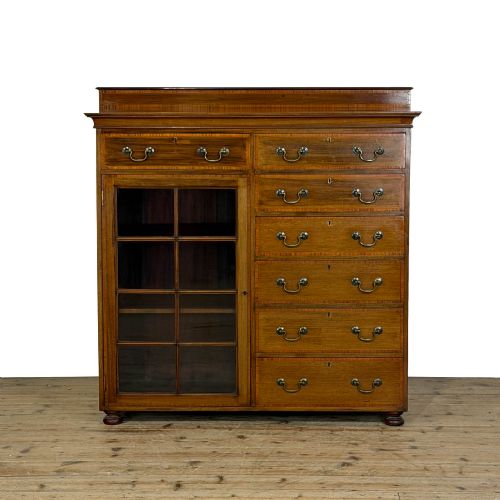
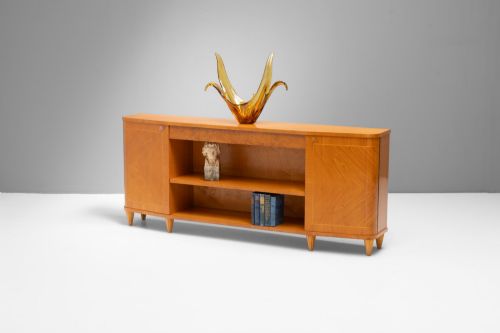
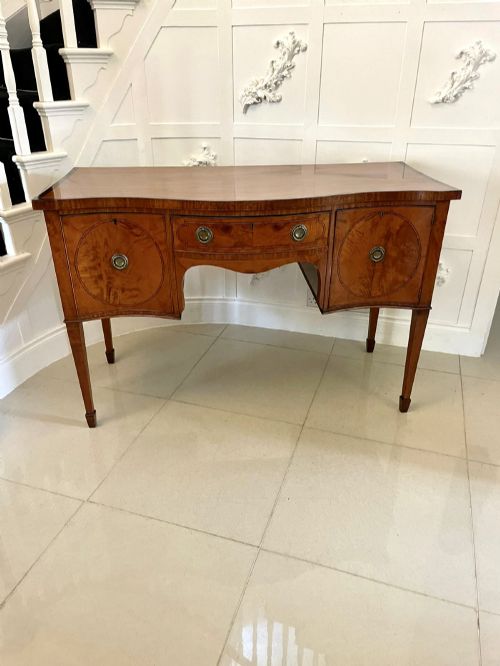
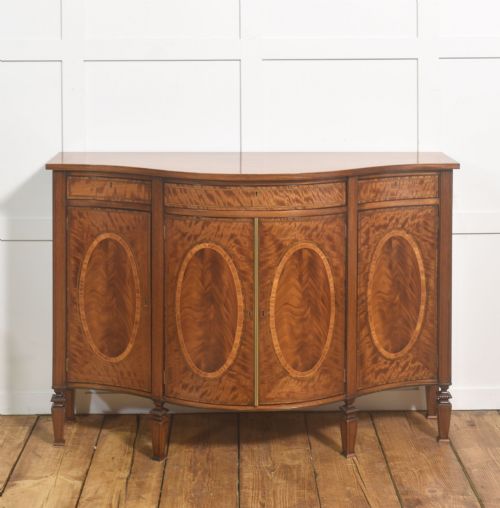
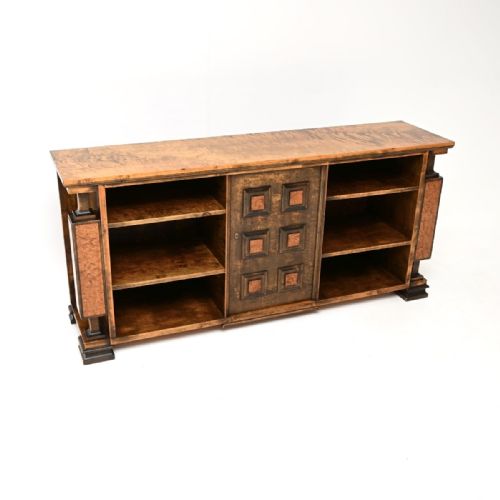
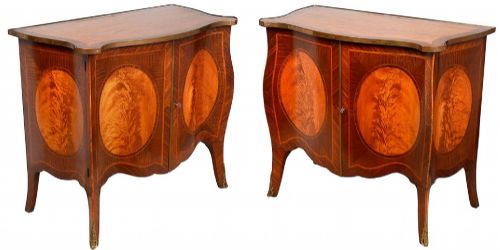
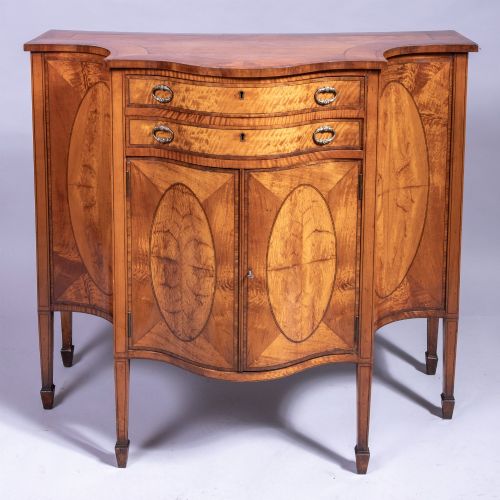
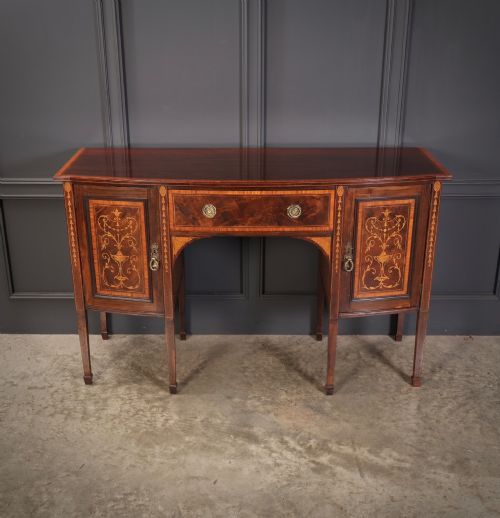
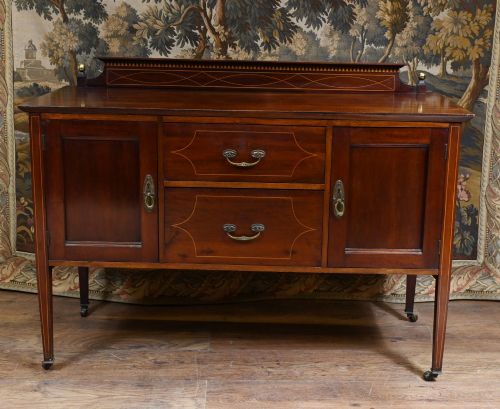
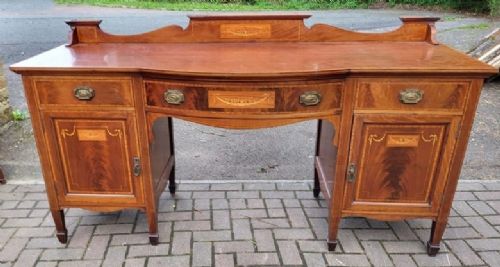
A vintage satinwood credenza encompasses a variety of large storage furniture, most frequently appearing on this page as sideboards, side cabinets, and display cabinets from the Victorian, Edwardian, and Art Deco eras. Buyers searching for this phrase encounter pieces that lean heavily on Sheraton Revival and neoclassical design principles, often shaped with serpentine or bow-front profiles.
The materials span from solid satinwood and satinwood veneer to mahogany carcasses enriched with satinwood inlay, boxwood stringing, and marquetry motifs. Alongside these traditional revival pieces, related forms such as commodes, washstands, and occasional bookcases bridge the gap between utilitarian storage and decorative display.
Origins stretch across the late nineteenth century into the early decades of the twentieth century, capturing periods when cabinetmakers revived eighteenth-century elegance with fresh precision. Whether standing on tapered legs or massive bases, these cabinets serve as focal points in dining rooms and drawing rooms alike.
Materials and construction methods
Makers constructed these cabinets using sturdy underlying timbers like mahogany or walnut, then applied figured satinwood veneers and intricate boxwood stringing to the visible surfaces. Marquetry panels and hand-painted details frequently adorned the doors and drawers, creating contrast against the pale golden ground of the satinwood.
Brass mounts, galleries, and handles provided functional accents that complemented the inlaid woodwork, while glass panes were fitted into display cabinet doors. Structural integrity relied on traditional joinery methods adapted to curved serpentine and bow-front forms, ensuring stability across large sideboards and compact commodes.
Listings feature satinwood credenzas and related cabinets spanning the Victorian, Edwardian, and Art Deco periods, utilising mahogany, walnut, and brass alongside satinwood.
Distinctions in craftsmanship and finish
Quality separates cabinets by the crispness of the inlay and the depth of the timber figuring, where dense satinwood veneer and precise boxwood stringing demonstrate superior handwork. Finer examples display meticulous marquetry and hand-painted motifs that remain sharp and integrated into the wood grain.
The structural execution of complex curves, such as serpentine and demi-lune fronts, dictates the grade of the piece, alongside the preservation of original brass hardware and glass. Well-executed secondary timbers and sturdy internal framing separate high-workshop production from standard commercial output.
Collinson and Lock·Edwards and Roberts·Gillows
The Vintage Satinwood Credenza Glossary
- Satinwood
- A dense, lustrous hardwood with a natural golden sheen, frequently utilised for veneers and decorative stringing in revival furniture. It takes a high polish that accentuates its characteristic grain.
- Serpentine
- A front profile characterised by a central convex curve flanked by two concave curves, demanding high skill from the cabinetmaker. This shape appears frequently on high-end sideboards and commodes.
- Marquetry
- The art of applying pieces of veneer to a structure to form decorative patterns and pictures. Makers used contrasting timbers like boxwood and mahogany to create floral or geometric motifs.
- Demi-lune
- A half-moon shape used for the footprint and top of specific console tables and cabinets. These pieces fit flat against a wall while offering curved front profiles.
- Sheraton Revival
- A late nineteenth and early twentieth-century design movement inspired by the neoclassical furniture of George Sheraton. It favours light proportions, satinwood, and delicate inlay work.
Vintage Satinwood Credenza: Frequently Asked Questions
Where should I place a satinwood credenza?
These cabinets suit dining rooms, living rooms, and large hallways where their pale timber can reflect light and anchor the room. They function well against neutral walls that allow the golden tones of the satinwood to stand out.
Ensure the piece sits away from direct heat sources and strong sunlight to protect the veneer and delicate inlay work over time.
How do I clean satinwood veneer?
Dust the surface regularly with a soft, dry cloth to prevent dirt accumulation in the grain and around the stringing. Avoid chemical polishes and excess moisture, which can damage the aged varnish.
Apply a micro-crystalline wax occasionally if the surface appears dry, buffing it gently with a clean cloth to maintain the natural lustre.
What is the difference between a sideboard and a credenza?
While the terms often overlap in modern usage, traditional sideboards focused on dining storage with drawers and cupboards, whereas credenzas historically served display and serving functions. Edwardian and Victorian cabinetmakers often blended these forms, producing side cabinets with glass doors or open shelving.
Review the internal layout and door style of each piece to determine its specific storage capacity.
How do I date a satinwood cabinet?
Examine the secondary timbers inside the drawers, the construction methods used for the joints, and the style of the brass hardware. Pieces from the Victorian and Edwardian periods often show machine-sawn elements alongside hand-finished joinery.
Stylistic cues, such as the proportions typical of Sheraton Revival revivals, help narrow down the production era to the late nineteenth or early twentieth century.