





Vintage Salon Table
A vintage salon table brings effortless French elegance and practical surface space into a modern room, usually taking the form of a low coffee table or an occasional centre table.
Vintage Salon Table
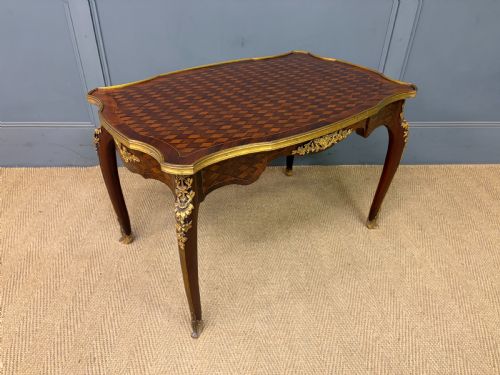
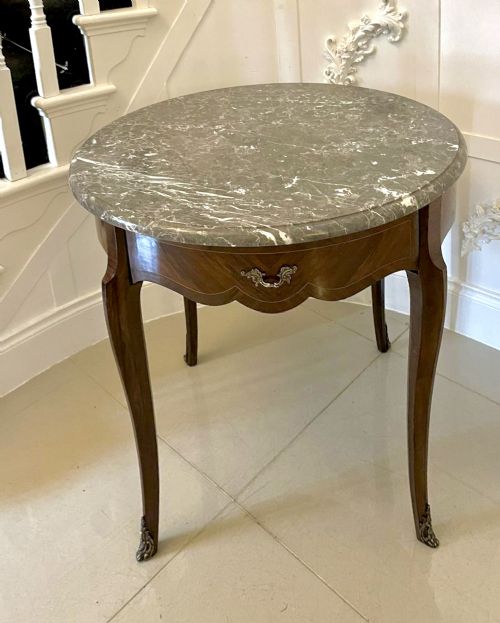
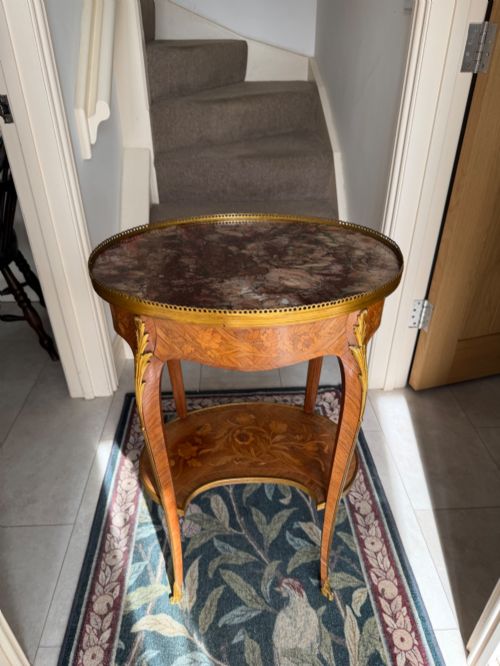
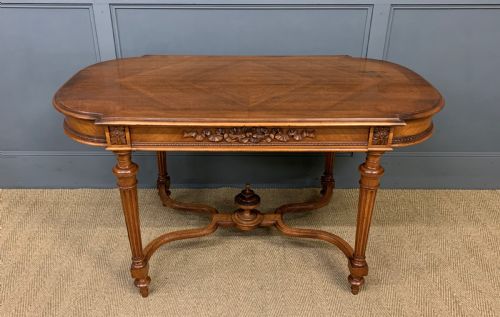
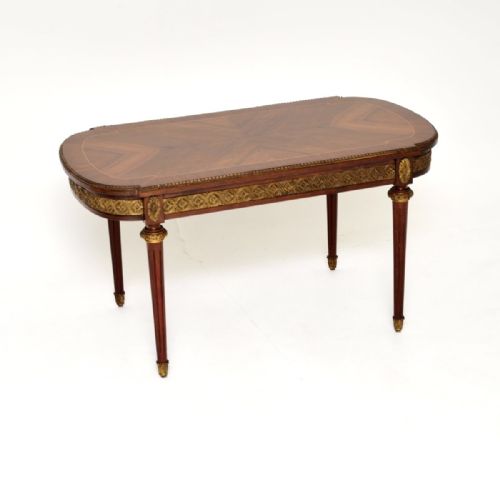
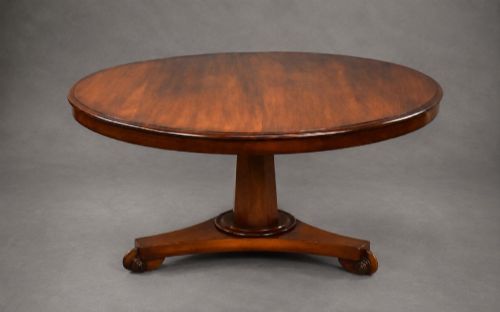
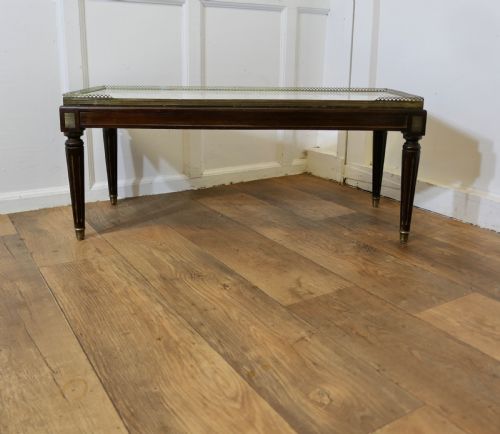
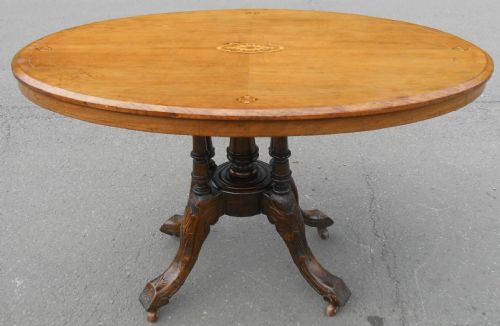
When you search for a vintage salon table, you are looking at small occasional furniture designed for drawing rooms and sitting rooms, drawing heavily on French aesthetic traditions. The examples you are most likely to meet on this page include walnut coffee tables, marble-topped centre tables, and occasional pieces originating from the nineteenth and early twentieth centuries.
These items span periods from the Victorian and Edwardian eras up through the nineteen-thirties, with revivalist designs leaning heavily into Louis XV and Louis XVI styles. Forms range from low coffee tables and nest of tables to circular centre tables and pedestal pieces, reflecting the shifting domestic habits of those decades.
How they were made
The makers of these pieces relied on fine hardwoods such as walnut, mahogany, and kingwood, often enhanced by intricate parquetry and marquetry inlay. Cabinets and tables were frequently fitted with ormolu mounts, cast bronze details, and inset marble slabs that added considerable weight and decorative presence.
Joinery and carving techniques demanded high levels of traditional craftsmanship, particularly for curved cabriole legs, shaped aprons, and circular pedestal structures. Ormolu mounts were meticulously cast and chased before being applied to the timber carcasses, while marble tops were carefully cut, bevelled, and fitted to the frames.
Vintage Salon Table Retail Price Guide 2026
Typical asking prices for vintage salon table among the pieces listed under this phrase on Sellingantiques today, from the lower quarter to the upper quarter. They describe what is for sale here now, not the wider market.
Several tables clearly anticipated modern habits by offering nests of four, proving that Victorians also needed somewhere to put their tea.
What varies in quality
The distinction between standard commercial production and finer work lies in the choice of timber veneers and the precision of the parquetry inlay. Superior pieces display thoughtful grain matching, crisp hand-carving on the walnut or mahogany frames, and substantial metal mounts rather than lightweight pressed brass.
Structural integrity and the quality of the original finish also define the better examples, where joints remain rigid and the polished surfaces retain depth and warmth. Tables that integrate genuine marble tops or heavy bronze and ormolu hardware naturally occupy a higher tier of craftsmanship.
The Vintage Salon Table Glossary
- Ormolu
- Gilded bronze ornamentation applied to furniture and decorative objects. This technique was widely utilised in French cabinet-making to accent corners, legs, and aprons.
- Kingwood
- A dense, richly figured tropical timber prized for its contrasting dark and golden brown colouration. It was frequently used for decorative banding and veneer work on high-end tables.
- Parquetry
- Geometric wood-mosaic work used for covering floors and furniture surfaces. Artisans arranged small blocks of contrasting timbers to create repeating patterns.
- Cabriole leg
- A furniture leg that curves outward and then tapers inward, finishing in a small pad or foot. This form is characteristic of eighteenth-century revivals popular in later salon furniture.
- Centre table
- A freestanding table finished on all sides, designed to sit in the middle of a room rather than against a wall. These pieces often feature decorative parquetry or marble tops visible from every angle.
Vintage Salon Table: Frequently Asked Questions
What is a vintage salon table used for?
These tables function primarily as decorative coffee tables, lamp tables, or central display surfaces in a living space. Their compact dimensions make them adaptable for holding books, lamps, or small objects.
Historically, salon tables served as elegant furnishings for formal entertaining and conversation areas. Today, they bring historic character and practical surface area into contemporary interiors.
How do I identify a French salon table?
French salon tables often feature distinct design markers such as shaped aprons, cabriole legs, and elaborate parquetry or marquetry. The inclusion of ormolu mounts or inset marble tops also points directly to French stylistic traditions.
Many examples draw inspiration from Louis XV and Louis XVI revivals, displaying symmetrical or flowing rococo and neoclassical motifs. The use of exotic timbers like kingwood further supports French regional attribution.
Are these tables suitable for daily use?
Most vintage salon tables are robust enough for everyday living when handled with reasonable care. Walnut and mahogany frames provide solid foundations for normal daily tasks.
Tables with delicate veneer, polished french polish, or marble tops benefit from coasters and protective pads to prevent surface marking. Regular dusting and occasional waxing help maintain the timber's condition.
How do I date a salon table?
Dating relies on examining the timber construction, hardware, and prevailing stylistic revival periods visible in the piece. Victorian, Edwardian, and early twentieth-century examples each carry specific manufacturing traits and aesthetic preferences.
Clues appear in the type of wood screws used, the method of joint construction, and whether the brass or ormolu mounts are cast by hand. Comparing the overall form against documented nineteenth and early twentieth-century furniture styles narrows the era.