



Vintage Rustic Dough Bowl
These vintage rustic dough bowl examples are carved wooden vessels built for daily utility, offering tactile warmth and practical surface character for modern rooms.
Vintage Rustic Dough Bowl
A vintage rustic dough bowl is a heavy wooden vessel originally used in rural domestic kitchens for kneading bread or processing dairy. The listings on this page span the eighteenth, nineteenth, and early twentieth centuries, capturing utilitarian forms from various European and international traditions.
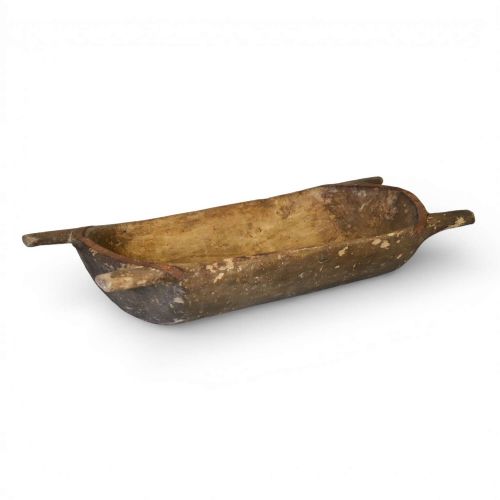
The dominant forms are large carved bowls, dairy bowls, and kneading troughs fashioned from native timbers. These pieces range from restrained Swedish and English dairy bowls to French farmhouse troughs and Indian folk pieces.
Makers shaped these utilitarian objects from solid timber logs, hollowing them out to create deep, open interiors designed for hard daily work. Their surfaces now carry the distinct marks of historical labour and simple domestic use.
Materials and construction
Makers relied on dense hardwoods and local softwoods such as sycamore, pine, and shisham wood, selecting solid timber blocks that could withstand heavy kneading and scraping. These logs were typically halved and dug out by hand using specialised gouges and adzes.
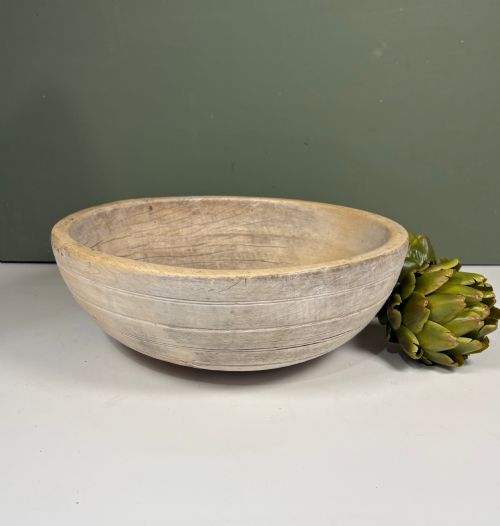
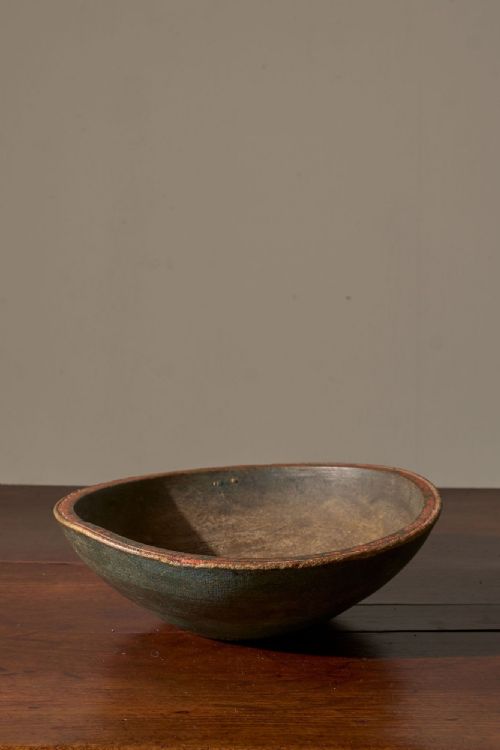
The reliance on hand carving left distinct tool marks across the interiors and exteriors of the timber, recording the direct intervention of the maker. Selected examples retain traces of early paint or accumulated patination built up through decades of kitchen use.
Several bowls bear the quiet scars of enthusiastic flour kneading, carrying centuries-old thumb indents left by anonymous bakers.
Assessing quality and character
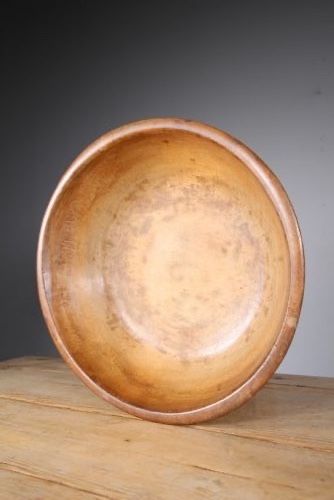
Quality in a vintage rustic dough bowl rests in the integrity of the timber and the depth of the hand-carved form. Vessels hewn from a single piece of sycamore or pine without excessive splitting demonstrate superior original selection of material.
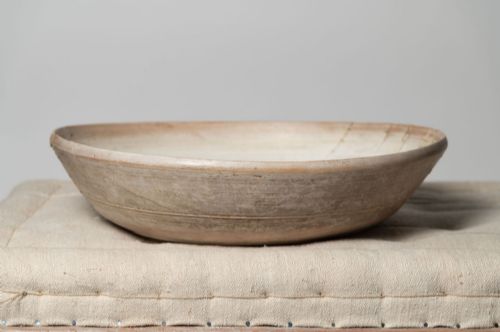
The visual appeal depends heavily on the surface patina, where dry, chalky timber differs markedly from surfaces enriched by decades of oils, flour, and handling. Proportion and balance in the carved rim separate standard utilitarian vessels from more sculptural examples.
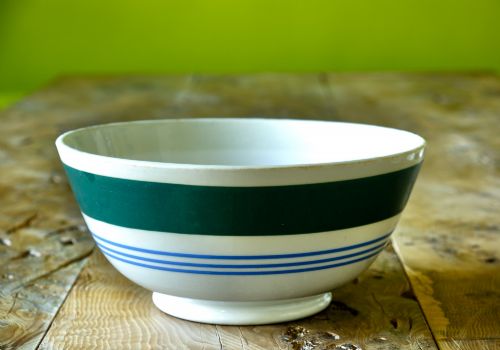
T G Green Pottery
The Vintage Rustic Dough Bowl Glossary
- Sycamore
- A dense hardwood commonly utilised by turners and bowl-makers for its stable grain and resistance to splitting during heavy kitchen tasks. English and European makers favored it for dairy and kneading vessels.
- Dairy bowl
- A wide, shallow wooden vessel specifically formed for setting milk to let the cream rise to the surface. These pieces often feature flat bases and gently sloping sides.
- Patina
- The surface sheen and colour depth developed over decades of handling, cleaning, and exposure to oils and air. It serves as a visual record of an object's age and use.
- Treen
- Small domestic wooden artefacts made by turners and joiners, including bowls, spoons, and platters. The term derives from the Middle English word for tree.
- Dug out
- A descriptive term for a vessel carved directly from a single solid log rather than assembled from multiple staves. This method produced sturdy, heavy-walled bowls suited for rigorous kitchen labour.
Vintage Rustic Dough Bowl: Frequently Asked Questions
What were vintage rustic dough bowls used for?
These wooden vessels served rural households primarily for mixing bread dough, kneading flour, and setting dairy products like milk and cream. Their deep cavities and wide rims provided practical space for heavy domestic food preparation before industrial metal and plastic kitchenware became common.
Over generations, many of these bowls transitioned from active kitchens to general utility roles around the home, accumulating wear that defines their current decorative character.
How do I care for a wooden dough bowl?
Maintain the timber by keeping these bowls away from direct heat sources, radiators, and prolonged strong sunlight, which can cause the dry wood to split. Clean the surface gently with a slightly damp cloth rather than soaking it in water.
Applying occasional light coats of food-safe mineral oil helps nourish dry antique timber and maintains the rich surface patina without altering the natural colour.
How can I tell an 18th-century bowl from a later one?
Eighteenth-century examples often display irregular hand-hewn tool marks from adzes and primitive gouges, reflecting the entirely manual process of digging out a heavy log. The timber surfaces typically show deeper wear patterns and more pronounced undulations along the rim.
Later nineteenth and twentieth-century pieces can feature more regular lathe turning or standardised shaping techniques, alongside differences in the drying and ageing of the wood.
Are these bowls safe for serving food today?
While these pieces originally held food and dough, centuries of historic use, old repairs, and dry unsealed timber mean many are best retained for dry display or decorative storage. If you choose to use one for serving wrapped items or dry fruit, line the interior or ensure it is thoroughly cleaned.
Avoid placing wet or greasy foods directly onto untreated historic wood surfaces that may have absorbed substances over their long lifespan.