


Vintage Rotating Table
A vintage rotating table brings functional movement to libraries and dining rooms through revolving mechanisms built for convenience.
Vintage Rotating Table
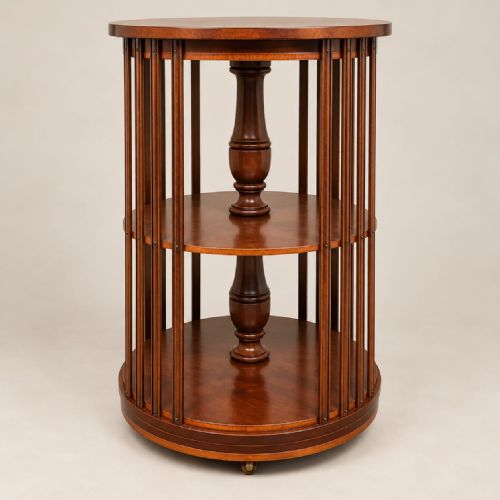
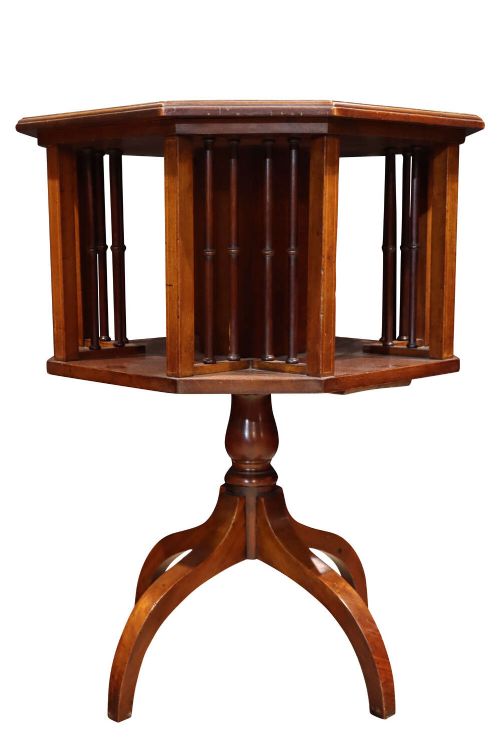
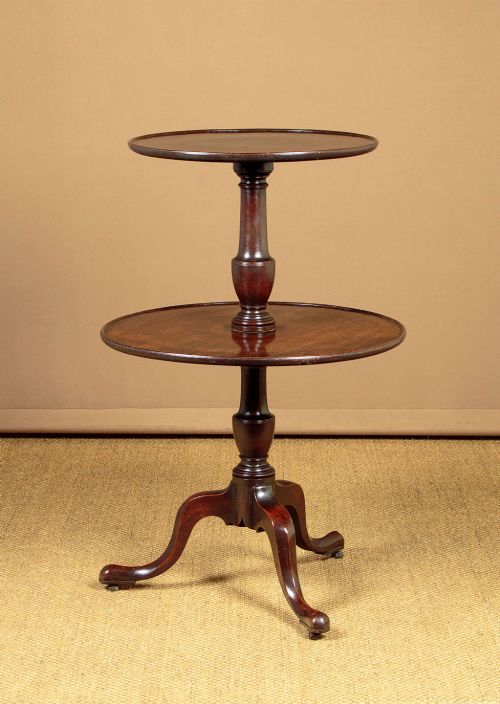
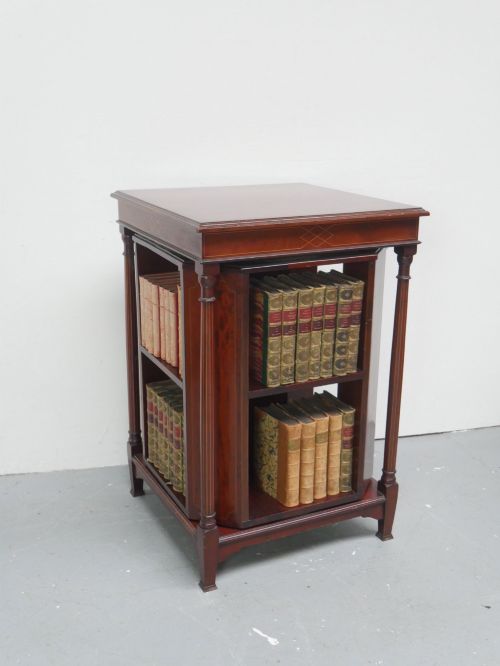
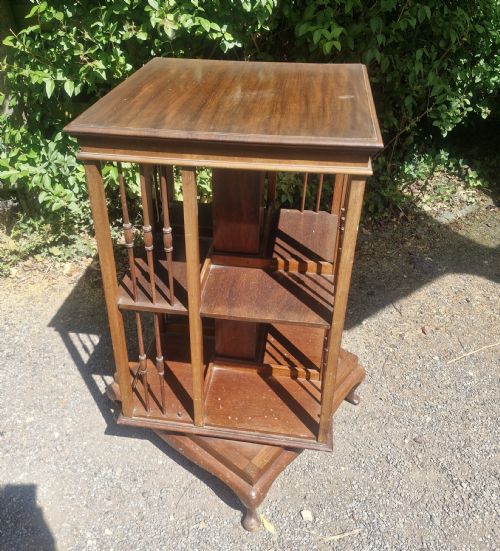
A vintage rotating table encompasses revolving bookcases, lazy susans, and dumb waiters designed to turn smoothly on central pivots. These pieces span Victorian, Edwardian, and early twentieth-century eras, reflecting the domestic needs of past households.
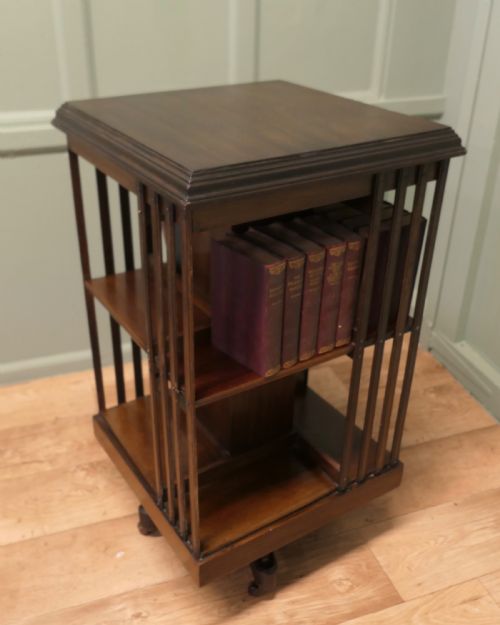
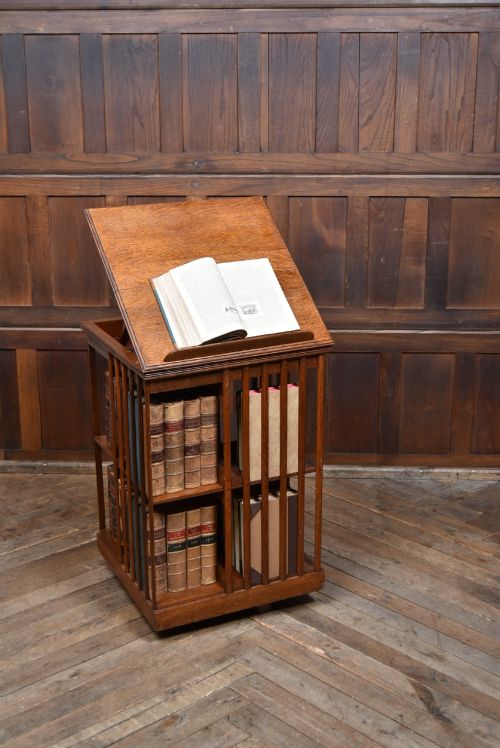
The most common forms on this page are revolving bookcases in mahogany and oak, alongside tabletop lazy susans intended for dining or serving. Buyers encounter freestanding library pieces alongside compact desktop versions and serving trays.
Origins range from English country workshops to Edwardian urban makers, utilising styles from plain functional oak to inlaid satinwood and carved mahogany. Each variation serves a distinct domestic purpose, from holding a library collection to assisting at the dinner table.
How they were made
Cabinetmakers constructed these rotating items primarily using solid mahogany, oak, and occasionally walnut, chosen for structural strength and grain appearance. Wood surfaces often received inlay work in satinwood or brass fittings to enhance the turning mechanisms and corners.
Rotating function relied on internal metal ball bearings or wooden pivot systems concealed beneath the top surface. Joinery involved traditional techniques like dovetailing and mortise-and-tenon joints to ensure the framework withstood the stress of constant rotation.
Vintage Rotating Table Retail Price Guide 2026
Typical asking prices for vintage rotating table among the pieces listed under this phrase on Sellingantiques today, from the lower quarter to the upper quarter. They describe what is for sale here now, not the wider market.
Listings feature revolving bookcases and lazy susans built from mahogany, oak, and walnut across Victorian and Edwardian periods.
What varies in quality
Quality in a vintage rotating table rests on the smoothness of the turning action and the stability of the central pivot. Superior pieces maintain an even balance while spinning, without wobbling or sticking, regardless of how many books or dishes rest upon them.
Material selection and decorative detailing set finer examples apart from standard utility items. Distinctive timber grain, crisp carving, satinwood inlay, and robust cast iron or brass mechanical components indicate higher workshop standards.
The Vintage Rotating Table Glossary
- Lazy Susan
- A revolving tray placed on a table or countertop to assist in moving food easily between diners. These items appear in timber configurations from the nineteenth century onward.
- Revolving bookcase
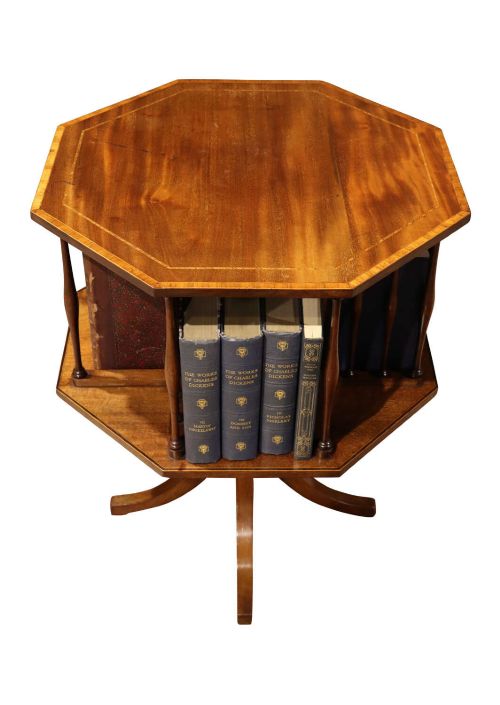
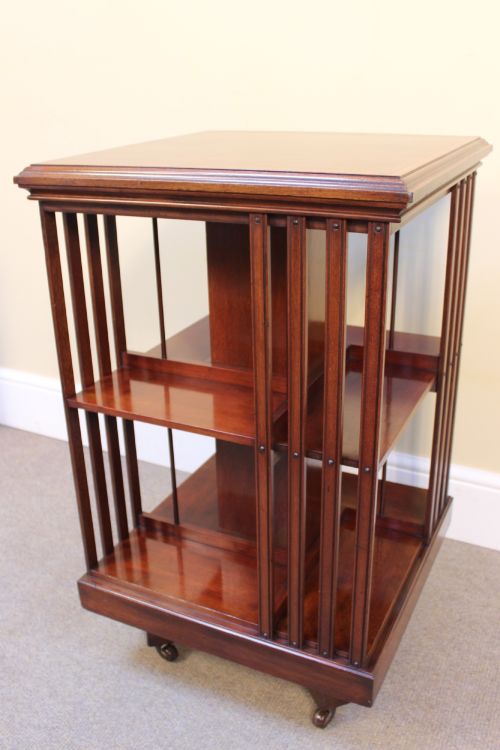
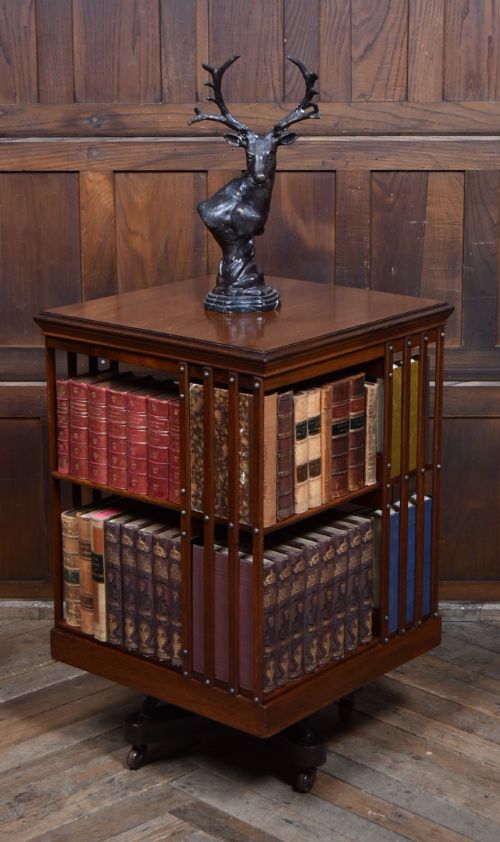
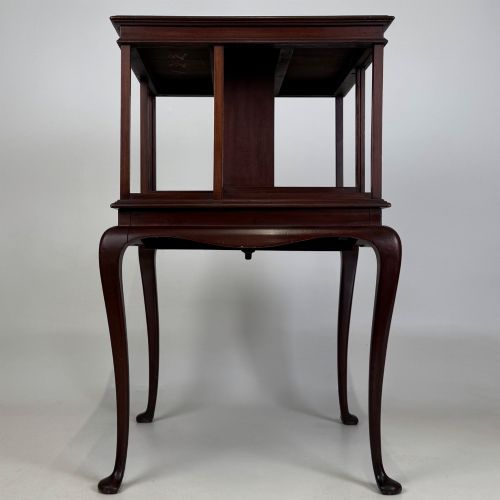
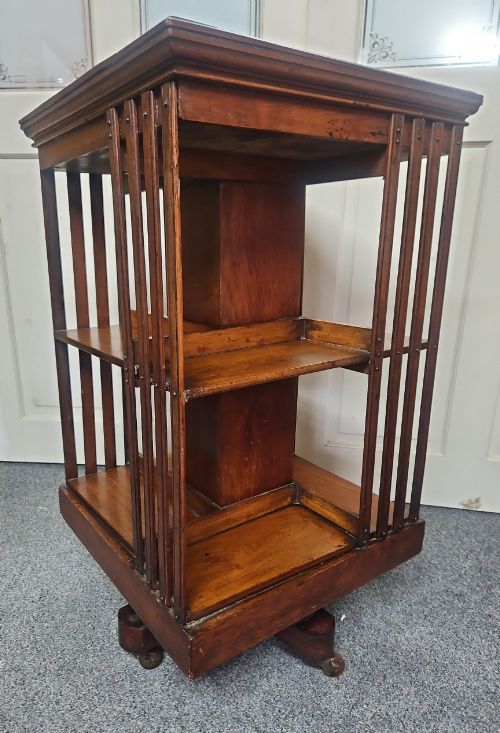
- A tiered shelving unit built on a rotating base designed to grant access to multiple volumes from one seated position. Edwardian examples often feature slatted sides and cross-banded mahogany.
- Dumb waiter
- A tiered serving stand or table used to hold dishes without needing servants present during a meal. Some period iterations incorporate rotating sections.
- Satinwood inlay
- A contrasting light-coloured timber embedded into darker woods like mahogany for decorative border work. This technique frequently appears on Edwardian pieces.
- Cabriole leg
- A furniture leg that curves outward and then tapers inward, finishing in a simple foot. This style appears on select rotating bookcases from the Edwardian era.
Vintage Rotating Table: Frequently Asked Questions
What is a vintage rotating table used for?
These tables and stands were designed to provide easy access to books, reference materials, or serving dishes without requiring the user to move around the furniture. Revolving bookcases kept personal libraries close at hand in studies, while lazy susans assisted with food distribution at dining tables.
Over time, their practical function shifted into decorative display use within modern interiors. They remain effective space-saving solutions for organising books or serving guests in compact rooms.
How do I date a revolving bookcase?
Dating relies on observing the timber types, joinery methods, and stylistic cues present in the construction. Edwardian and late Victorian pieces frequently showcase inlaid satinwood, slatted sides, and specific brass mechanism designs.
Earlier nineteenth-century iterations tend to feature heavier solid mahogany construction and hand-cut joinery. Comparing these traits against known period styles helps narrow down the decade of manufacture.
Are these tables heavy to turn?
Original mechanical pivots and ball-bearing systems were engineered to distribute weight evenly, allowing smooth rotation even when fully loaded. A well-maintained piece should spin with minimal manual effort.
If a table feels stiff or catches during rotation, the internal pivot mechanism often requires minor adjustment or cleaning. The quality of the original engineering determines how effortlessly the tiers glide.
Where should I place one in my home?
Revolving bookcases suit corners, beside armchairs, or near home office desks where quick access to reading material is beneficial. Their 360-degree turning radius means they do not require clearance space for drawers or doors to open.
Tabletop lazy susans function well on dining tables or sideboards for communal serving. Their compact footprints allow them to integrate easily into both traditional and contemporary living spaces.