

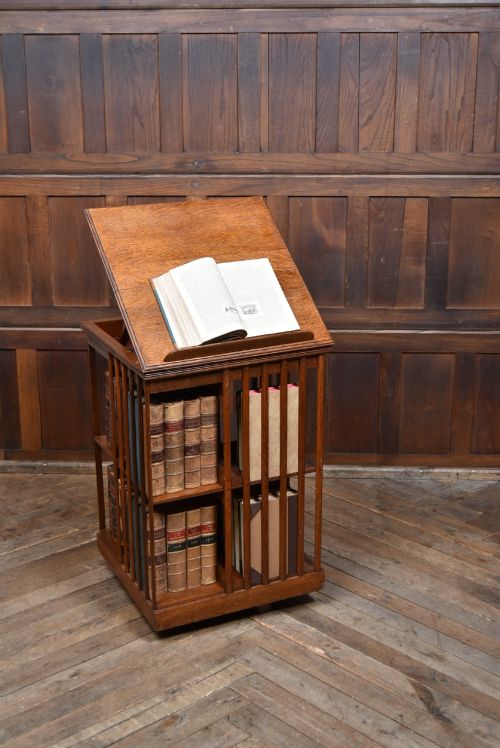
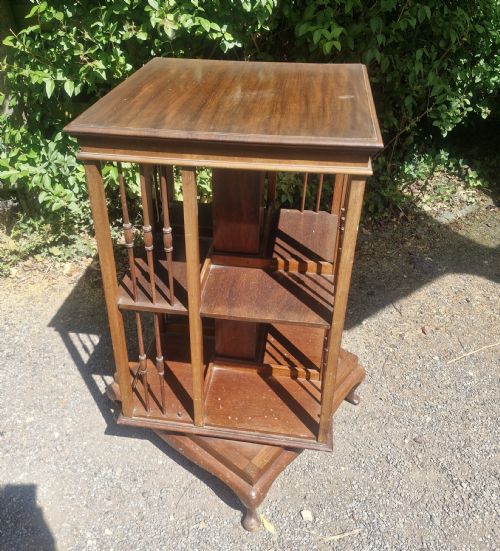
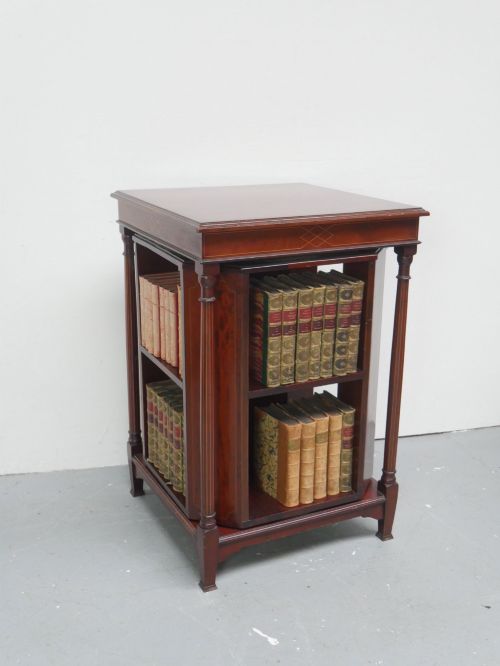
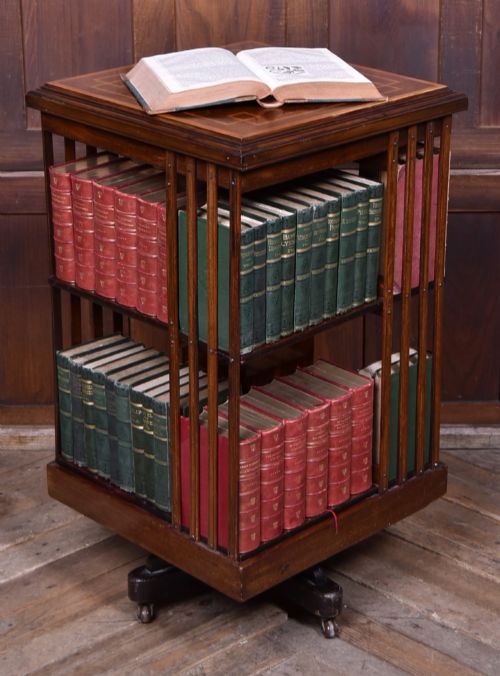
Vintage Rotating Stand
A vintage rotating stand turns smoothly to bring books, displays and serveware within reach, combining practical utility with polished timber craftsmanship.
Vintage Rotating Stand
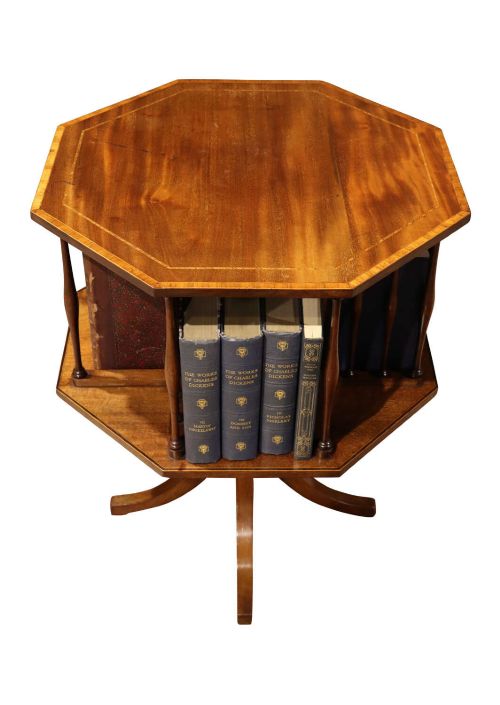
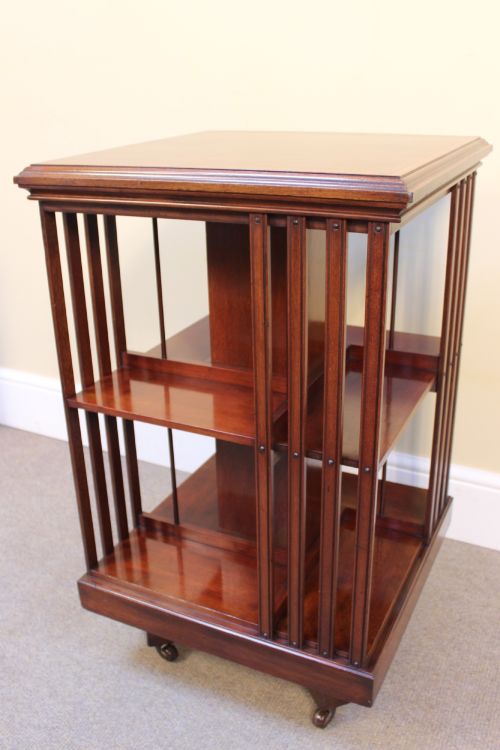
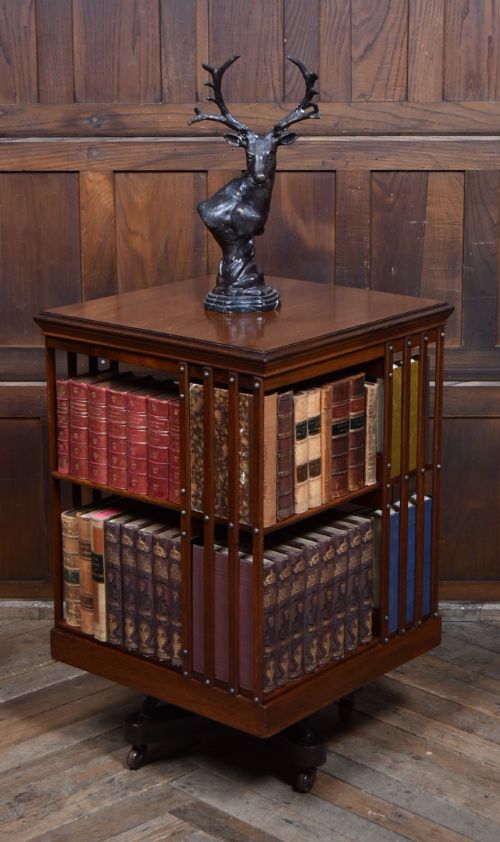
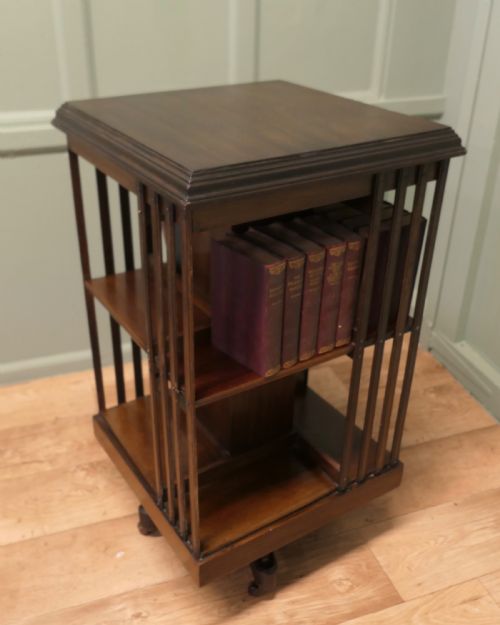
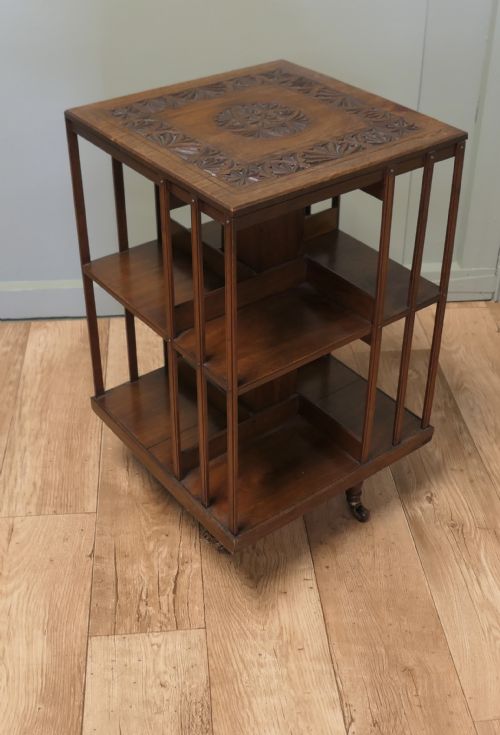
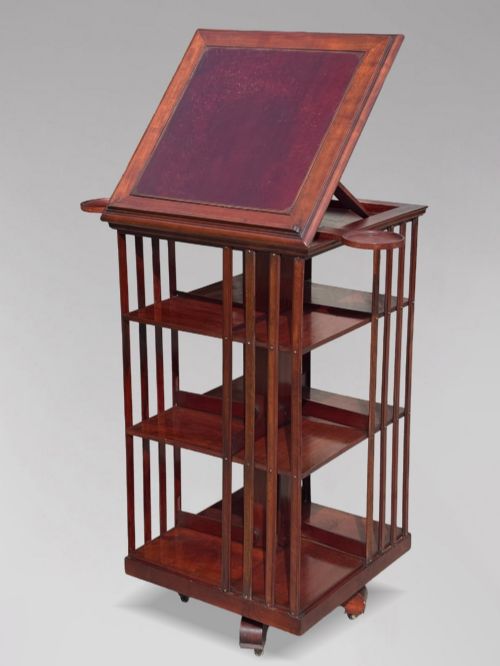
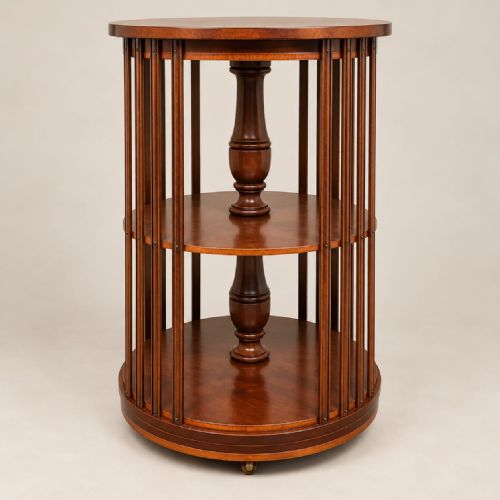
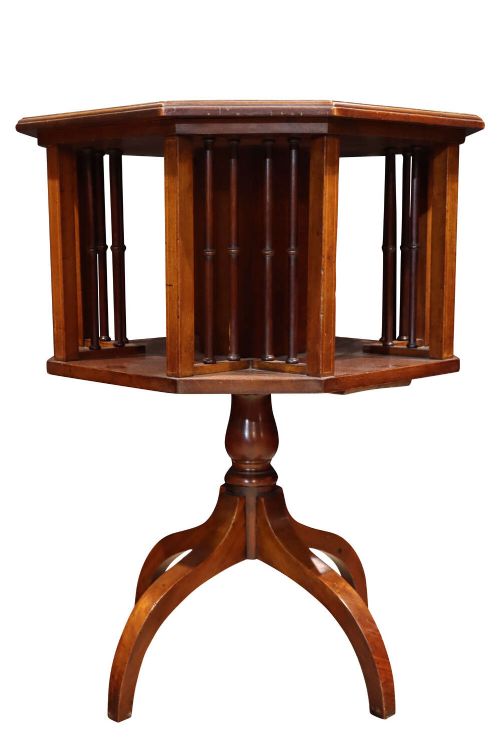
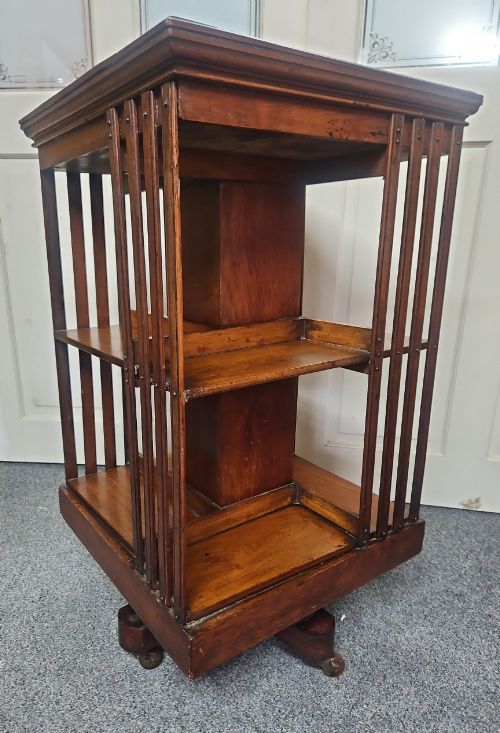
A vintage rotating stand primarily encompasses revolving bookcases, lazy Susans and small display frames designed to turn on a central pivot. You will find them in forms ranging from compact tabletop book stands to tall multi-tiered library bookcases.
The Edwardian period and the Victorian era provide the largest share of examples on this page, alongside pieces stretching back to the nineteenth century and forward into the interwar years. Mahogany and oak dominate the timber selection, frequently accompanied by brass mechanisms and occasional satinwood inlay.
How they were made
Cabinet makers utilised solid and veneered timbers such as mahogany, oak and walnut, shaping them into slatted, panelled or inlaid carcasses. Iron and brass internal ball-bearing mechanisms or central pivots allow the upper tier to turn effortlessly.
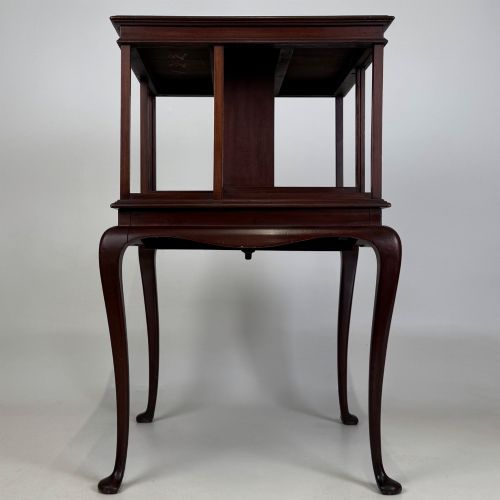
Joinery techniques include pegged joints, dovetail construction and applied mouldings, while specialist pieces incorporate carved details, cabriole legs or delicate silk embroidery held within rotating hardwood frames.
Vintage Rotating Stand Retail Price Guide 2026
Typical asking prices for vintage rotating stand among the pieces listed under this phrase on Sellingantiques today, from the lower quarter to the upper quarter. They describe what is for sale here now, not the wider market.
Some items require nothing more than a gentle spin to settle an animated library argument.
What varies in quality
The refinement of the internal turning mechanism dictates the physical operation, separating a smooth, silent rotation from a stiff or lopsided turn. Heavier cast iron or brass components generally indicate a more robust build.
Timber selection and decorative ambition set the finer examples apart from utility items. Flame mahogany veneers, intricate satinwood inlay, carved structural elements and proportioned tiers distinguish superior workshop output.
The Vintage Rotating Stand Glossary
- Revolving bookcase
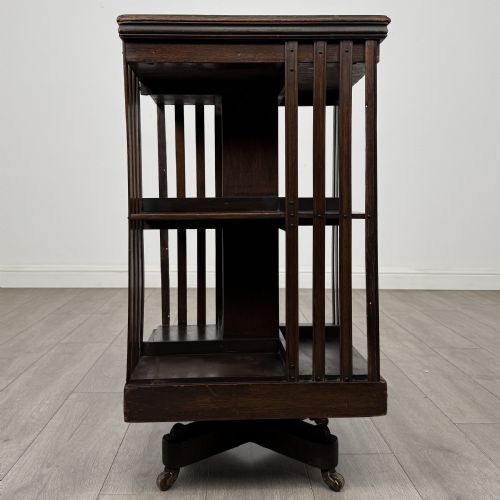
- A freestanding or tabletop piece of furniture fitted with a concealed pivot mechanism allowing books to be accessed from any side. These often feature slatted sides and multiple tiers.
- Lazy Susan
- A rotating tray placed on a table or stand to assist with passing food or serveware. They appear in timber such as oak and mahogany.
- Satinwood inlay
- A contrasting decorative wood veneer inserted into the primary timber surface in geometric or floral motifs. It is commonly found on Edwardian mahogany pieces.
- Cabriole leg
- A furniture leg that curves outward and then tapers inward, finishing in a pad or foot. This stylistic element appears on select Edwardian stands.
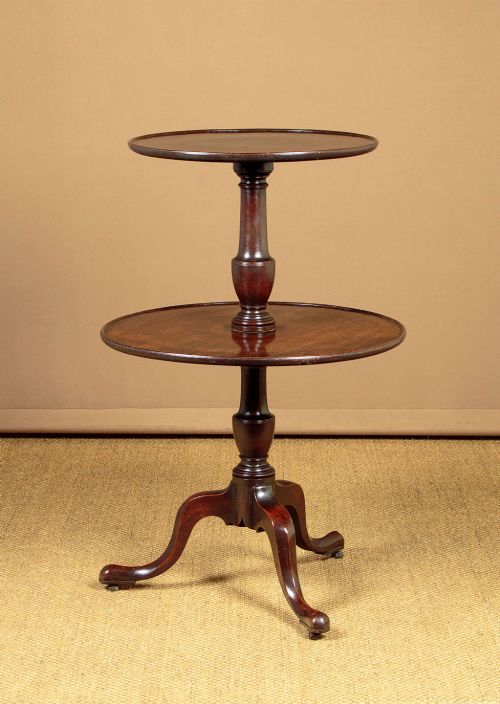
- Tazza
- A shallow pedestal plate or dish elevated on a central support. In this context it describes a raised rotating serving platform.
Vintage Rotating Stand: Frequently Asked Questions
How do revolving bookcases work?
A concealed central pivot or ball-bearing mechanism connects the upper shelving unit to a heavy weighted base. This design allows the entire bookcase to turn freely in either direction without tipping over.
Most models use a cross-shaped wooden or metal spider frame underneath the shelves to distribute weight evenly across the rotation point.
Where were lazy Susans used?
These rotating trays served dining rooms and large tables to circulate dishes and condiments among diners without passing platters across the table.
Edwardian and interwar examples often doubled as display stands or tazzas for afternoon tea service.
How do I date a mahogany bookcase?
Victorian and Edwardian pieces display distinct cabinetmaking traits, with Victorian items often showing heavier proportions and darker finishes. Edwardian pieces tend to feature lighter mahogany, sometimes accented with satinwood stringing or inlaid motifs.
Construction details such as machine-sawn timber versus hand-planed surfaces also help distinguish nineteenth-century origins from later reproductions.
Can I place a heavy load on a desktop stand?
Smaller tabletop and desk stands suit lighter reference volumes, novels or framed displays rather than encyclopaedias. Overloading the upper tiers can strain the central pivot and restrict smooth rotation.
Distributing books evenly across opposing compartments helps maintain balance and protects the internal mechanism from undue wear.