
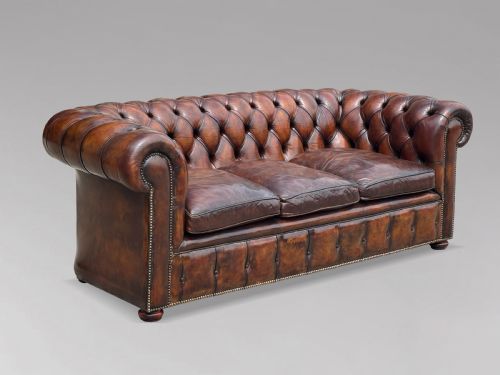


Vintage Rolled Arm Sofa
A vintage rolled arm sofa anchors a room with deep buttoning, low backs, and generous proportions designed for long evenings.
Vintage Rolled Arm Sofa
When searching for a vintage rolled arm sofa, you encounter substantial seating options dominated by the classic Chesterfield form. These pieces emerge from the nineteenth century through the early decades of the twentieth century, carrying the hallmarks of traditional English upholstery. Victorian and Edwardian examples appear frequently alongside pieces from the 1920s and 1930s.
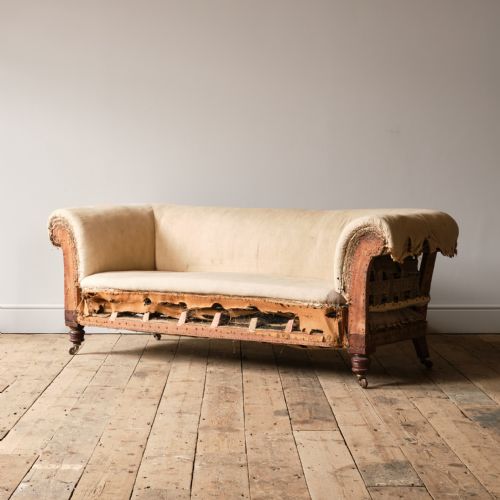
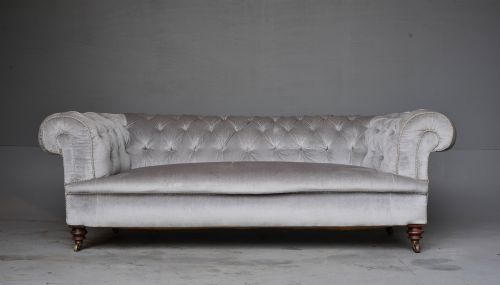
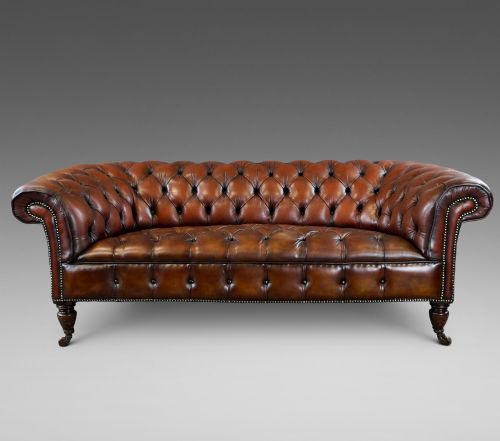
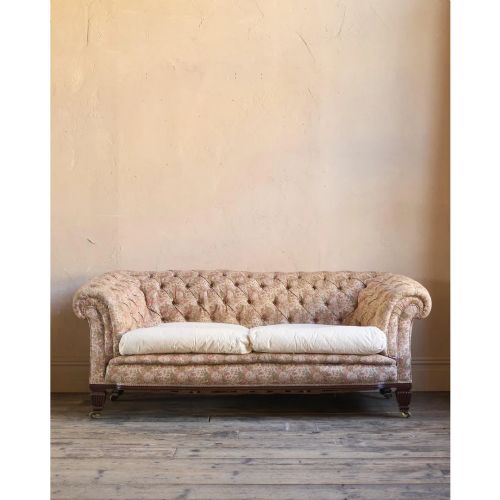
The defining physical characteristics include scrolled arms that match the height of the backrest, creating a balanced silhouette. Most examples found here utilise rich leathers in brown, raw, or dyed tones, alongside calico covers awaiting new upholstery. You will also find distinctive variations such as the moustache back and gentleman's club configurations.
How they were made
Construction relies upon sturdy timber frames built from hardwood and mahogany, providing the internal skeleton for heavy daily use. Upholsterers employed traditional methods involving deep buttoning and coil springing to secure longevity and comfort. Leather hides were hand-dyed or left in original un-restored states, secured with brass detailing where appropriate.
Support systems utilised webbing and metal components within the frame structure. Frames often required robust wood foundations to bear the weight of dense stuffing and thick leather upholstery.
One gentleman's club model arrives with a moustache back, proving that Victorian furniture designers possessed a distinct sense of facial hair appreciation.
What varies in quality
The distinction between tiers rests upon the integrity of the original timber frame and the condition of the leather hides. Pieces retaining untouched original leathers demonstrate higher authenticity compared to those subjected to heavy modern interventions. Maker attribution also elevates certain examples, particularly those bearing the marks of established London cabinet makers.
Upholstery execution separates standard workshop production from master craftsmanship, visible in the precision of the deep buttoning and the spring tension. Frames requiring complete reupholstering present a blank slate for restoration, whereas well-preserved historical surfaces command greater interest from collectors.
Howard and Sons·Maple and Co
The Vintage Rolled Arm Sofa Glossary
- Chesterfield
- A traditional style of sofa characterised by low backs and rolled arms of equal height, typically featuring deep buttoning. This form remains the primary archetype found within these listings.
- Calico
- A plain-woven cotton fabric used as a foundational upholstery layer or base cover on antique frames awaiting finishing. It provides a sturdy substrate before final leather application.
- Moustache back
- A distinctive decorative wood or upholstered frame shaping along the upper backrest that curves to resemble a Victorian moustache. This variation appears on select club sofas.
- Deep buttoning
- An upholstery technique where buttons are pulled deep into the padding to create a diamond pattern and secure the internal stuffing. It provides both structural integrity and a characteristic textured surface.
Vintage Rolled Arm Sofa: Frequently Asked Questions
How do I date a leather Chesterfield?
Dating relies upon examining the frame construction, the type of leather, and the buttoning technique. Nineteenth-century examples typically show heavier timber frames and hand-stitched hides.
Later pieces from the Edwardian era or the 1920s introduce subtle shifts in proportion and spring mechanisms. Comparing the specific maker stamps where present also clarifies the production era.
Are these sofas comfortable for daily use?
These seating pieces were engineered for durability and long lounging sessions, utilising robust coil springing and dense internal stuffing. Their low backs and deep seats offer substantial support when maintained properly.
Restored versions provide modern resilience while retaining the original ergonomic geometry of the nineteenth and early twentieth centuries.
What does un-restored leather mean?
Un-restored leather indicates that the hide retains its original surface patination, wear, and colour acquired over decades of use. Collectors often prize this state for the historical authenticity it brings to the room.
Conversely, some pieces are offered in raw leather specifically prepared for custom hand-dyeing to a buyer's preferred colour choice.
How should I care for antique leather?
Antique leather requires gentle cleaning with specialised conditioners to prevent the hide from drying and cracking over time. Keeping the sofa away from direct sunlight and heat sources preserves the natural oils within the material.
Original finishes benefit from minimal intervention, allowing the natural patination to continue developing gracefully.