



Vintage Relief Pitcher
These vintage relief pitchers bring tactile moulded ornament, classical figures, and historical scenes directly to the table.
Vintage Relief Pitcher
When you search for a vintage relief pitcher, you are looking at moulded ceramic and stoneware vessels decorated with raised figures, botanical motifs, and historical pageantry. These jugs and ewers span the nineteenth century, encompassing Victorian interpretations, Art Nouveau styling, and earlier classical revivals.
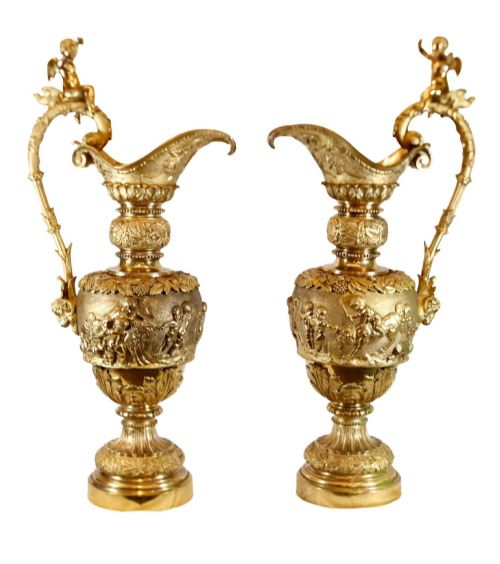
On this page, you will most frequently encounter stoneware and earthenware jugs decorated with scenes such as bacchanalian revels, royal jubilees, and sporting pursuits. The forms range from monumental French gilt ewers down to practical majolica and harvest jugs meant for daily use.
Many examples showcase the work of notable British potteries and continental foundries, demonstrating how utilitarian vessels doubled as sculptural display pieces. Whether formed as a puzzle jug or a large commemorative pitcher, each piece relies on depth and shadow to bring its moulded surface to life.
How they were made
Potters utilised durable stoneware, buff-coloured clays, and earthenware bodies shaped in detailed moulds to achieve crisp, raised decoration. The high-relief designs were pressed directly into the damp clay or applied separately before firing.
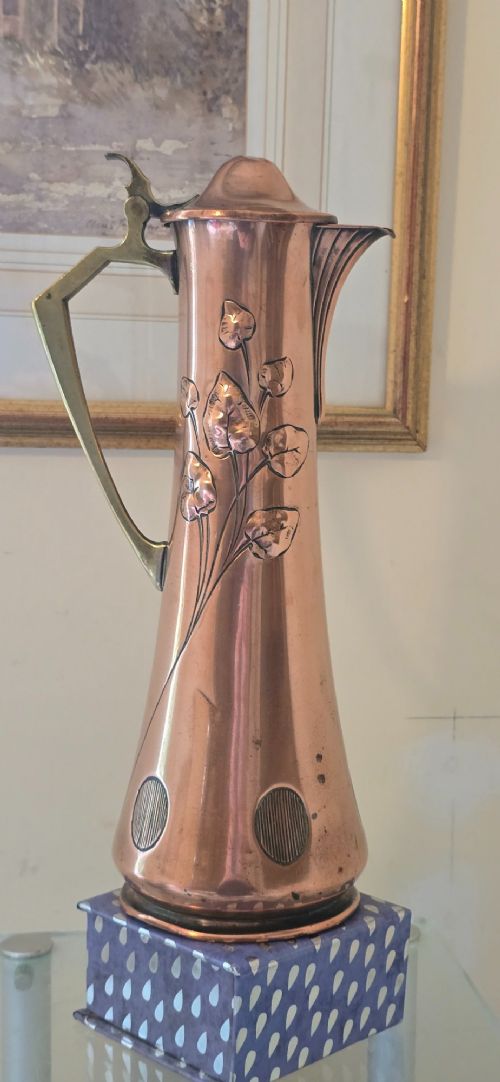
Many surfaces received salt glazes or rich coloured glazes that pooled in the recesses of the ornament to emphasise the sculptural detail. Certain continental ewers combined ceramic bodies with gilt bronze, ormolu, copper, and brass mounts to elevate their status.
Vintage Relief Pitcher Retail Price Guide 2026
Typical asking prices for vintage relief pitcher among the pieces listed under this phrase on Sellingantiques today, from the lower quarter to the upper quarter. They describe what is for sale here now, not the wider market.
The documented forms range from utilitarian harvest jugs and puzzle jugs to monumental French ewers.
What varies in quality
The distinction between ordinary production and superior quality lies primarily in the crispness and undercut depth of the moulding. Sharp relief details allow the figures and foliage to read clearly beneath a glaze, whereas worn moulds produce soft, muddy outlines.
The choice of body and glaze application also determines the character of the vessel. Denser stoneware bodies with even salt glazes or well-controlled coloured finishes represent the finer end of the range compared to heavy, indistinct earthenware.
Charles Meigh·Doulton Lambeth·Ridgway and Sons·Jones and Walley·Copeland Spode
The Vintage Relief Pitcher Glossary
- Relief moulded
- A technique where ornament is pressed into the clay body so that it stands proud of the vessel wall. This creates a tactile surface that catches the light.
- Stoneware
- A hard, dense ceramic fired at high temperatures until semi-vitrified. It holds fine detail well and resists liquid absorption.
- Ewer
- A large jug with a wide spout and elaborate handle, traditionally used for pouring water at table. Many survive purely as decorative display pieces.
- Majolica
- A type of earthenware coated with an opaque tin glaze and painted with brightly coloured metal oxides. It produces a rich, glossy surface finish.
- Salt glaze
- A glassy, slightly textured finish achieved by throwing common salt into the kiln during high-temperature firing. It creates a subtle orange-peel texture on stoneware.
Vintage Relief Pitcher: Frequently Asked Questions
What were vintage relief pitchers used for?
These vessels originally served practical functions at the table, pouring water, ale, cider, or wine during communal meals. Larger examples held generous quantities of liquid for household gatherings.
Over time, many fine relief pitchers transitioned into display pieces, appreciated more for their sculptural moulded scenes than for daily service.
How do I date a relief pitcher?
Dating relies on identifying the pottery mark, the clay body, and the decorative style. Victorian pieces often incorporate Gothic revivals, naturalistic foliage, or historical jubilees.
Later nineteenth-century examples might show emerging Art Nouveau curves, while earlier mid-century pieces favour classical bacchanalian themes and buff stoneware.
How should I display a relief pitcher?
Display these pieces where directional light can strike the surface and reveal the depth of the moulded ornament. Placing them on open shelving or a cabinet allows the shadows to define the figures.
Keep them away from direct heat sources and handle them carefully by the body rather than relying solely on applied handles.