



Vintage Refectory Benches
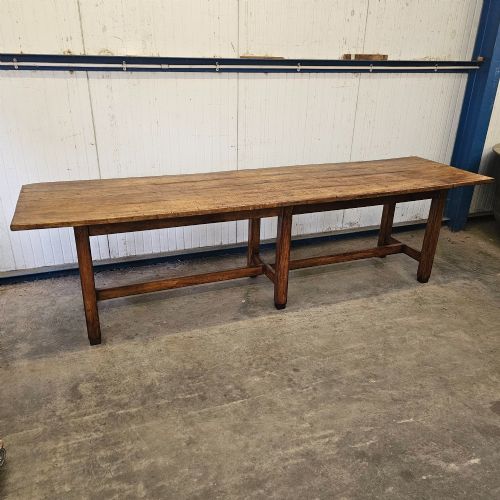
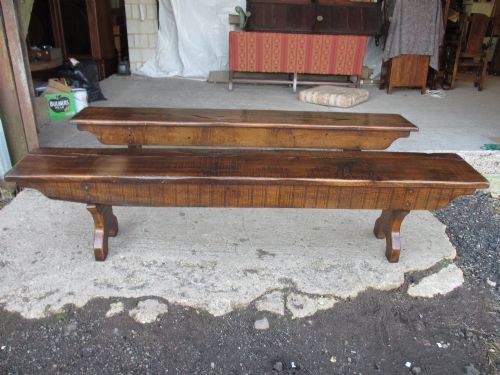
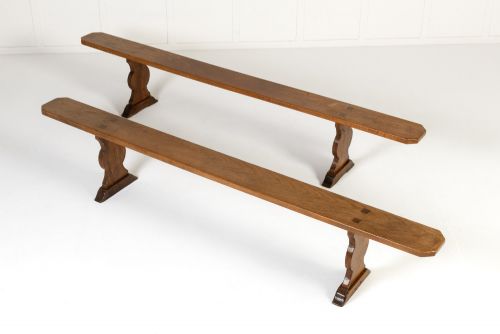
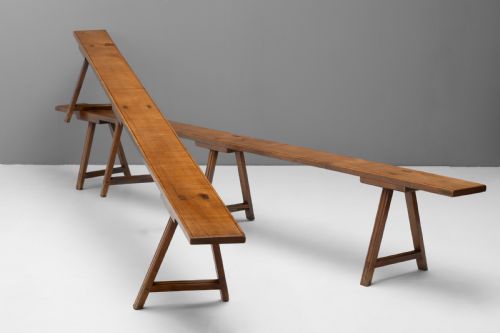
Vintage refectory benches bring communal warmth to a room, offering sturdy wooden seating built for gathering.
Vintage Refectory Benches
Vintage refectory benches provide long, linear seating historically designed for large communal halls and dining spaces. When searching for vintage refectory benches, buyers encounter long wooden forms meant to accompany heavy dining tables.
The pieces listed on this page span the nineteenth century, the Edwardian era, and the early twentieth century, including the decades up to 1940. Forms range from heavy oak trestle examples to French fruitwood dining pairs and long cherry benches.
Origins stretch across England, Wales, and France, encompassing styles such as rustic farmhouse, French country, Jacobean, and Victorian Gothic. These seating options serve everyday dining needs as well as serving table and altar applications.
How they were made
Makers constructed these benches primarily from solid hardwoods such as oak, beech, cherry, fruitwood, and general hardwood. Solid oak dominates the construction, providing the structural integrity required for heavy daily use.
Construction techniques involve robust supports, notably shaped trestle ends that anchor the long timber tops securely. Joinery relies on traditional carpentry methods suited to sustaining heavy weight over long spans.
Vintage Refectory Benches Retail Price Guide 2026
Typical asking prices for vintage refectory benches among the pieces listed under this phrase on Sellingantiques today, from the lower quarter to the upper quarter. They describe what is for sale here now, not the wider market.
Some nineteenth-century French benches were originally built for community halls, where they likely endured decades of lively local gatherings.
What varies in quality
Quality differences lie in the selection of timber and the structural complexity of the trestle supports. Pieces fashioned from solid English or Welsh oak with shaped trestle ends represent higher tiers of craftsmanship.
The integrity of the timber grain and the depth of the natural finish distinguish finer examples from standard utility seating. Proportion and length also influence the character of each piece, with longer examples requiring superior timber selection to prevent sagging.
The Vintage Refectory Benches Glossary
- Trestle ends
- Support structures at either end of a bench or table, often shaped to distribute weight evenly along long timber tops. They provide both stability and decorative silhouette.
- Refectory
- A term describing long dining furniture historically used in communal dining halls for large groups. It denotes a long, narrow proportion.
- Fruitwood
- A collective term for timber sourced from fruit-bearing trees such as cherry or pear, valued for its warm tone and fine grain. French fruitwood benches display distinct colour variation.
- Solid oak
- Timber that is entirely natural oak throughout rather than veneered over a secondary core. This material ensures maximum durability for heavy seating.
Vintage Refectory Benches: Frequently Asked Questions
How do I style a refectory bench?
Pair long wooden benches with a matching rustic or refectory dining table to recreate traditional communal seating.
They also function effectively placed against hallway walls or beneath windows for practical everyday use.
What periods do these benches cover?
The available pieces originate from the nineteenth century, the Edwardian period, and the early decades of the twentieth century up to 1940.
Designs reflect vernacular traditions from England, Wales, and France during these eras.
Are these benches suitable for daily dining?
Solid construction in heavy oak, beech, and cherry ensures these benches easily withstand regular family meals.
Their generous lengths accommodate multiple diners comfortably in modern or traditional kitchens.
How do I identify French country benches?
French country examples frequently utilise fruitwood or beech timbers, exhibiting lighter tones and softer grain patterns than English oak.
Their regional styles lean towards provincial elegance rather than heavy Gothic proportions.