


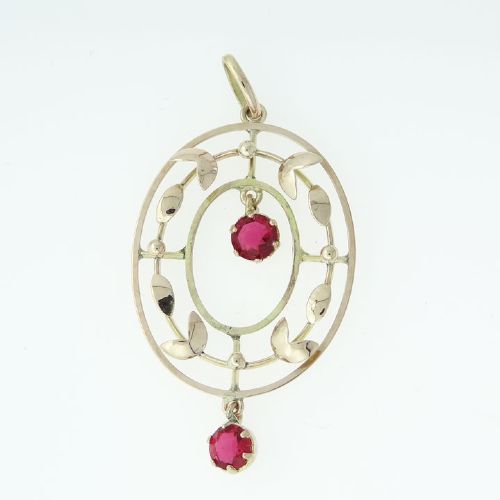
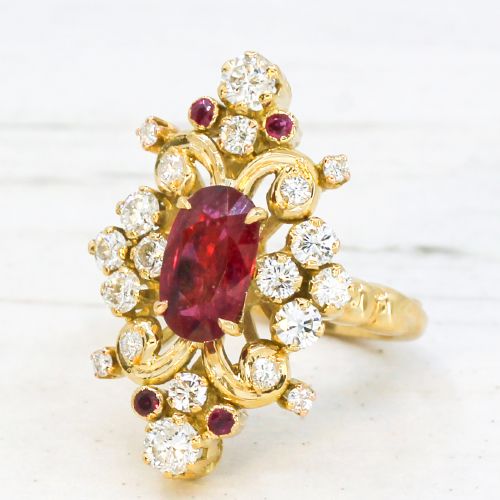
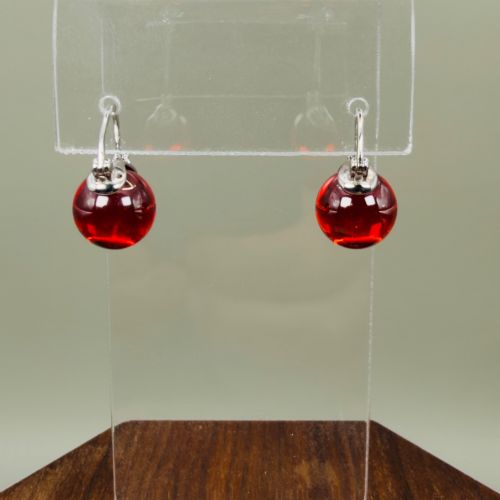
Vintage Red Ruby Jewellery
Vintage red ruby jewellery brings together deep crimson corundum and bright diamonds in rings, brooches, and pendants spanning the Victorian era to the mid-twentieth century.
Vintage Red Ruby Jewellery
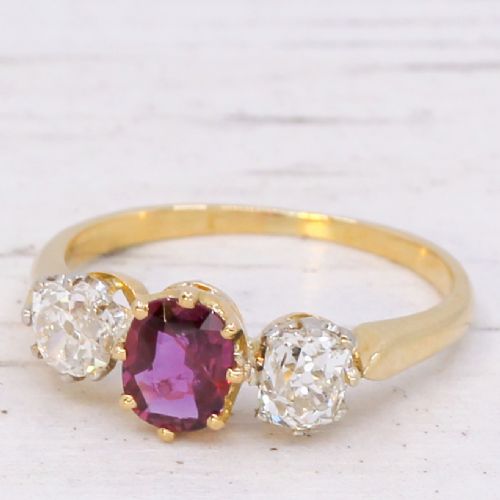
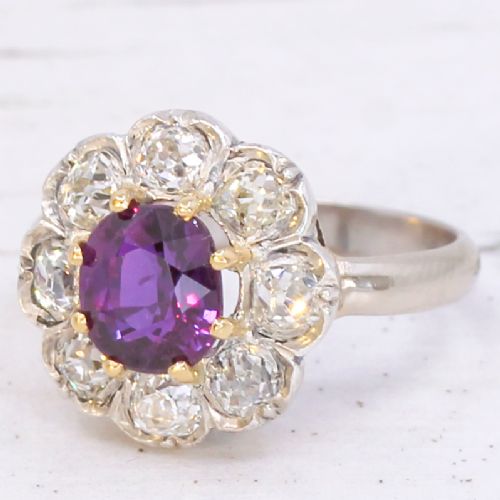
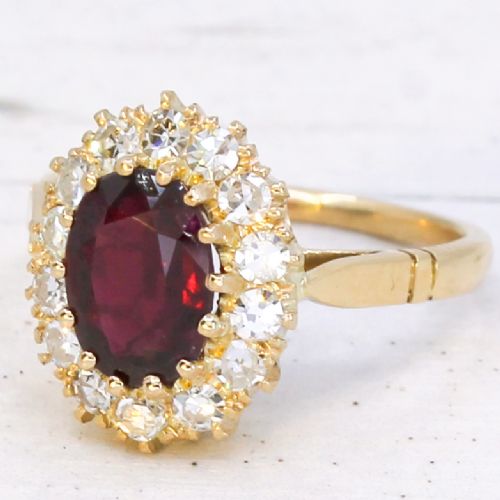
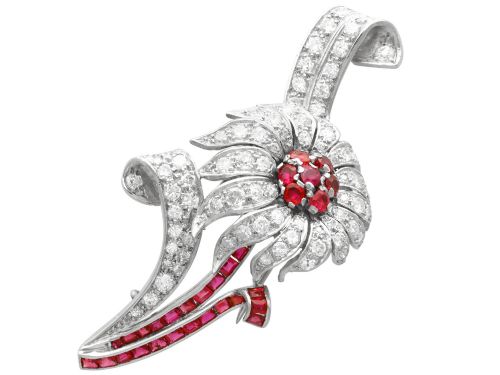
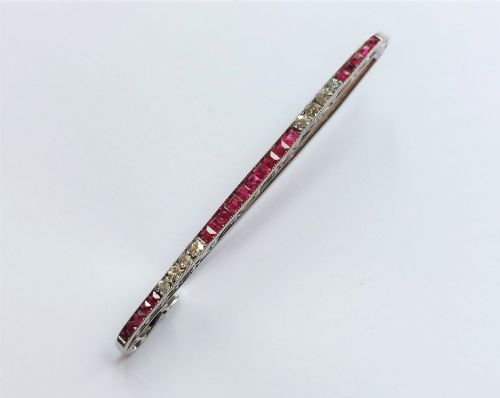
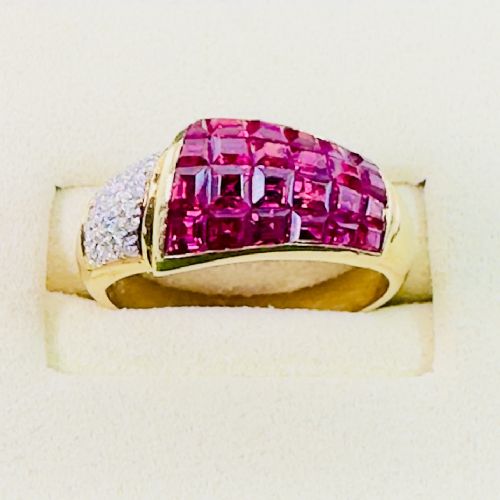
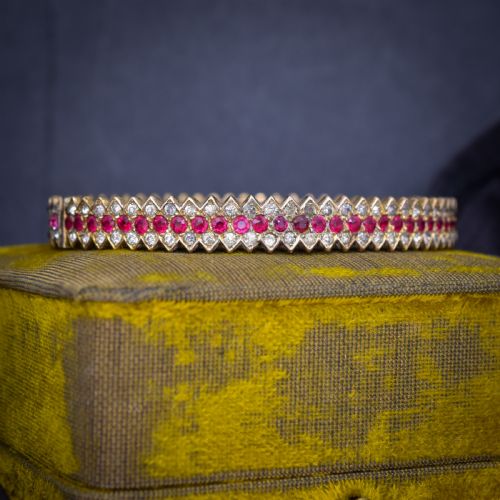
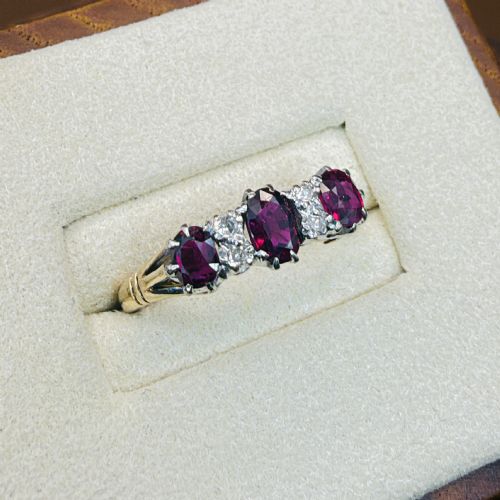
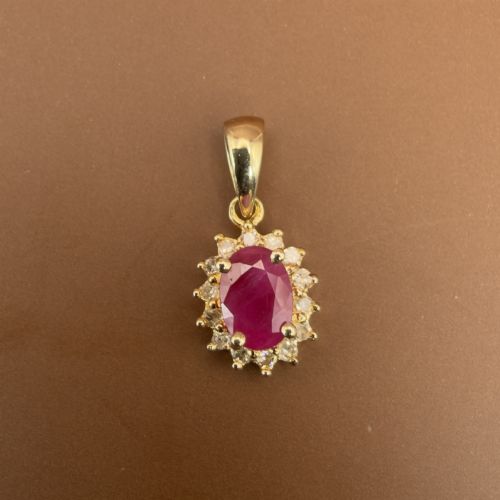
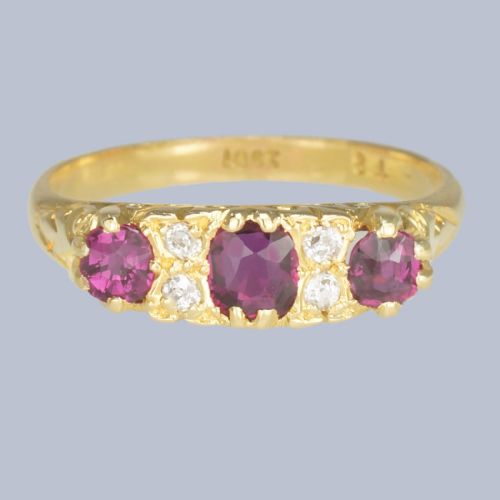
When you search for vintage red ruby jewellery, you encounter pieces designed across multiple eras from the late nineteenth century through to the 1960s. The selection spans distinct forms, most commonly cluster rings, band rings, pendants, and bar brooches.
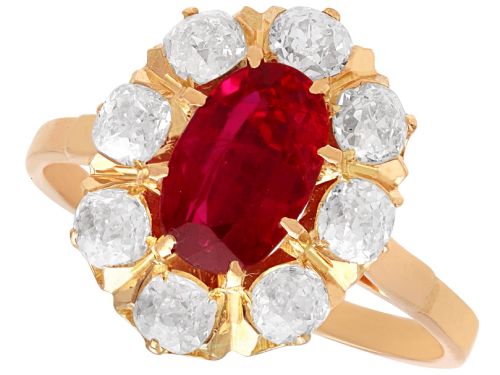
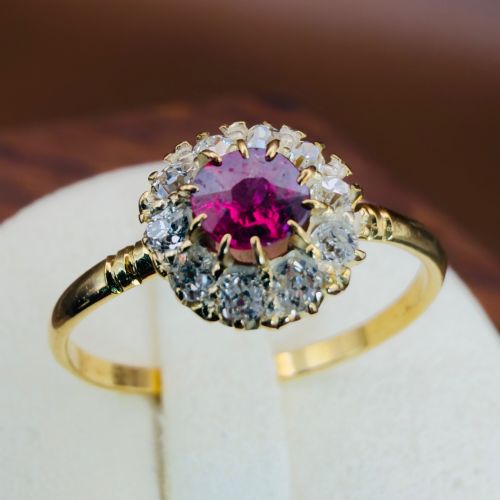
You are most likely to meet 18ct gold and platinum cluster rings featuring oval or old-cut rubies encircled by diamonds. These pieces reflect specific historical design movements including Edwardian filigree, Art Deco geometric symmetry, and mid-century floral motifs.
The materials range from traditional 9ct and 18ct yellow and white gold to platinum and sterling silver. Alongside natural unheated stones from Burma, the listings also encompass simulated and paste alternatives from the early and mid-twentieth century.
Materials and construction methods
Goldsmiths set red rubies alongside diamonds using platinum, 18ct white gold, and yellow gold to structure intricate settings such as halos, navettes, and starbursts. Metal selection shifted across decades, moving from heavy yellow gold in Victorian bands to bright platinum and white gold in Art Deco geometric designs.
Stone cutting techniques define the construction of these jewels, utilising old-cut, oval, baguette, and pear-cut facets. Artisans arranged these cuts into structured clusters, three-stone configurations, and flush gypsy settings.
Vintage Red Ruby Jewellery Retail Price Guide 2026
Typical asking prices for vintage red ruby jewellery among the pieces listed under this phrase on Sellingantiques today, from the lower quarter to the upper quarter. They describe what is for sale here now, not the wider market.
The listings span periods from the late nineteenth century through to 1960, utilising 18ct gold, platinum, and 9ct gold across rings, brooches, and pendants.
Distinctions in quality
Quality rests upon the origin and optical characteristics of the central ruby, particularly unheated stones originating from Burmese sources like Mogok and Mong Hsu. The depth of the natural red colour and the clarity of the gemstone elevate the work.
The precision of the surrounding diamond work and the integrity of the precious metal setting distinguish finer examples. Master craftsmanship appears in balanced proportions, secure prong or bezel placement, and preserved hallmarks across gold and platinum.
The Vintage Red Ruby Jewellery Glossary
- Cluster ring
- A ring featuring a central gemstone surrounded by a border of smaller stones, typically diamonds. This arrangement maximises the visual presence of the primary gem.
- Navette
- A boat-shaped setting that tapers to sharp points at either end. This elongated geometric form was favoured in late Victorian and Edwardian jewellery design.
- Old-cut diamond
- A hand-faceted diamond cut prior to the standardisation of the modern brilliant cut in the early twentieth century. These stones typically exhibit smaller tables and higher crowns.
- Gypsy ring
- A band ring where gemstones are flush-set directly into the thick metal hoop. This style gained popularity during the late nineteenth century.
- Paste
- Hand-cut and polished lead glass utilised as a gemstone simulant. Historical paste jewellery achieved high popularity during the Art Deco period.
Vintage Red Ruby Jewellery: Frequently Asked Questions
How do I identify a Victorian ruby ring?
Victorian ruby rings often feature heavier yellow or rose gold bands with old-cut diamonds and secure claw or gypsy settings. Look for hallmarks indicating nineteenth-century British assay offices.
Designs from this period frequently incorporate symbolic motifs such as stars, serpents, or multi-stone clusters that reflect the romantic sentiments of the era.
What defines Art Deco ruby jewellery?
Art Deco ruby pieces utilise geometric layouts, platinum settings, and sharp lines such as chevrons and navette shapes. The style avoids organic curves in favour of architectural symmetry.
Contrast is central to the aesthetic, pairing deep red rubies with clean white diamonds and dark platinum or white gold backdrops.
Are unheated rubies more valuable?
Unheated rubies lack any thermal enhancement and retain their natural geological formation, making them scarce and desirable to collectors. Gemmological reports usually verify this natural state.
Such stones often command higher interest because the colour and clarity occur entirely through natural processes without human intervention.
How should I care for vintage gold jewellery?
Clean vintage gold settings gently using warm water, mild soap, and a soft brush to remove everyday oils. Avoid harsh ultrasonic cleaners, particularly with pieces containing pearls or paste.
Store each item separately in a lined box to prevent softer stones and gold surfaces from scratching against harder diamond facets.