




Vintage Railway Painting
These pieces captured the grit and motion of the railway age, spanning nineteenth-century scenes and mid-century modern interpretations.
Vintage Railway Painting
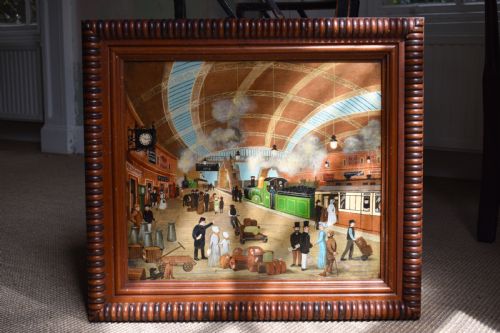
A vintage railway painting records the grit, scale and industry of the transport network through oils and boards. These works vary from naive depictions of stations to detailed studies of locomotives and engineering projects.
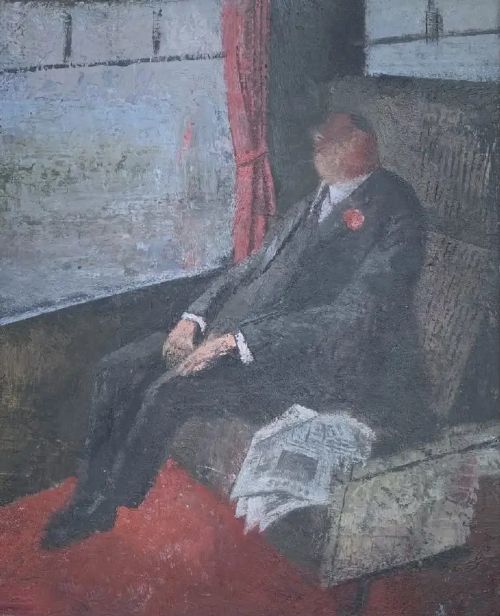
Buyers seeking a vintage railway painting encounter works originating from the nineteenth century up to the nineteen-sixties. The selection includes framed oils by the British School alongside architectural scenes capturing structural workers.
The aesthetic leans towards industrial and modern British styles, reflecting the changing landscape of travel. Such pieces suit interiors that favour authentic transport heritage and utilitarian design.
Materials and construction
Paint applied directly to wooden boards forms the primary medium for these visual records. Artists utilised traditional oil pigments to capture the dark tones of steam, iron and soot characteristic of the network.
Framing and mounting often incorporate period timbers such as mahogany and pine, reflecting the workshop practices of the era. These sturdy supports ensure the survival of the painted surface through decades of handling.
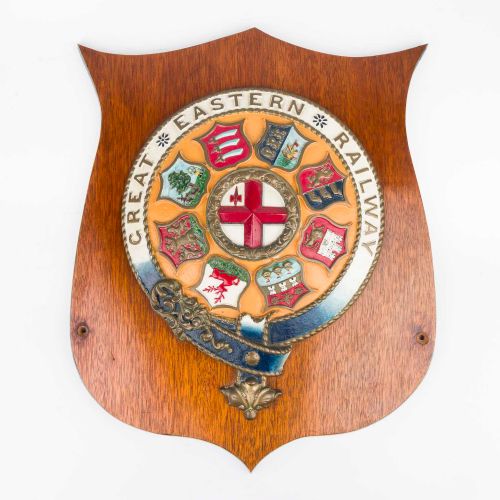
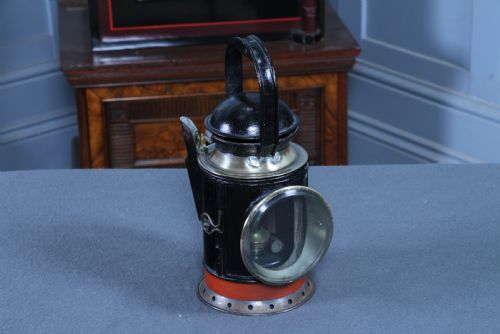
Listings combine fine art paintings with utilitarian objects including cast iron signs, oil lamps and station benches.
Assessing quality and character
Quality rests in the precision of the brushwork and the artist's ability to convey movement and atmosphere. Stronger examples display confident handling of light upon metal, steam and station architecture.
Condition of the painted surface and the stability of the underlying board dictate the desirability of an artwork. Patina accumulated over decades adds depth, provided the pigment remains stable and uncompromised by damp.
Henry J Neave
The Vintage Railway Painting Glossary
- Oil on board
- A painting technique where oil pigments are applied to a rigid wooden support rather than canvas. This method provides a sturdy surface favoured for industrial and plein air subjects.
- British School
- A loose classification for artists working within Britain across various centuries. It groups together works sharing national stylistic traditions without denoting a specific academy.
- Naive art
- Artwork characterised by a childlike simplicity in perspective and proportion. These pieces often lack formal academic training yet offer direct and honest visual documentation.
- Modern British
- An umbrella term for art produced in Britain during the twentieth century that absorbed European modernist influences. It encompasses various movements departing from strict Victorian academic realism.
Vintage Railway Painting: Frequently Asked Questions
Where were these paintings displayed?
Many works originate from private collections, railway offices, or local depots documenting the expansion of the transport network.
Artists often painted on site to capture the heavy industry and daily operations of bustling Victorian and twentieth-century termini.
How do I care for an oil on board?
Keep the artwork away from direct sunlight and fluctuating humidity to prevent the wooden support from warping.
Dust the surface gently with a soft, dry brush and avoid applying liquid cleaners directly to the painted pigment.
What periods do these artworks cover?
The selection spans from the nineteenth century through the Edwardian era up to the nineteen-sixties.
Victorian and Edwardian pieces focus on early steam and station life, whilst mid-century works reflect modernisation and structural changes.
How do I identify the British School style?
British School attributions are given to works executed by artists trained or working within Britain whose specific identities remain unrecorded.
These paintings rely on traditional regional techniques and subject matter typical of their production era.