




Vintage Qum Floor Rug
A vintage qum floor rug brings exceptional Persian knotwork into a room, offering dense floral or tile designs created by skilled weavers.
Vintage Qum Floor Rug
A vintage qum floor rug is a hand-knotted textile originating from the city of Qum in central Iran. These pieces range in date from the early twentieth century, specifically between nineteen ten and nineteen thirty, covering both smaller rugs and room-size carpets.
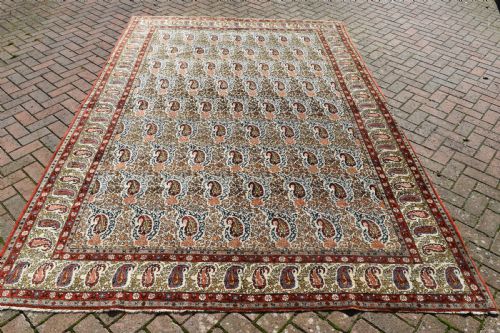
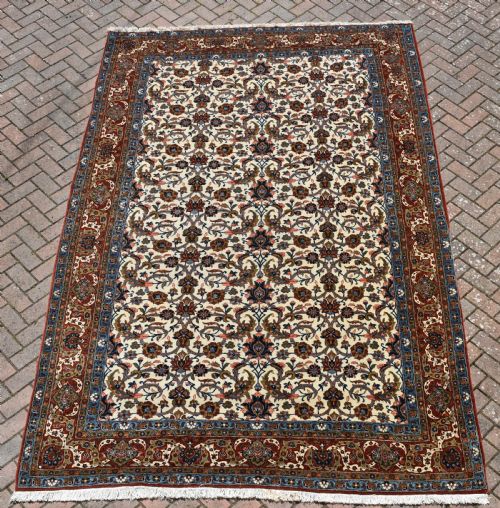
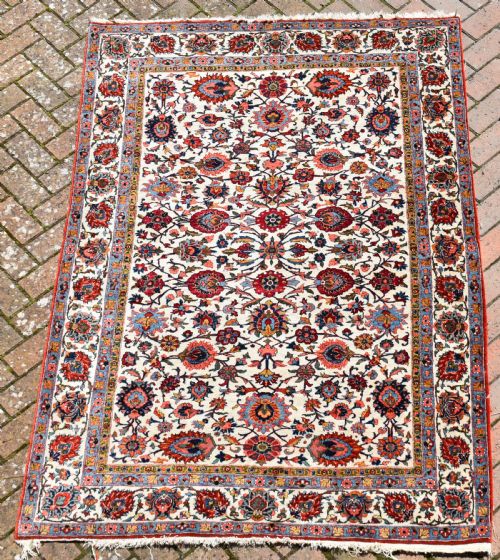
Buyers will encounter various formats on this page, from compact area rugs measuring around two metres to large room-sized carpets exceeding four metres in length. The designs seen across these listings include traditional Persian motifs and structured tile patterns.
Originating from a city renowned for its textile heritage, these floor coverings demonstrate the classic aesthetic of Persian workshop production. They function as both practical floor coverings and decorative centerpieces for traditional or contemporary interiors.
How they were made
The construction of a vintage qum floor rug relies on traditional hand-knotting techniques executed on a foundation of cotton or wool. Weavers worked on vertical looms, tying dense rows of knots to build up the intricate patterns and durable pile.
Materials utilised in these pieces include fine wool, cotton, and occasionally silk. The combination of natural fibres provides both structural stability in the warp and woof and a soft, resilient surface underfoot.
Vintage Qum Floor Rug Retail Price Guide 2026
Typical asking prices for vintage qum floor rug among the pieces listed under this phrase on Sellingantiques today, from the lower quarter to the upper quarter. They describe what is for sale here now, not the wider market.
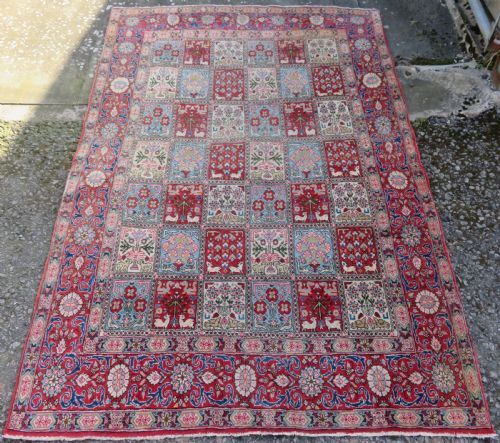
Some carpets feature precise tile patterns that resemble miniature architectural ceramic panels laid out across the floor.
What varies in quality
The quality of a vintage qum floor rug is determined by knot density and the precision of the woven design. Finer knotting allows for sharper delineation of motifs, whether in floral compositions or geometric tile patterns.
Material selection also dictates the grade of the piece, with tightly spun wool and refined cotton foundations creating a heavier, more stable carpet. The overall handle and flexibility of the rug indicate the care taken during the original weaving process.
The Vintage Qum Floor Rug Glossary
- Pile
- The vertical or slanted yarn that forms the usable surface of the rug. It is created by the knotted ends of the threads rising from the foundation.
- Warp
- The stationary longitudinal threads stretched parallel on the loom before weaving begins. The fringe of a rug is typically formed by the extended warp threads.
- Weft
- The horizontal threads passed alternately over and under the warp threads to hold the knots in place. Tight beating of the weft contributes to the structural firmness of the carpet.
- Foundation
- The underlying grid of warp and weft threads that supports the pile knots. A sturdy foundation ensures the rug maintains its shape over decades of use.
- Knot density
- The number of individual knots per square unit, which dictates the intricacy of the pattern and the durability of the textile. Higher densities usually correlate with finer workshop production.
Vintage Qum Floor Rug: Frequently Asked Questions
How do I clean a vintage qum floor rug?
Professional specialist cleaning is essential for maintaining these delicate wool and cotton textiles. Regular gentle vacuuming without a beater bar removes surface dust safely.
Avoid using household detergents or excess water on the pile. Consult a conservator experienced in antique Persian carpets for deeper maintenance.
Where should I place a room-size qum carpet?
Large room-size carpets anchor living rooms, dining spaces, or studies with traditional elegance. Ensure the placement allows the intricate central medallion or tile pattern to remain visible.
Use a quality rug underlay to prevent slipping and reduce friction between the foundation and the floorboards.
How do I date an antique qum rug?
Dating relies on stylistic analysis, material wear, and structural characteristics recorded in the weaving. Pieces from the early twentieth century often exhibit specific natural dye palettes and traditional workshop signatures.
Comparing the knotting style and format with documented examples helps narrow down the production period between nineteen ten and nineteen thirty.
Are these rugs suitable for high-traffic areas?
The dense pile and sturdy cotton foundations provide good durability for everyday domestic environments. Placing them in moderate-traffic zones balances preservation with practical enjoyment.
Rotating the rug periodically ensures even wear across the surface when exposed to directional sunlight or heavy foot traffic.