


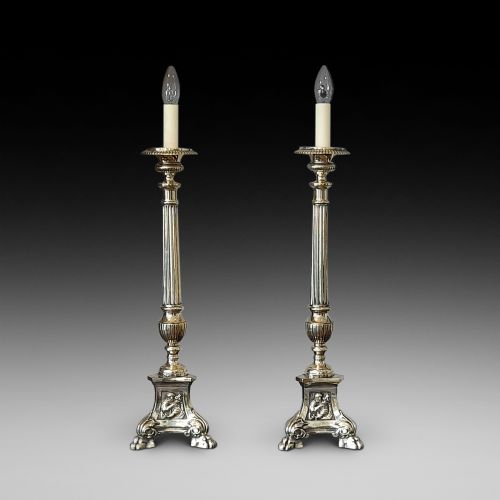
Vintage Pricket Lamp
These vintage pricket lamp pieces adapt altar candlesticks and torchers into striking lighting options for period interiors.
Vintage Pricket Lamp
When you search for a vintage pricket lamp, you encounter converted altar pieces, standard lamps, and torcheres adapted for modern electrical use. These items bridge ecclesiastical heritage and domestic illumination, drawing from centuries of liturgical and decorative design.
The selections on this page span table lamps and floor-standing candle holders repurposed from earlier hardware. They derive principally from nineteenth and twentieth-century workshops, alongside eighteenth-century forms.
Italian, French, and English origins dominate the available styles, ranging from Baroque exuberance to Gothic Revival austerity and Art Deco restraint. You most frequently meet brass, carved giltwood, and wrought iron constructions modified to hold bulbs rather than tapers.
How they were made
Maker workshops utilised traditional joinery and metalworking techniques to build these sturdy supports, employing turned wood, carved gesso, and cast brass. Artisans shaped structural elements by hand, applying giltwood finishes or patinated metal to achieve rich surface textures.
The structural integration of electrical wiring required discreet channels or adaptations through existing central shafts originally designed to carry solid prickets. Opaline glass elements and metal fixtures were then combined with the original antique bases during conversion.
Vintage Pricket Lamp Retail Price Guide 2026
Typical asking prices for vintage pricket lamp among the pieces listed under this phrase on Sellingantiques today, from the lower quarter to the upper quarter. They describe what is for sale here now, not the wider market.
Materials recorded across the selection include brass, wrought iron, opaline glass, and carved giltwood.
What varies in quality
The distinction between standard examples and finer pieces lies in the crispness of the original carving and the integrity of the patination. Heavy cast brass components and deeply carved giltwood retain their architectural definition more successfully than softer plaster-based gesso alternatives.
Proportion and scale dictate the visual weight of each piece, with taller standard lamps and matched pairs commanding greater presence in a room. The quality of the conversion work itself, particularly how sympathetically the electrical fittings integrate with the antique base, defines the overall standard.
The Vintage Pricket Lamp Glossary
- Pricket
- A sharp metal spike on a candlestick designed to hold a candle with a hollow base securely in place. This traditional feature distinguishes pricket lamps from socket-style candle holders.
- Giltwood
- Timber that has been coated with a thin layer of gold leaf over a prepared gesso ground. It provides a luminous surface finish characteristic of Baroque and Neoclassical decorative objects.
- Torchere
- A tall ornamental stand or candlestick originally designed to hold a light source. In modern contexts, these often function as floor-standing standard lamps.
- Gesso
- A plaster-like mixture applied to wood surfaces as a base for paint or gilding. It allows craftsmen to carve intricate relief details before finishing.
Vintage Pricket Lamp: Frequently Asked Questions
What is a pricket lamp?
A pricket lamp is a lighting fixture created by converting an antique pricket candlestick or torchere into an electric lamp. These pieces retain the central spike or upper platform of the original liturgical or decorative holder.
They combine historical craftsmanship with functional domestic lighting, serving as table lamps or floor standards.
How do I style a tall floor lamp?
Floor-standing torchere lamps work effectively in corners or beside large pieces of furniture to provide ambient vertical illumination. Their height draws the eye upward, complementing high ceilings and traditional architectural details.
Keep surrounding decor balanced by pairing their substantial presence with simpler furnishings that do not compete for attention.
Are these lamps safe to use?
Most antique lighting pieces are sold after undergoing professional rewiring to meet modern electrical safety standards. It remains advisable to have a qualified electrician inspect older conversions before regular use.
Ensure that appropriate bulb wattages are used, particularly with enclosed glass shades or delicate giltwood components.
How do I identify Italian Baroque pieces?
Italian Baroque designs feature dynamic scrolls, acanthus leaf carving, and rich giltwood surfaces that emphasise movement and drama. These pieces often display robust proportions and theatrical detailing characteristic of ecclesiastical furnishings.
Comparing the ornamentation against regional design traits helps distinguish Florentine and broader Italian workshop traditions from French or English equivalents.