



Vintage Press Irons
Vintage press irons are heavy mechanical tools that squeeze, flatten, and bind, offering industrial character and tactile history for the modern home.
Vintage Press Irons
Vintage press irons encompass heavy mechanical devices used for pressing, binding, and sealing across domestic, agricultural, and industrial trades. These utilitarian objects demonstrate the robust functional engineering of past centuries.
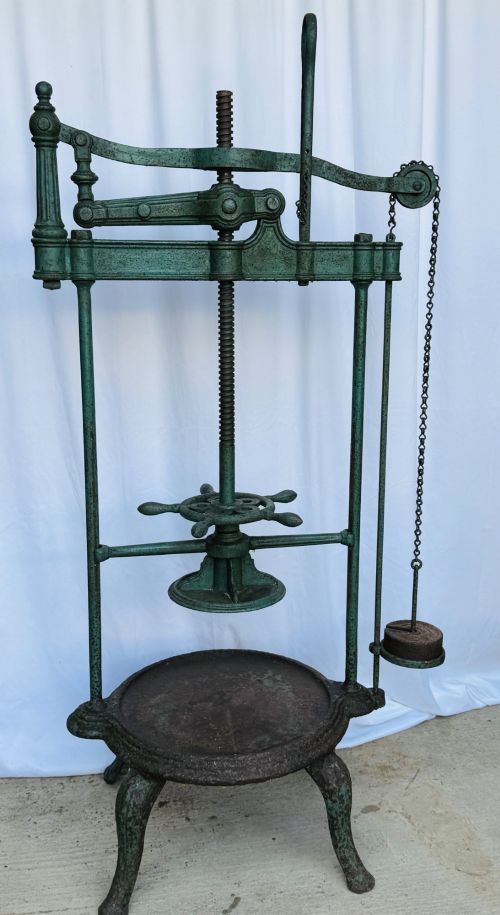
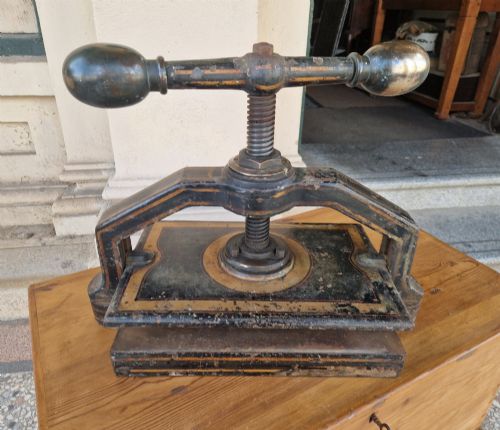
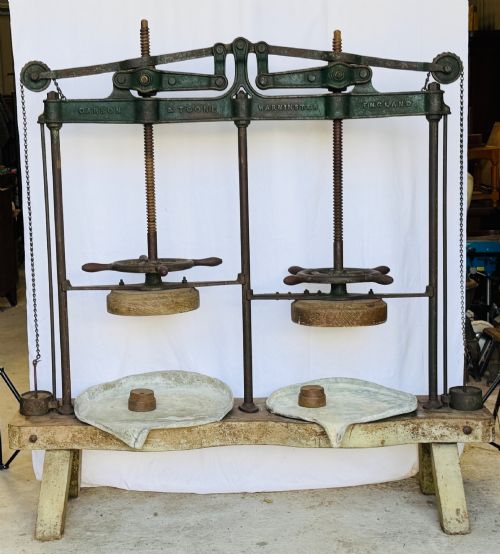
Buyers searching for vintage press irons encounter diverse forms including book presses, cheese presses, apothecary cork compressors, and bottle corkers. The selection draws heavily from Victorian and Georgian periods alongside industrial examples.
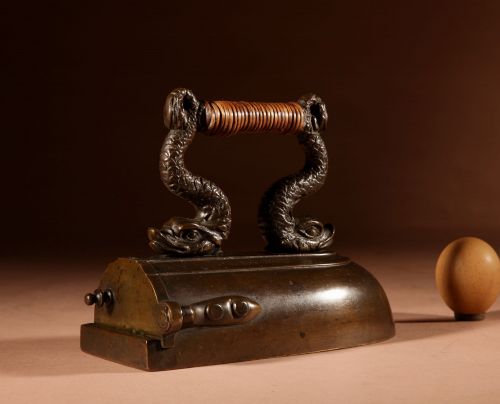
While traditional flat irons appear in related categories, the current offering leans towards mechanical presses constructed for specific trades rather than simple laundry smoothing.
Materials and construction
Cast iron and forged steel provide the structural strength necessary for heavy compression work, often paired with wrought iron brackets and handles. These metals form the rigid frames that endure centuries of mechanical strain.
Timber and wood components, such as oak, frequently feature in the press beds and handles, contrasting against the dark metalwork. Bronze and brass details appear in screw mechanisms and fittings, adding subtle metallic variation.
Makers utilised simple sand casting and hand forging techniques to shape the thick metal components. Surface finishes typically rely on oxidised metal surfaces and natural timber grain rather than applied paints.
Vintage Press Irons Retail Price Guide 2026
Typical asking prices for vintage press irons among the pieces listed under this phrase on Sellingantiques today, from the lower quarter to the upper quarter. They describe what is for sale here now, not the wider market.
A solitary apothecary cork compressor waits quietly to squeeze nineteenth-century wine closures.
Evaluating quality and execution
Quality rests in the precision of the mechanical screw threads and the integrity of the heavy iron castings. Superior examples show crisp casting marks and smooth operation without excessive play in the moving parts.
The choice of secondary materials marks the distinction between standard utilitarian items and finer workshop tools. Integrated timber bases and retained original metal patination elevate the visual presence of a piece.
Proportion and scale dictate the visual weight of the object within a room. Balanced proportions in the frame and handles distinguish well-designed industrial machinery from crude local fabrication.
Burgess Brothers of Weaverham
The Vintage Press Irons Glossary
- Book press
- A heavy mechanical device utilising a screw thread to flatten pages or bind volumes. These units typically feature a large metal platen and substantial wooden or iron framing.
- Cork compressor
- A specialised apothecary or bottling tool designed to squeeze bottle corks before insertion. These small presses often incorporate lever actions and shaped metal jaws.
- Cheese press
- An agricultural implement used to expel whey from curd during cheese production. They rely on weighted levers or screw mechanisms to apply steady pressure.
- Platen
- The flat metal or wooden plate that applies uniform pressure downward onto the material below. The thickness of this plate indicates the structural strength of the press.
- Screw thread
- The helical ridge cut into the main shaft that converts rotational force into linear pressure. Fine, deep threads allow for gradual and powerful compression.
Vintage Press Irons: Frequently Asked Questions
What were vintage press irons used for?
These devices served specific industrial, domestic, and agricultural functions including binding books, pressing cheese, and sealing bottles with corks. Each mechanical press was built to apply heavy, controlled pressure for trade work.
Over time, these workshop tools transitioned into decorative objects that celebrate historical manufacturing and robust mechanical design.
How do I date a cast iron press?
Dating relies on stylistic clues, fastener types, and foundry marks cast directly into the metal frame. Victorian and Georgian examples often display heavier ornamentation and specific patent details.
Examining the wear patterns on the screw threads and timber components also helps determine the approximate age of the mechanism.
Are these presses still fully operational?
Many of the surviving mechanical presses retain their functional integrity and working screw threads. Basic maintenance involving cleaning and light lubrication often restores smooth movement to the metal parts.
Buyers frequently use book presses for paper crafts or display them as static sculptural objects in living spaces.
How heavy are these metal presses?
Cast iron and steel construction makes these objects exceptionally heavy, often requiring two people to lift larger book or cheese presses. This substantial weight reflects their original purpose of withstanding immense mechanical stress.
Display surfaces must be strong enough to support the dead weight of solid iron and dense timber.