






Vintage Poultry Painting
These vintage poultry painting works bring farmyard life indoors through oil on canvas and watercolour, offering a charming glimpse into rural scenes that collectors treasure.
Vintage Poultry Painting
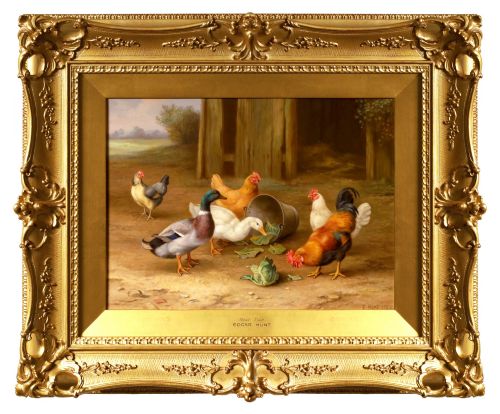
A vintage poultry painting depicts farmyard birds such as hens, cockerels, and chicks, often set within rural landscapes or farmyards. These works capture domestic fowl with careful observation, reflecting a strong agricultural interest in British and European art.
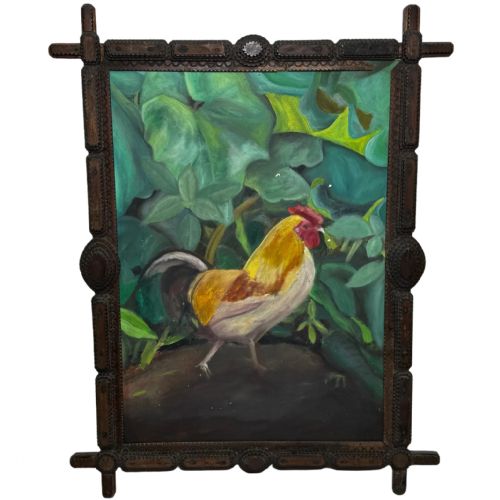
Buyers encountering this group will most frequently find oils on canvas and watercolours on paper. The examples span the nineteenth century through the early decades of the twentieth century, including Edwardian and Spanish folk art pieces.
The subjects range from intimate studies of chicks to broader scenes featuring cart sheds and farm yards. Artists of the period focused closely on the natural textures of feathers and the rustic environments inhabited by the birds.
How they were made
Artists painted these works primarily using oil paint on canvas or watercolour applied to paper, mounted within wood and giltwood frames. The technique relies on layered brushwork to render the detailed plumage and light of farmyard settings.
The preparation of the canvas or paper surface allowed painters to achieve both fine realist detail in the birds and looser, impressionistic strokes in the surrounding landscape backgrounds.
Vintage Poultry Painting Retail Price Guide 2026
Typical asking prices for vintage poultry painting among the pieces listed under this phrase on Sellingantiques today, from the lower quarter to the upper quarter. They describe what is for sale here now, not the wider market.
Several cockerels recorded here appear to demand immediate breakfast with considerable insistence.
What varies in quality
Quality in these works rests upon the precision of the animal drawing and the liveliness of the brushwork within the plumage. Stronger pieces display a distinct character in the cockerels and hens, moving beyond stiff illustration to capture natural movement.
The handling of light and the integration of the birds into their farmyard context separate standard decorative works from accomplished examples by recognised animalier and realist painters.
Edgar Hunt·John Atkinson·Claude Cardon·Owen Bowen·Gustav Goemans·J L VAN Leemputten
The Vintage Poultry Painting Glossary
- Oil on Canvas
- Pigment mixed with drying oil applied to a stretched woven fabric support. This medium allowed artists to build rich textures and deep tones.
- Watercolour
- A paint consisting of colour suspended in a water-soluble binder, used on paper. It produces transparent washes that capture light effectively.
- Giltwood
- Wood that has been coated with a thin layer of gold leaf. Frames finished in this manner frequently house traditional oil paintings.
- Animalier
- An artist who specialises in the realistic portrayal of animals. Such painters focused heavily on the accurate anatomy of farmyard birds.
Vintage Poultry Painting: Frequently Asked Questions
What subjects appear in these paintings?
The works depict farmyard scenes centred on hens, cockerels, and chicks, often accompanied by cart sheds or rural interiors. Artists documented these domestic fowl with close attention to natural grouping and behaviour.
Such rural imagery reflects a broader historical interest in agrarian life and British animalier painting traditions during the nineteenth and early twentieth centuries.
How should I care for a watercolour?
Watercolours on paper require placement away from direct sunlight to prevent the pigments and paper support from fading over time. Glazing with appropriate framing materials protects the delicate surface from moisture and atmospheric dust.
Stable indoor humidity levels help preserve both the paper and any associated wooden or giltwood frames.
How do I distinguish an oil from a watercolour?
Oil paintings feature a textured, often glossy surface of dried pigment on canvas, which does not require protective glass. Watercolours present a flatter, matt appearance on paper and are customarily displayed behind glass.
Examining the support under magnification reveals the woven threads of canvas versus the smooth fibres of paper.
Where were these rural scenes painted?
The pieces originate from various European traditions, including British realism, Spanish folk art, and continental European schools. Artists worked directly from farmyards, rural sheds, and domestic agricultural settings.
This geographical diversity brings different regional approaches to the depiction of light and farm architecture.