
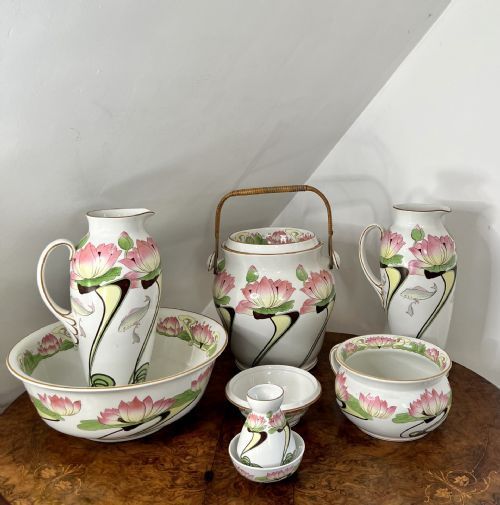


Vintage Porcelain Pitcher
When you handle a vintage porcelain pitcher, you hold a functional vessel shaped through centuries of ceramic tradition.
Vintage Porcelain Pitcher
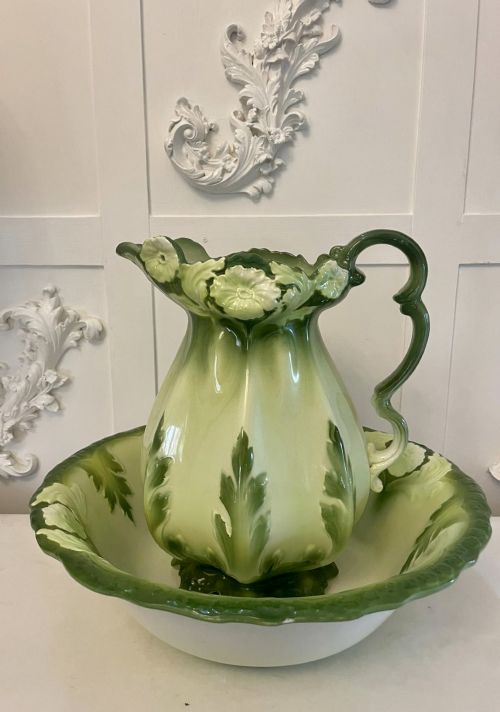
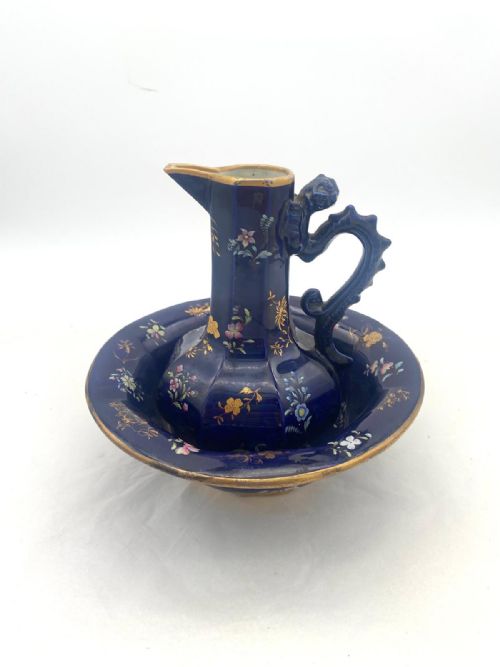
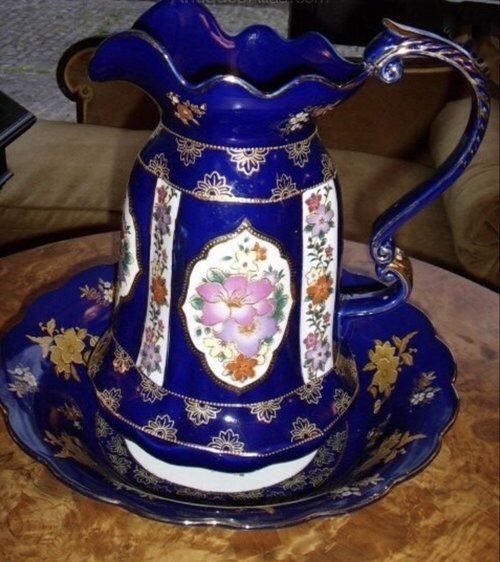
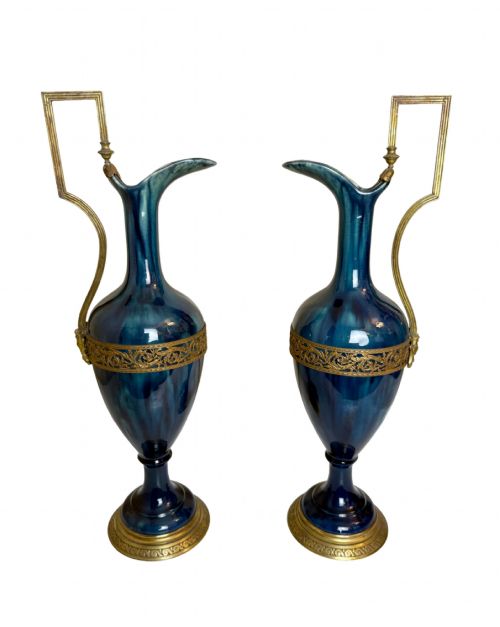
A vintage porcelain pitcher encompasses a diverse range of vessels, spanning from large washstand sets and ewers to smaller cream jugs and coffee pots. These items appear across periods including the Georgian era, the nineteenth century, and the early decades of the twentieth century, reflecting domestic habits of past households.
The most common forms on this page include larger jug and bowl sets intended for Edwardian and Victorian bathrooms, alongside smaller porcelain jugs produced by factories such as Royal Worcester. Stylistic influences range from Art Nouveau and Victorian Chinoiserie to French Rococo Revival.
Buyers selecting a vintage porcelain pitcher often weigh whether they want a utilitarian chamber vessel or a cabinet piece decorated with handpainted fruits, birds, insects, or armorial crests. Each piece carries the distinct aesthetic mark of its manufacturing period.
What varies in quality
The distinction between standard domestic wares and superior examples often rests on the complexity of the handpainting and the precision of the gilding. Pieces featuring signed artwork or intricate armorial crests typically represent higher standards of production.
The refinement of the porcelain paste and the crispness of moulded details, such as those found on ewers and mask head jugs, signal the skill of the pottery. Artisans who executed detailed handpainted birds, insects, and fruit added considerable value to the finished vessel.
Completeness also dictates standing, particularly for washstand sets where retaining both the jug and the matching basin preserves the original context of the domestic set.
Some jugs hide a face right beneath the spout, giving you a quiet ceramic companion for your morning cream.
Masons Ironstone·Chamberlain Worcester·Caughley Coalport·Royal Worcester·Doulton Burslem·Shelley·Crown Derby·Meissen
The Vintage Porcelain Pitcher Glossary
- Ewer
- A large pitcher with a wide spout and ornate handle, historically used for water on washstands or as a decorative display piece.
- Cream jug
- A small pouring vessel designed to hold cream for tea or coffee service, frequently found in porcelain and earthenware.
- Gilding
- The application of gold leaf or gold paint to the surface of porcelain to highlight rims, handles, and decorative borders.
- Mask head jug
- A pitcher featuring a moulded human or grotesque face incorporated beneath the spout, common in eighteenth and nineteenth-century English ceramics.
- Armorial crest
- A heraldic design painted onto porcelain, commissioned by landed families to personalise their dining and tea services.
Vintage Porcelain Pitcher: Frequently Asked Questions
How were porcelain pitchers used historically?
Larger pitchers and ewers served practical washing functions on bedroom washstands, paired with matching basins for daily hygiene before indoor plumbing became widespread.
Smaller vessels functioned at the dining table to pour cream or hot liquids during tea and coffee services.
Can I use my vintage pitcher daily?
While these pieces were originally made for functional use, age and delicate materials like gold leaf and handpainted enamel require careful handling.
Many collectors prefer to display them safely or use them strictly for dry decorative purposes to preserve their surface decoration.
How do I clean a porcelain jug?
Gentle washing with warm water and mild soap is usually sufficient for glazed porcelain surfaces.
Avoid abrasive sponges and harsh detergents, especially on pieces with exterior gilding or delicate handpainted enamels.
How do I identify the period of a pitcher?
Stylistic clues such as the flowing organic lines of Art Nouveau or the heavy floral motifs of the Victorian era offer clear indicators of date.
Maker marks, factory stamps, and the specific composition of the ceramic body further help narrow down the decade of production.