


Vintage Pocketwatch and Chain
These vintage pocketwatch and chain sets combine mechanical timepieces with heavy gold or silver linkages, offering a wearable piece of history.
Vintage Pocketwatch and Chain
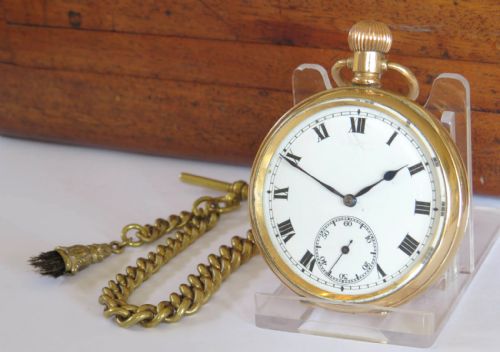
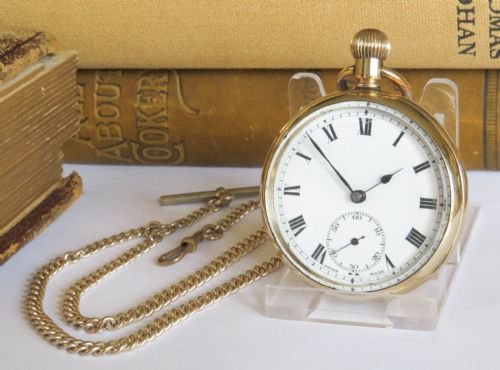
A vintage pocketwatch and chain brings together a portable timepiece and a matching tether, often repurposed today as a necklace or bracelet. When you search for a vintage pocketwatch and chain, you encounter formations ranging from simple open-faced watches paired with silver links to elaborate gold necklaces constructed from historic components.
The pieces on this page span the late nineteenth century through to the nineteen-thirties, covering Victorian, Edwardian, and Art Deco aesthetics. Most examples integrate solid gold, silver, or gun metal alongside mechanical movements, creating durable items designed for daily use or formal wear.
You will find items that retain their original pairing alongside those where watch and chain have met later in life. The focus remains on the interplay between the ticking movement and the linked metalwork, whether worn draped across a waistcoat or adapted as a neckpiece.
How they were made
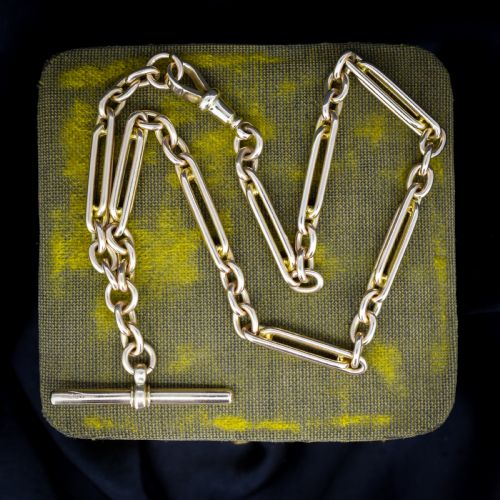
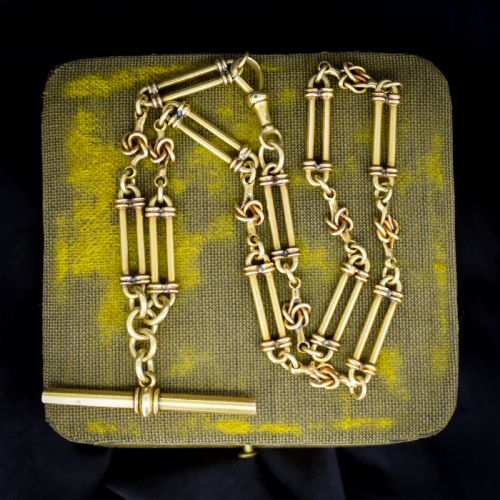
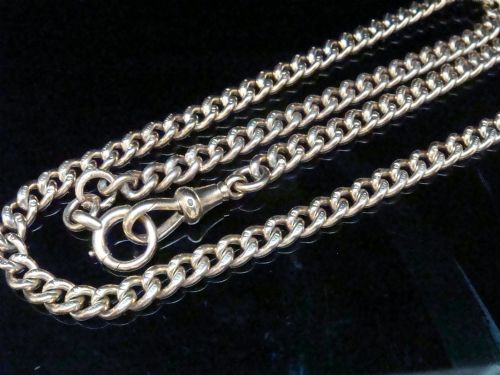
Makers constructed these chains using distinctive link patterns such as trombone links, oval links, and love knots, frequently applying hallmarks to individual components for quality assurance. Gold and silver dominated the workshops, utilising varying carats including nine carat rose gold, ten carat yellow gold, and eighteen carat yellow gold alongside durable gun metal.
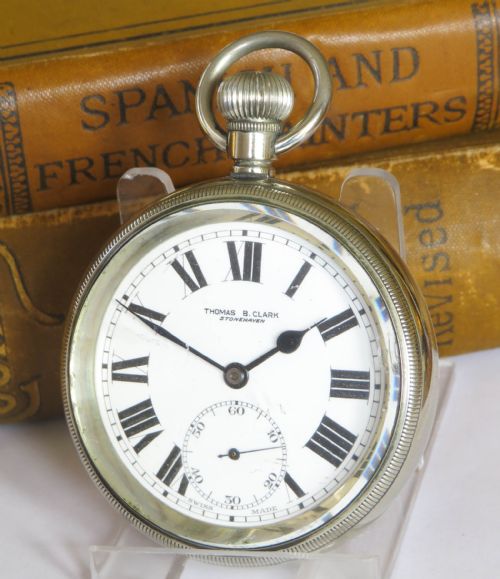
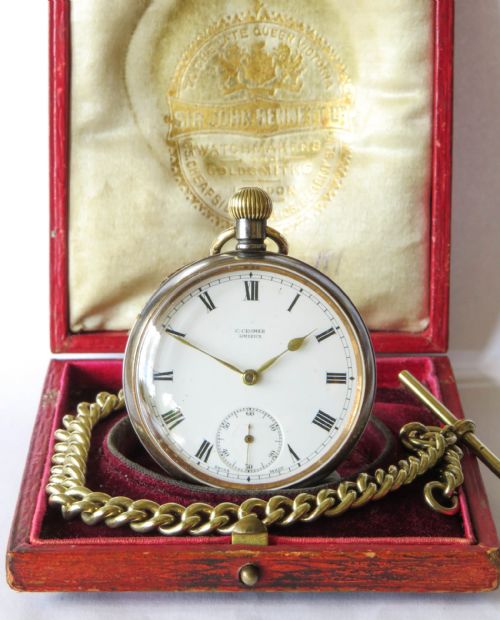
Watchmakers housed mechanical movements inside metal cases, sometimes incorporating glass crystals and enamel dials with delicate numerals. Artisans fashioned Albert chains to secure securely to garments, employing sturdy clasps and T-bars that reflect nineteenth and early twentieth-century manufacturing standards.
Listings span multiple eras from the late Victorian period through the nineteen-thirties, encompassing both silver and various carats of gold.
What varies in quality
Quality in these items rests upon the weight of the metal and the complexity of the link construction, with fully hallmarked pieces demonstrating superior craftsmanship. Finer examples exhibit crisp detailing on the watch dial and robust mechanical health within the movement.
The integrity of the chain links and the originality of the pairing dictate the standing of a piece within its period. Substantial gram weights in rose or yellow gold elevate the desirability of a chain, while well-preserved enamel and clear maker signatures distinguish the better timepieces.
Revue·Syren·Omega·Electa
The Vintage Pocketwatch and Chain Glossary
- Albert chain
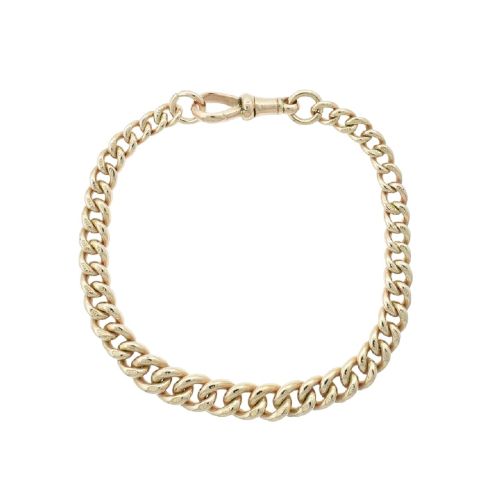
- A short length of watch chain designed to secure a pocket watch to a waistcoat, featuring a T-bar at one end and a swivel clasp at the other. These chains evolved into distinct jewellery pieces and frequently convert into necklaces.
- Trombone link
- A type of watch chain link characterised by long rectangular bars alternating with smaller round or oval links. This pattern provides both flexibility and visual rhythm.
- Love knot
- A decorative knot formed from intertwined strands of metal, frequently incorporated into nineteenth-century chain designs as a symbol of affection.
- Hallmark
- An official stamp applied to precious metals indicating the purity of the material, the assay office, and often the year of manufacture.
- Open faced
- A watch design lacking a hinged metal cover over the glass crystal, allowing immediate visibility of the dial and hands.
Vintage Pocketwatch and Chain: Frequently Asked Questions
How do I wear a pocket watch chain today?
Many buyers repurpose historic watch chains as necklaces or bracelets, utilising the existing length and clasps to wear them directly against the skin. The substantial links of an Albert chain offer a distinct presence when styled in this modern manner.
Alternatively, you can thread the T-bar through a buttonhole and secure the watch in a pocket to replicate the traditional nineteenth-century method of carrying a timepiece.
How can I tell the period of a watch and chain?
The period of a piece is usually determined by hallmarks stamped onto the metal links, stylistic cues in the watch face, and the overall construction technique. Victorian and Edwardian examples often display heavier ornamentation, while nineteen-thirties pieces lean towards cleaner geometric lines.
Examining the shape of the watch case and the typography on the dial provides additional clues regarding the decade of production.
Are these pocket watches still working?
The mechanical movements in these vintage watches require careful handling and often benefit from professional servicing to ensure accurate timekeeping. Each timepiece operates on a manual wind mechanism developed during its respective era.
While many retain their functional capacity, collectors frequently appreciate them as mechanical artefacts as well as working accessories.