



Vintage Pocket Watch T-bar
A vintage pocket watch t-bar secures an albert chain through a buttonhole, bringing functional historic tailoring detail into modern wear.
Vintage Pocket Watch T-bar
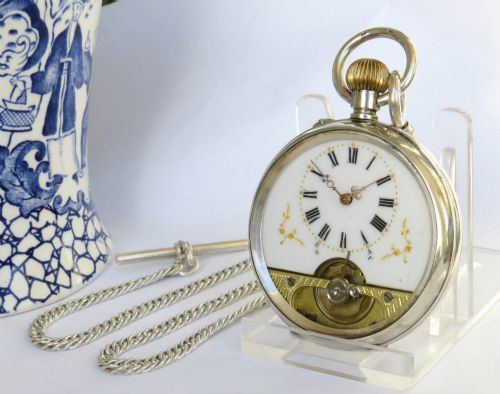
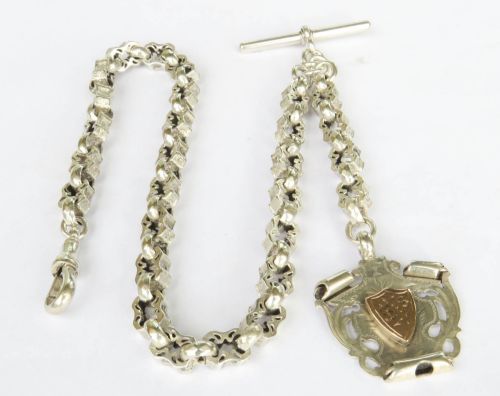
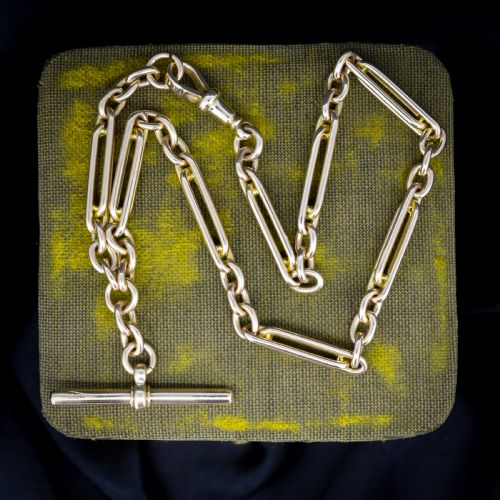
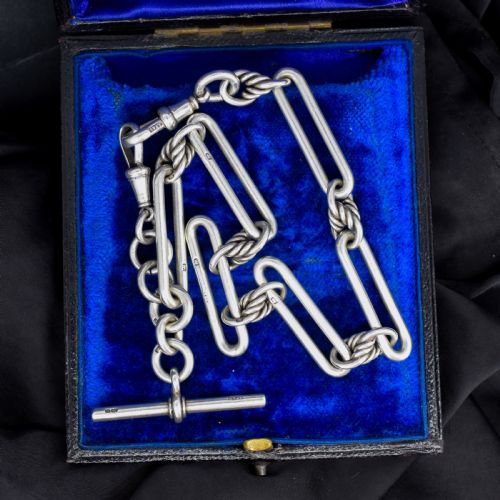
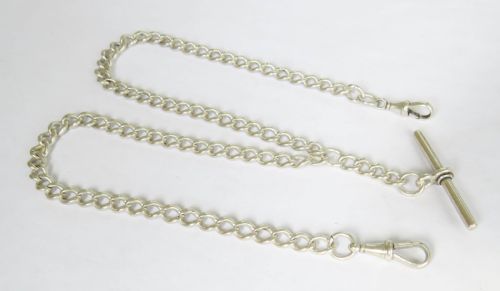
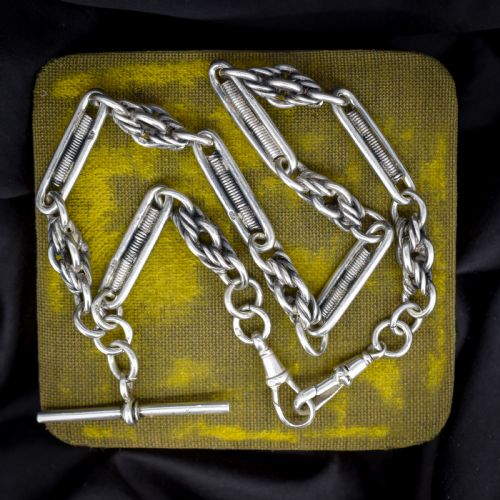
A vintage pocket watch t-bar anchors a watch chain across a waistcoat or garment buttonhole, originating from nineteenth and early twentieth-century gentlemen's attire. When searching for a vintage pocket watch t-bar, buyers encounter solid silver, rolled gold, and various carats of yellow and rose gold chains attached to functional T-bars, dog clips, and fobs. The examples on this page span from Victorian and Edwardian periods through to Art Deco and nineteen-thirties designs, frequently incorporating curb links, trombone links, and love knots.
Albert chains featuring a vintage pocket watch t-bar appear frequently, often adapted today to wear as necklaces or bracelets alongside their original pocket timepieces. These pieces range from heavy graduated sterling silver curb links hallmarked in provincial assay offices like Chester and Birmingham to delicate nine carat rose gold lengths set with darts or football fobs. The forms combine utilitarian watch-securing hardware with decorative metalwork, creating versatile pieces of historic jewellery.
What varies in quality
Quality in these pieces depends on the weight and integrity of the metal links, the precision of the graduating scale on curb chains, and the clarity of the assay hallmarks. Substantial gauge gold and heavy gauge sterling silver retain their crisp link profiles and secure joints better over time than lighter rolled variants.
The sophistication of the link construction - such as intricate trombone and love knot configurations or fully articulated fancy links - distinguishes finer workshop output from standard production. Original components like matching maker-stamped dog clips and intact swivel mechanisms preserve the integrity of the ensemble.
Vintage Pocket Watch T-bar Retail Price Guide 2026
Typical asking prices for vintage pocket watch t-bar among the pieces listed under this phrase on Sellingantiques today, from the lower quarter to the upper quarter. They describe what is for sale here now, not the wider market.
Assay offices stamped provincial locations such as Chester and Birmingham onto link surfaces alongside specific date letters.
Longines·Omega·Horos·Tellus·Cyma·Revue
The Vintage Pocket Watch T-bar Glossary
- T-Bar
- The crossbar component attached to a watch chain that slips through a buttonhole to secure the chain and watch. It frequently bears assay marks on its metal bar.
- Albert Chain
- A type of watch chain named after Prince Albert, designed to secure a pocket watch in a waistcoat pocket. They come in single and double variations.
- Dog Clip
- A spring-loaded swivel clasp attached to the end of a watch chain used to secure a pocket watch or fob. The spring mechanism allows for quick attachment and release.
- Trombone Link
- A distinctive chain link shape characterised by elongated rectangular links connected by smaller circular or oval rings. This pattern was popular in nineteenth and early twentieth-century watch chains.
- Graduated Chain
- A watch chain where the links decrease in size progressively from the centre point towards the ends. This design balanced visual weight evenly across a waistcoat.
Vintage Pocket Watch T-bar: Frequently Asked Questions
How do I wear a pocket watch t-bar today?
Many people detach the watch and wear the albert chain and t-bar as a necklace or wrap bracelet. The t-bar drops as a decorative pendant feature in contemporary styling.
Alternatively, you can thread the t-bar through a buttonhole on a jacket or waistcoat and tuck the chain into the pocket, recreating its traditional Victorian function.
What is the difference between single and double albert chains?
A single albert chain runs from a single pocket to a single buttonhole, featuring one t-bar and one dog clip for the watch at the drop.
Double albert chains feature a central t-bar with two distinct chain lengths dropping from it, allowing a pocket watch to sit in one pocket and a fob or secondary item in the other.
How can I tell silver chains from rolled gold?
Sterling silver chains will typically display British hallmarks indicating the lion passant for sterling standard, alongside assay office marks like the Chester crown or Birmingham anchor.
Rolled gold pieces consist of a thin layer of gold mechanically bonded to a base metal core, and while they may bear maker stamps, they lack standard precious metal purity hallmarks.
What periods do these watch chains come from?
The listings predominantly feature pieces from the Victorian and Edwardian eras, spanning the late nineteenth century through to the nineteen-twenties and thirties.
Art Deco influences and early twentieth-century manufacturing styles appear frequently, often documented by date letters stamped directly onto the individual silver or gold links.