




Vintage Playing Cards
Vintage playing cards and their associated containers bring tangible social history to the table, spanning Victorian boxes to Art Deco bridge sets.
Vintage Playing Cards
When you search for vintage playing cards, you encounter a range of physical containers and accessories designed for historical parlour and card games. The material evidence on this page spans silver boxes, leather bridge cases, wooden games tables, and related paraphernalia rather than loose paper decks alone.
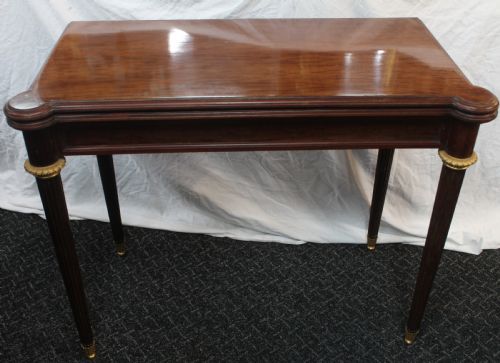
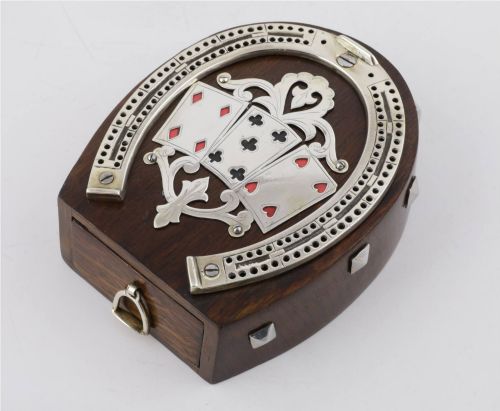
The objects you are most likely to meet here date from the nineteenth and twentieth centuries, encompassing Victorian, Edwardian, and Art Deco periods. These items include specialised cribbage board boxes, bridge boxes mounted in silver, and folding walnut or mahogany games tables designed for domestic entertainment.
Materials and construction methods
The pieces listed utilise a combination of precious metals, carved hardwoods, and fitted leather. Silversmiths created sterling silver and silver-plated bridge boxes, trump markers, and card suits spoons, frequently incorporating hallmarks that record the assay office and date.
Cabinetmakers constructed games tables and decorative boxes using walnut, mahogany, oak, and rosewood, often featuring inlaid details or carved folk art motifs. Specialised items also integrate enamel, brass, bone, and Bakelite to achieve their finished form.
Vintage Playing Cards Retail Price Guide 2026
Typical asking prices for vintage playing cards among the pieces listed under this phrase on Sellingantiques today, from the lower quarter to the upper quarter. They describe what is for sale here now, not the wider market.
Listings feature items spanning the Georgian, Victorian, Edwardian, and Art Deco periods, utilising silver, walnut, mahogany, and enamel.
Distinguishing quality in gaming antiques
Quality rests upon the integrity of the materials, the crispness of any metal chasing or wood carving, and the precision of mechanical elements like rising card trays. Maker attribution through clear hallmarks or signatures separates standard production pieces from higher-tier examples.
The survival of original fitted interiors, complete sets of spoons or dice, and well-preserved hinges or folding mechanisms dictate the overall standard of preservation. Pieces retaining their original fitted cases or unblemished enamel demonstrate superior original execution.
Levi & Salaman·Nelson and Drake
The Vintage Playing Cards Glossary
- Cribbage board
- A scoring board featuring tracks of small holes used to record points in the card game cribbage. Many period examples are integrated directly into the lids of wooden storage boxes.
- Bridge box
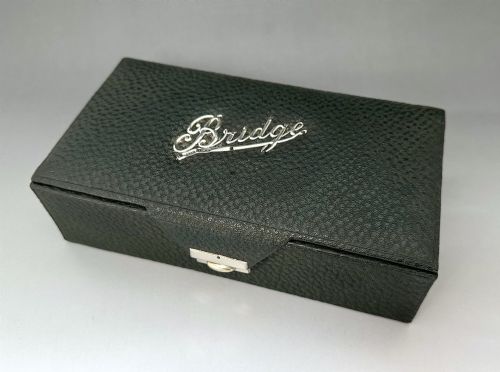
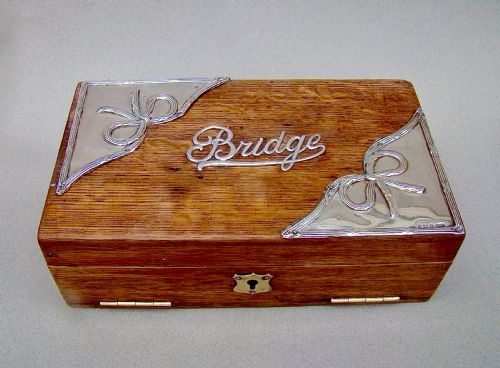
- A specialised lidded container designed to hold playing cards and scoring equipment for the game of bridge. These are frequently mounted in silver or bound in leather.
- Trump marker
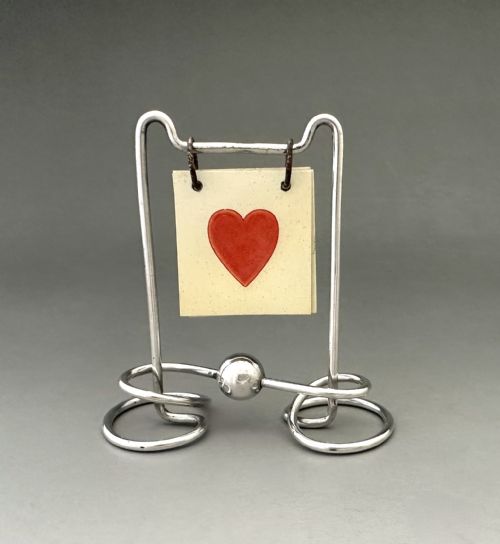
- A small mechanical device or indicator used in various card games to display the current trump suit. They appear in silver and silver-plated formats.
- Hallmark
- A series of official marks stamped on silver and gold items indicating the maker, purity, assay office, and year of manufacture. These provide verifiable dates for nineteenth-century pieces.
Vintage Playing Cards: Frequently Asked Questions
What is a bridge box?
A bridge box is a specialised container built to house playing cards and tally pads specifically for the game of bridge. They are often lined with silk or velvet and mounted with silver details.
These boxes date predominantly from the Edwardian period onward, reflecting the immense popularity of bridge during the early twentieth century.
How do I identify a Victorian games table?
Victorian games tables typically feature folding or rotating tops supported by mahogany, walnut, or rosewood structures. They open to reveal a baize-lined playing surface for cards.
Underneath the folding top, many incorporate a concealed shallow well designed to store decks of cards and small gaming pieces.
What are card suits spoons?
Card suits spoons are small teaspoons featuring handles shaped or engraved with the four card suits of hearts, diamonds, clubs, and spades. They were produced in silver and silver-plated formats.
Collectors often find them in matched sets of four, sometimes housed within their original fitted presentation cases from the Art Deco era.
How are cribbage boards incorporated into boxes?
Many nineteenth-century games boxes incorporate scoring tracks drilled directly into the wooden lid or sliding front panel. This allowed players to keep score using pegs stored inside the box itself.
This dual function made oak and mahogany cribbage boxes compact, essential items for domestic card playing before dedicated scorepads became standard.