


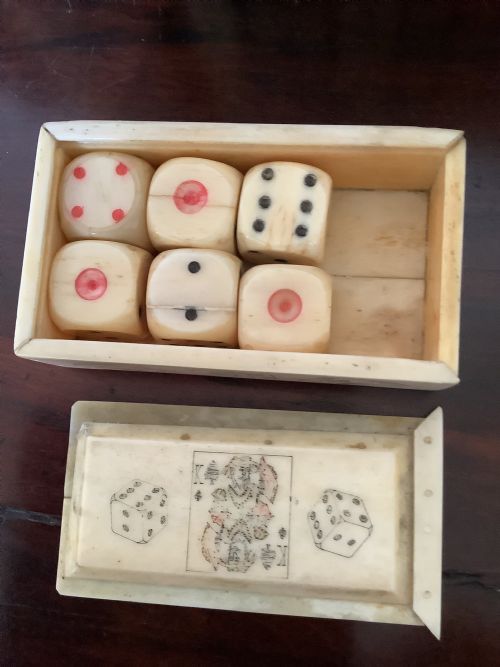


Vintage Playing Card Box
A vintage playing card box is a small receptacle designed to hold cards neatly, offering both functional storage and tabletop charm.
Vintage Playing Card Box
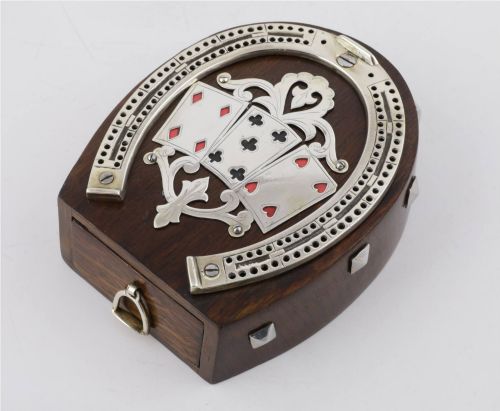
A vintage playing card box serves as a dedicated vessel for holding decks of cards, cribbage pegs, or gaming counters, keeping parlour accessories orderly. When searching for a vintage playing card box, a buyer encounters pieces originating from the Victorian, Edwardian, and Georgian periods, alongside later twentieth-century iterations.
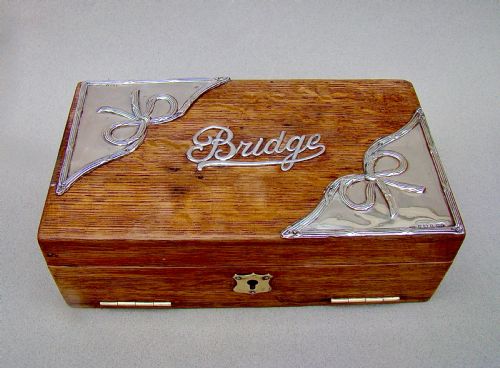
The objects appear in various forms including games boxes, caskets, and specific bridge or patience boxes. Materials span from silver and sterling silver to leather, burr walnut, glass, and carved bone.
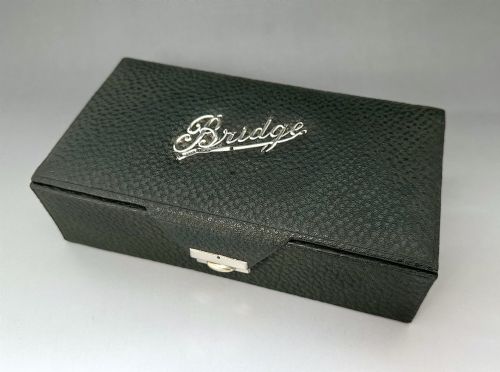
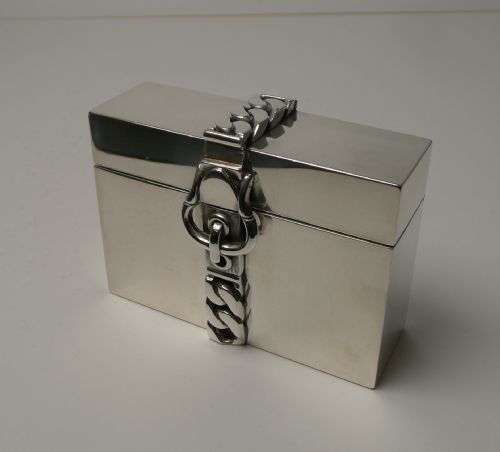
Makers and origins range from English silversmiths to continental workshops, capturing styles such as Black Forest carving, Art Deco, Regency, and Mid-Century Modernism. The most frequent examples on this page are silver-mounted leather bridge boxes and solid silver card boxes from the late nineteenth and early twentieth centuries.
How they were made
Metalsmiths constructed silver playing card boxes using techniques such as pressing, embossing, and mounting silver onto leather or wooden carcasses. Hallmarks stamped into the silver provide precise assay office and date records.
Carved wooden examples utilise traditional joinery and hand-carving methods, particularly evident in Black Forest game boxes and burr walnut caskets. Bone components in prisoner-of-war pieces involve meticulous hand-carving and staining techniques.
Leather-covered variants rely on stiffened card or wood foundations wrapped in fine leather, often accented with silver mounts, silk linings, and fitted interior compartments for cards and counters.
Vintage Playing Card Box Retail Price Guide 2026
Typical asking prices for vintage playing card box among the pieces listed under this phrase on Sellingantiques today, from the lower quarter to the upper quarter. They describe what is for sale here now, not the wider market.
One extraordinary box carries the quiet history of the Napoleonic Wars, carved entirely from bone by a prisoner of war.
What varies in quality
The standard of a vintage playing card box rests on the crispness of its hand-carved details and the weight of its metal components. Finer boxes feature substantial gauge silver, intricate relief carving, and robust internal mechanisms such as rising card trays.
Materials dictate much of the inherent quality, with solid sterling silver, burr walnut, and finely tooled leather occupying the upper tier of production. Inferior examples utilise thinner plating or simpler construction methods that lack enduring structural integrity.
Levi & Salaman·Nelson and Drake
The Vintage Playing Card Box Glossary
- Bridge box
- A specific container sized to hold two decks of cards, often accompanied by score pads and pencils for the game of bridge.
- Cribbage box
- A box featuring a sliding lid or internal compartment, with a cribbage board integrated into the exterior lid for pegging scores.
- Hallmark
- A series of official marks stamped on silver items indicating the maker, assay office, standard of purity, and year of manufacture.
- Black Forest carving
- Highly detailed wood carving originating from the mountainous regions of central Europe, frequently depicting animals and foliage on games boxes.
- Patience box
- A smaller container traditionally designed to hold a single pack of cards used for solitaire or patience games.
Vintage Playing Card Box: Frequently Asked Questions
What fits inside a vintage playing card box?
These boxes accommodate standard decks of playing cards, and many include compartments for scoring markers, dice, or cribbage pegs.
Larger games boxes house multiple decks alongside specialised accessories for specific card games.
How do I date a silver card box?
Dating relies primarily on the stamped silver hallmarks, which include a distinct letter code corresponding to the year of assay.
Stylistic cues such as Edwardian crests or Art Deco geometric lines further narrow the period of manufacture.
Were these boxes used for bridge?
Many Edwardian and later boxes were specifically manufactured for contract bridge, holding the necessary double decks and scoring implements.
Earlier nineteenth-century examples served more general card and gaming purposes before specific bridge sets became popular.
How should I clean a silver card box?
Silver components require gentle cleaning with a specialised cloth to preserve hallmarks and delicate embossed details.
Leather and wooden surfaces need only dry dusting, avoiding moisture that might damage old linings or adhesives.