
Vintage Plate Stand
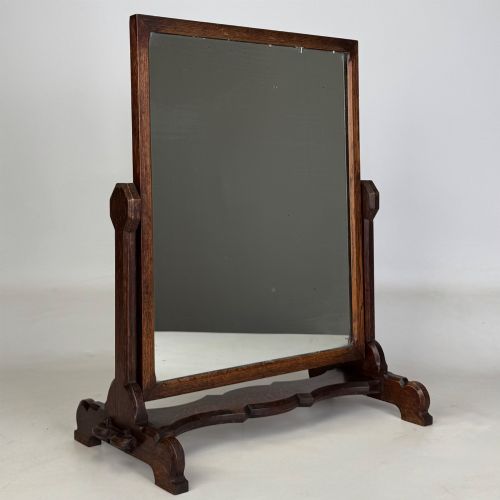
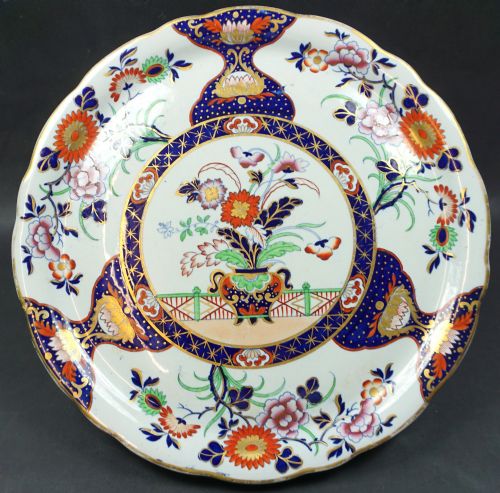
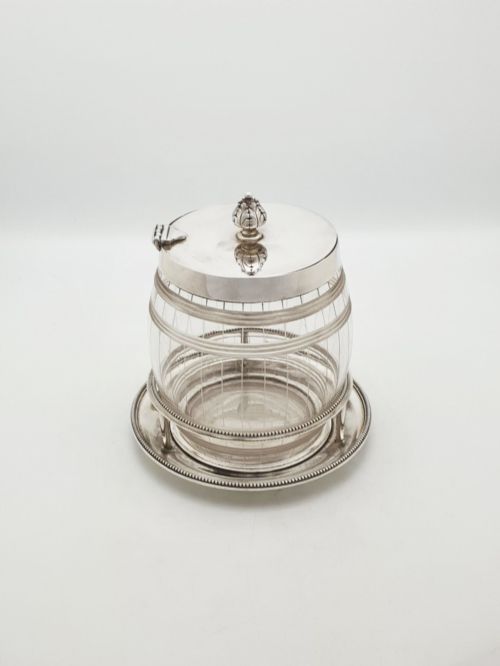
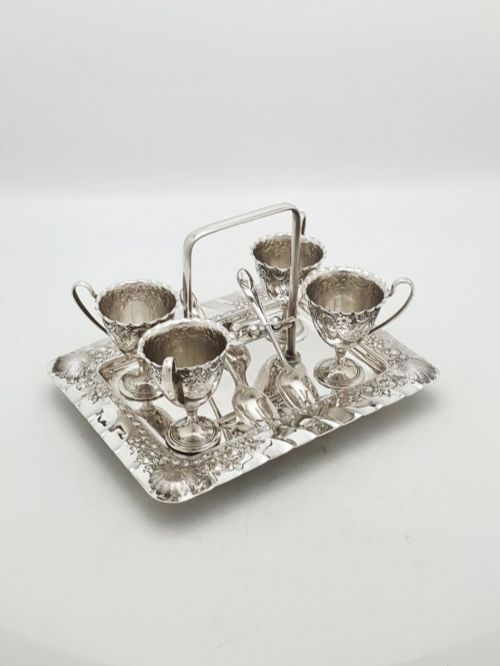
A vintage plate stand brings silver plate, cut glass, mahogany and oak together to hold cakes, fruit and bottles with Edwardian and Victorian poise.
Vintage Plate Stand
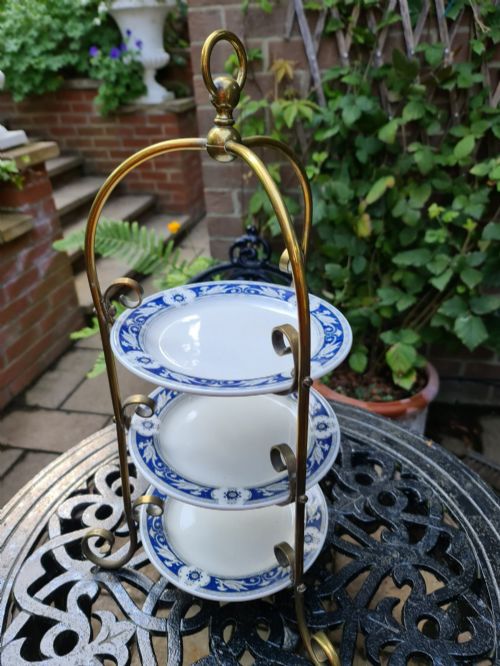
A vintage plate stand comprises serving tiers, cake holders and dish supports originating mainly from the Edwardian period, the Victorian era and the nineteen-twenties.
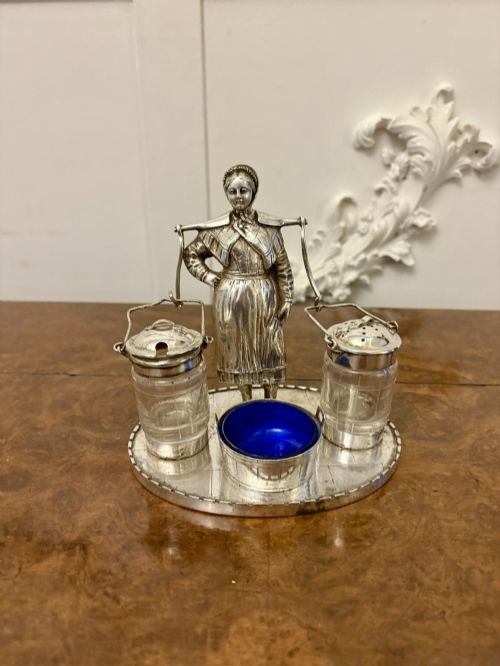
The objects take forms such as multi-tiered cake stands, revolving cruet frames, spirit kettles on burner stands and mahogany wine coasters.
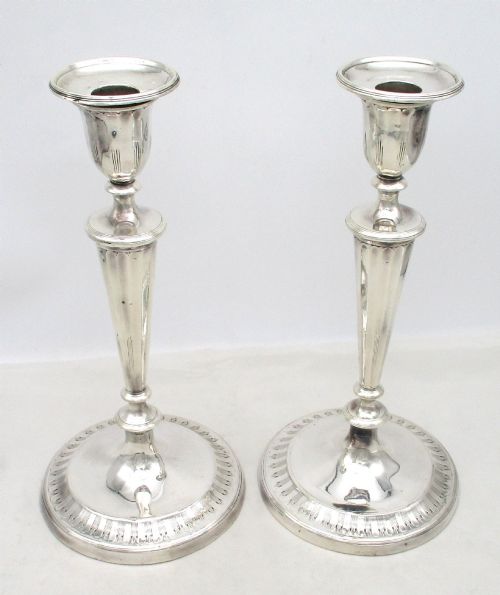
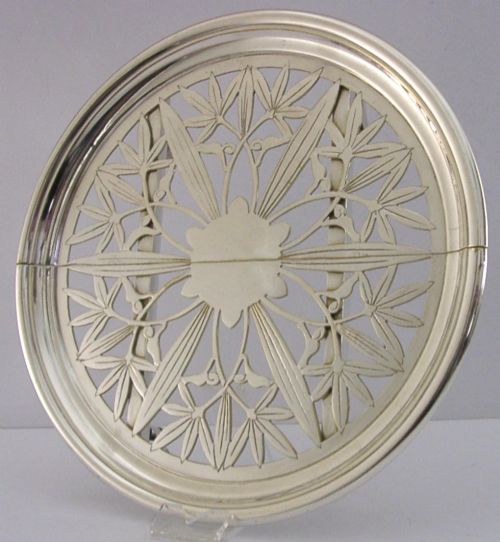
Makers combine silver plate and nickel plate with cut glass, cranberry flashed glass, oak and mahogany to construct these table and floor accessories.
How they were made
Silversmiths deposited silver plate onto base metals using electroplating techniques, while cabinetmakers turned solid oak and mahogany for wooden tiers and frames.
Glassmakers blew and cut crystal vessels, cruet bottles and decanters to fit precisely into metal mounts and wheeled trolleys.
Foundries cast brass and metal components into Rococo Revival, Neoclassical and Art Deco patterns before polishing and assembling.
Victorian motorists packed specialised travel cruet sets into cars, ensuring salt and pepper remained accessible during bumpy horse carriage or early automobile journeys.
What varies in quality
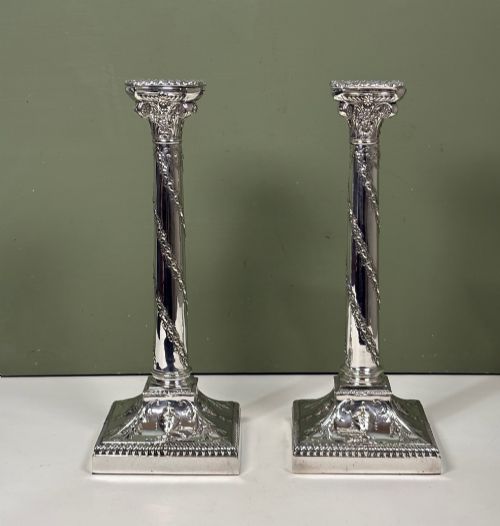
Quality rests in the weight of the silver plate over the base metal and the crispness of cast foliage, embossing and geometric handles.
The integrity of fitted cut glass bottles, matching stoppers and unblemished wood grain separates standard production from finer workshop output.
Mappin & Webb·Christofle·Elkington·Hicks & Meigh·George Jones·Hukin & Heath·Brook & Son Edinburgh·Harrods·WMF·Marples & Company
The Vintage Plate Stand Glossary
- Silver Plate
- A thin layer of silver fused or electroplated onto a base metal such as copper or nickel brass. This technique allowed manufacturers to produce domestic wares with the visual weight of solid silver at a lower cost.
- Cruet Set
- A matched collection of glass bottles for oil, vinegar, salt and mustard housed in a metal frame. These stands often feature central carrying rings and specific cut glass stoppers.
- Cranberry Glass
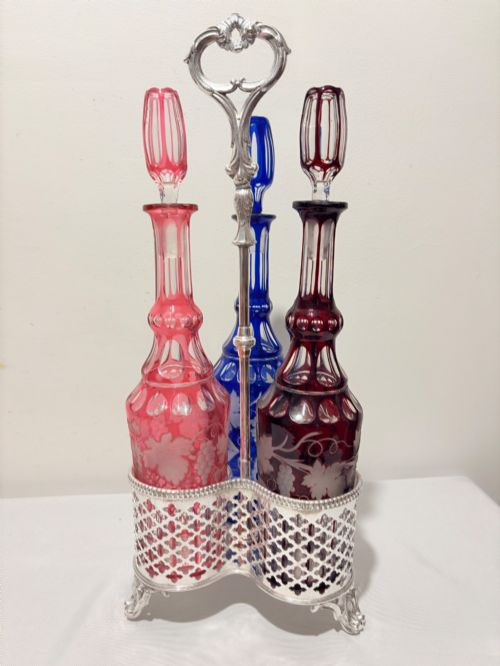
- Transparent glass coloured a rich red by the addition of gold chloride to the molten batch. It appears frequently in Edwardian cruet bottles and decanters.
- Tantalus
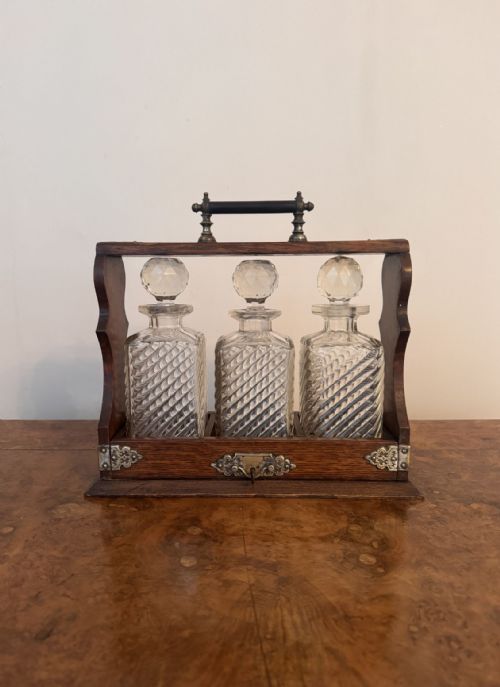
- A locking wooden or metal frame that holds decanters securely while displaying the contents behind a barred bar. The design prevents servants or guests from helping themselves without a key.
- Torchere
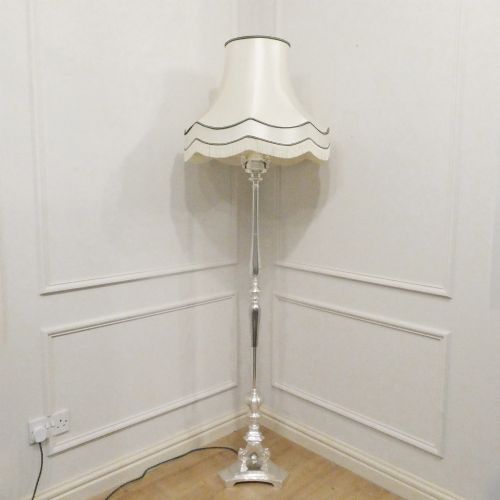
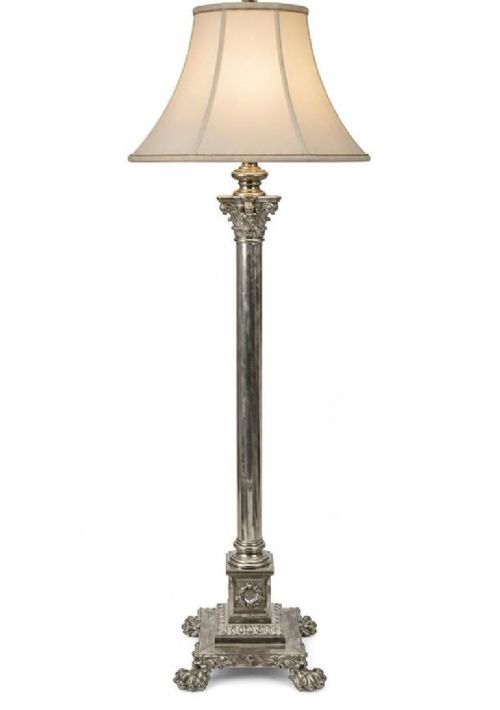
- A tall stand or pedestal designed to support a lamp, figure or plant. Examples often incorporate silver-plated figures or turned mahogany shafts.
Vintage Plate Stand: Frequently Asked Questions
How do I clean silver plate?
Use a soft cloth with a mild silver cream specifically formulated for plated items. Avoid harsh dips that strip the plating from the underlying metal.
Dry the piece thoroughly after washing to prevent water spots from forming on the polished surface.
Can I use these stands daily?
Most stands function well for serving cakes, holding bottles or organising desks during regular use. Ensure wooden tiers are kept away from excessive moisture and heat.
Glass inserts and removable ceramic plates lift out easily for washing after meals or gatherings.
How do I date a piece?
Examine the style of the mounts, such as Art Deco geometric lines or Edwardian embossed scrollwork. Maker marks and registry numbers stamped into the metal provide precise production years.
Turned mahogany bases and cut glass patterns also offer strong clues to the decade of manufacture.
What is a decanter stand?
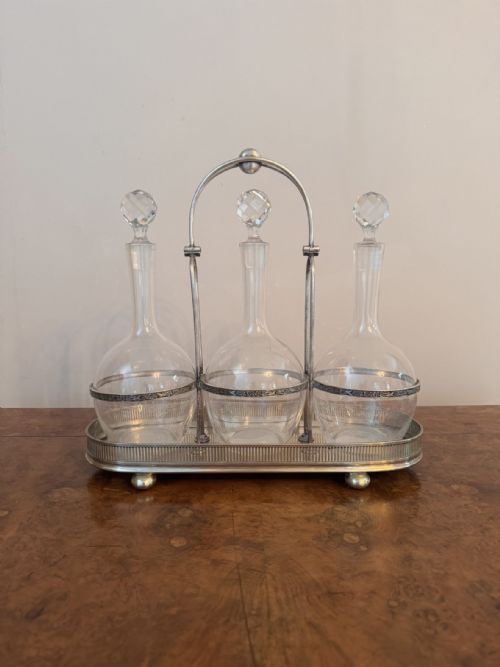
A decanter stand holds wine bottles, spirits or water jugs in fixed or rotating frames. Some designs incorporate coasters with wooden bases and silver-plated rims.
These pieces protected dining tables from condensation rings and made passing drinks around the table easier.