

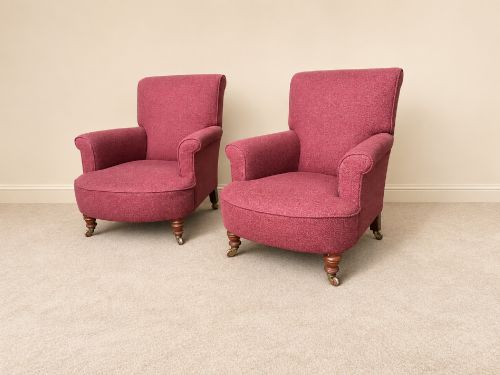
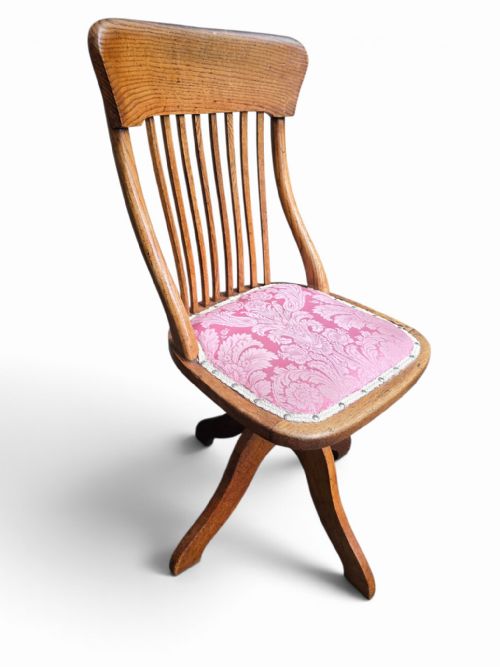
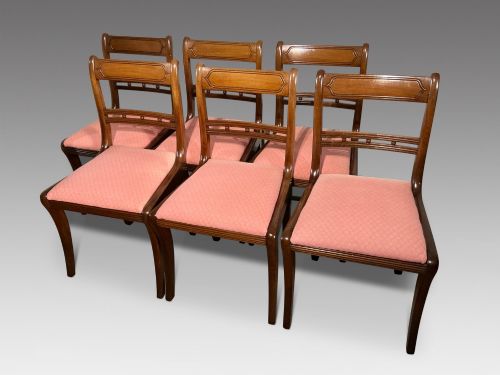
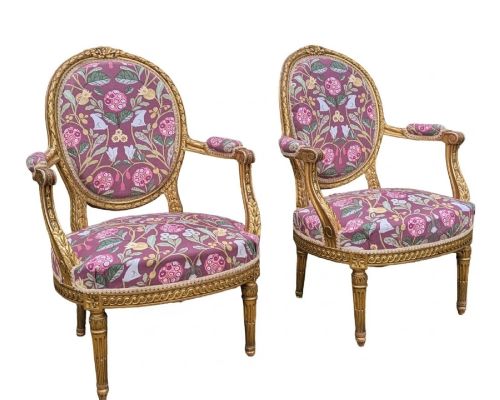
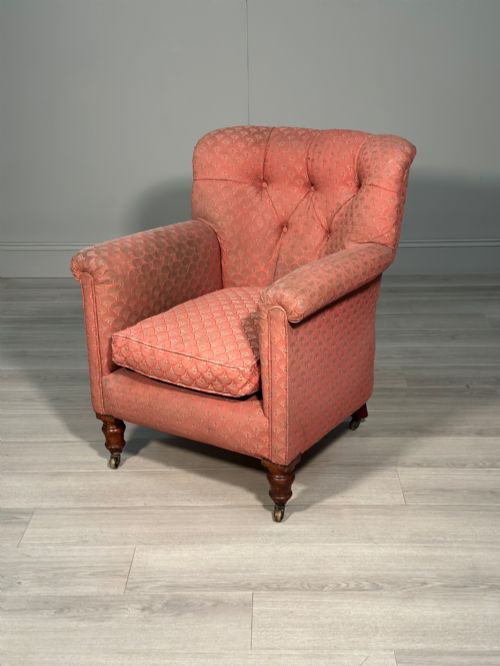
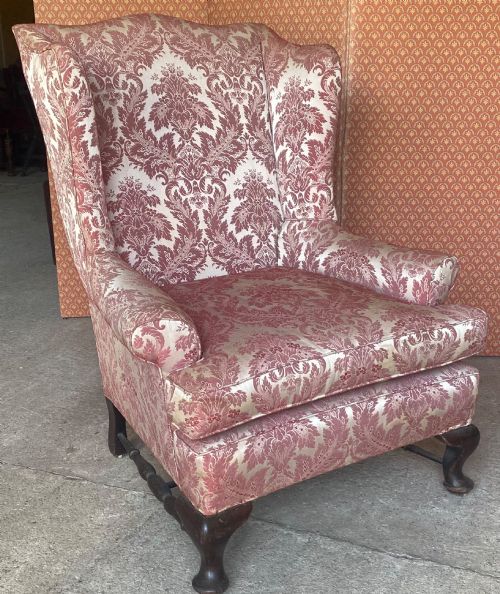
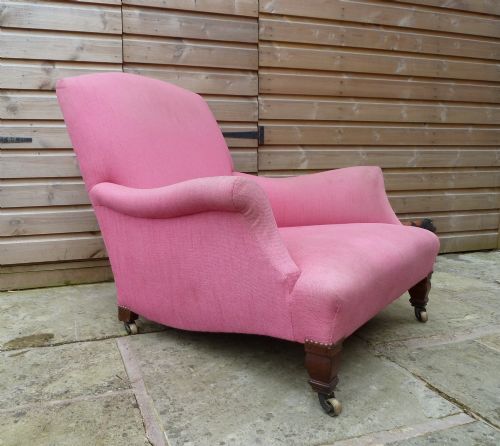
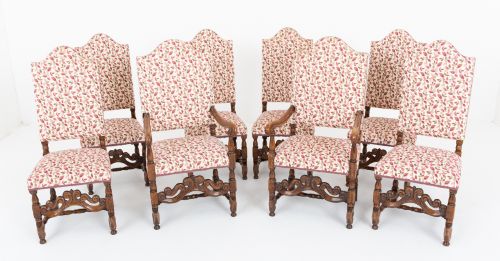

Vintage Pink Upholstered Chair
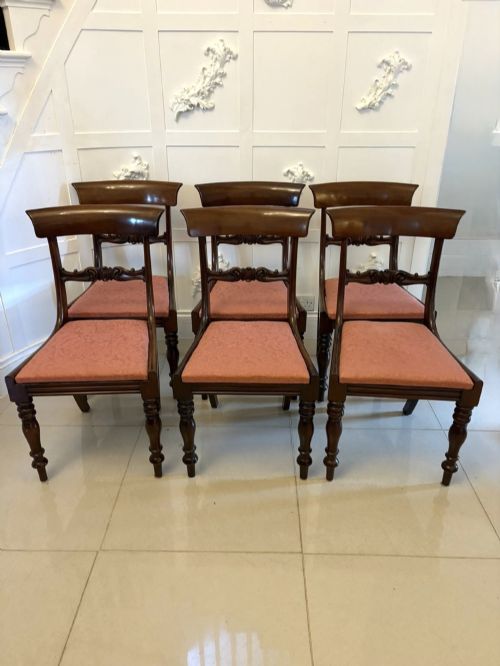
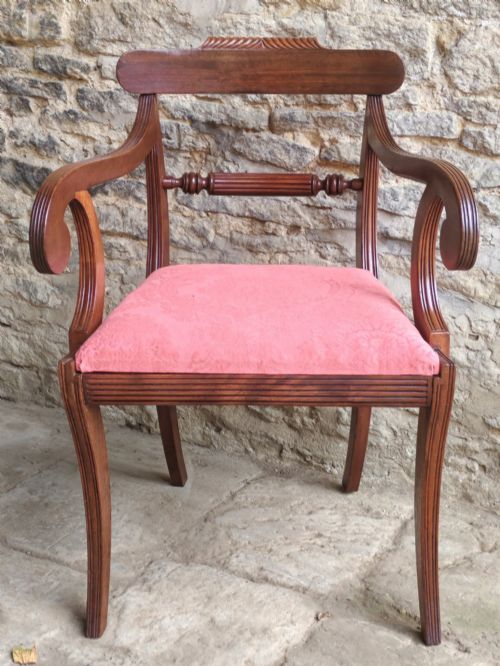
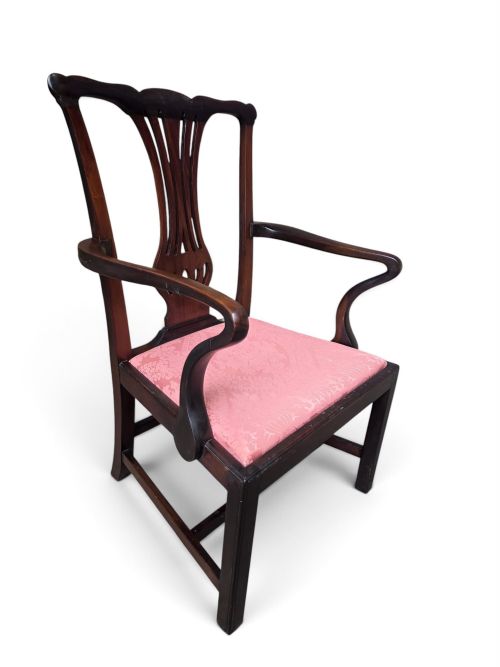
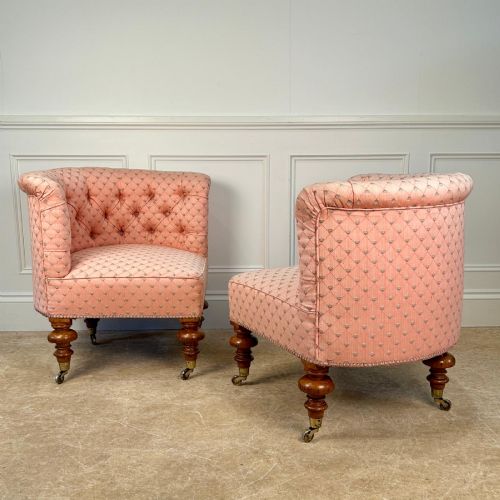
A vintage pink upholstered chair brings soft textile warmth and traditional seating comfort into a room.
Vintage Pink Upholstered Chair
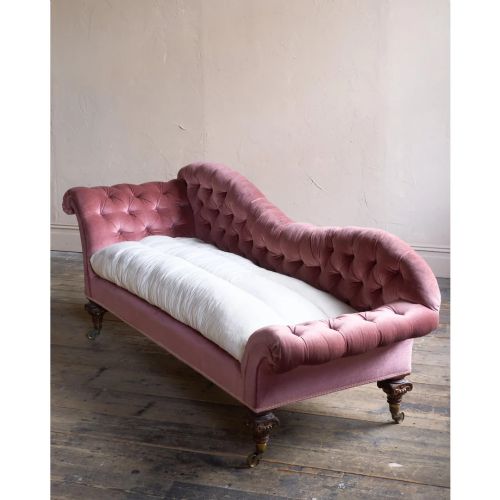
A vintage pink upholstered chair encompasses various seating forms upholstered in pink fabric, velvet, and other textiles. The selection spans the nineteenth century through to the 1930s, incorporating Victorian, Edwardian, and Art Deco influences.
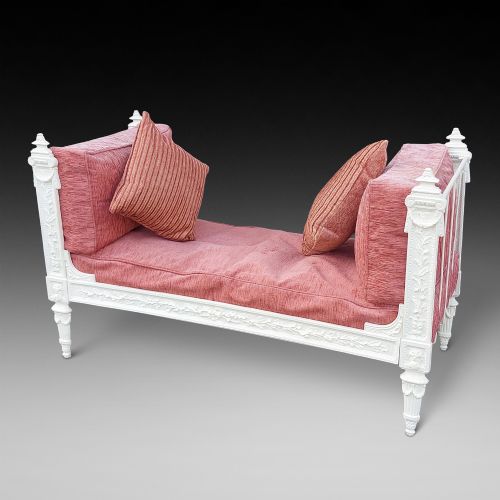
Buyers encounter different seating configurations on this page, including armchairs, slipper chairs, daybeds, chaise longues, and settees. Many pieces incorporate button backs, fringe details, and traditional frames constructed from mahogany, walnut, oak, and hardwood.
Origin styles vary widely across the inventory, ranging from French Louis XVI and Howard style designs to Georgian Revival and Queen Anne forms. These pieces function as boudoir chairs, bedroom chairs, and library seating.
How they were made
Frames are constructed from sturdy timbers such as mahogany, walnut, oak, and hardwood, often shaped with carved wooden details or gilt finishes. Brass components and cast iron elements appear in structural supports and decorative fittings.
Upholstery relies on fabric and velvet textiles, frequently finished with deep buttoning and traditional fringe trims. Woodworking techniques span from nineteenth-century hand carving to early twentieth-century assembly.
Vintage Pink Upholstered Chair Retail Price Guide 2026
Typical asking prices for vintage pink upholstered chair among the pieces listed under this phrase on Sellingantiques today, from the lower quarter to the upper quarter. They describe what is for sale here now, not the wider market.
Listings feature wooden frames in mahogany, walnut, oak, and hardwood, paired with velvet and fabric upholstery across the nineteenth and early twentieth centuries.
What varies in quality
The standard of timber framing differentiates the build quality, with dense hardwoods and intricate carved walnut or mahogany representing finer construction. Solid frame joinery ensures lasting stability across armchairs and settees.
Textile selection and upholstery execution determine the finish of the piece, particularly where deep buttoning and fringe detailing are applied. The precision of the woodwork and the historical style influence the overall character.
Maple and Co·Howard and Sons
The Vintage Pink Upholstered Chair Glossary
- Slipper chair
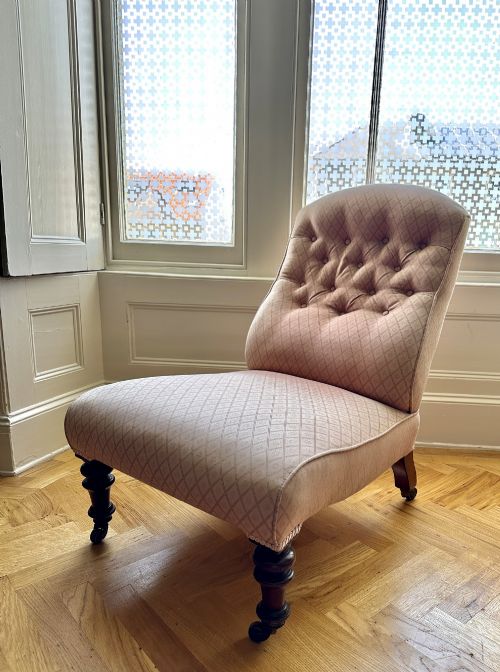
- A low-set upholstered chair traditionally used in bedrooms for dressing. These pieces sit close to the floor and usually lack arms.
- Button back
- An upholstery technique where buttons are pulled deep into the padding to create a quilted diamond pattern. This method secures the internal filling while providing textural detail.
- Chaise longue
- An elongated upholstered seat designed for reclining, combining elements of a chair and a daybed. Examples often feature scrolled ends or carved wooden legs.
- Bergere
- A closed-arm upholstered armchair with a wooden frame, typically featuring exposed carved wood and cane or upholstered panels. French variations are common in this style.
- Carver
- An armchair designed with open arms, historically placed at the head of a dining table to match a set of standard dining chairs.
Vintage Pink Upholstered Chair: Frequently Asked Questions
What is a slipper chair used for?
A slipper chair provides low seating originally designed for nineteenth-century bedrooms and dressing rooms. Their compact proportions allow them to fit into smaller spaces while offering comfortable seating.
Today, these chairs function well as accent seating in bedrooms, dressing areas, or living rooms. Their low profile creates a distinct visual silhouette compared to standard armchairs.
How do I identify a Victorian armchair?
Victorian armchairs typically feature substantial wooden frames made from mahogany or walnut, often displaying curved lines or carved ornamentation. Many examples include deep buttoned upholstery and sprung seats.
Construction methods from this era involve traditional joinery and heavy textiles like velvet. Button backs and turned wooden legs are frequent indicators of nineteenth-century design.
Where do I place a chaise longue?
A chaise longue suits spaces where an elongated seating piece can be positioned against a wall or float within a larger room. They function effectively in bedrooms, studies, or drawing rooms.
These pieces provide a dedicated space for reclining while adding a strong historical focal point to the interior. Placement should allow adequate clearance around the scrolled ends and legs.
What defines Edwardian upholstery styles?
Edwardian seating often displays lighter proportions than heavy Victorian furniture, incorporating refined wooden frames and tailored fabric coverings. Styles from this period frequently reference earlier Georgian or French designs.
Upholstery from the Edwardian era prioritises comfort alongside decorative elegance. Wing armchairs and salon suites from this time balance formal shaping with accessible domestic seating.