
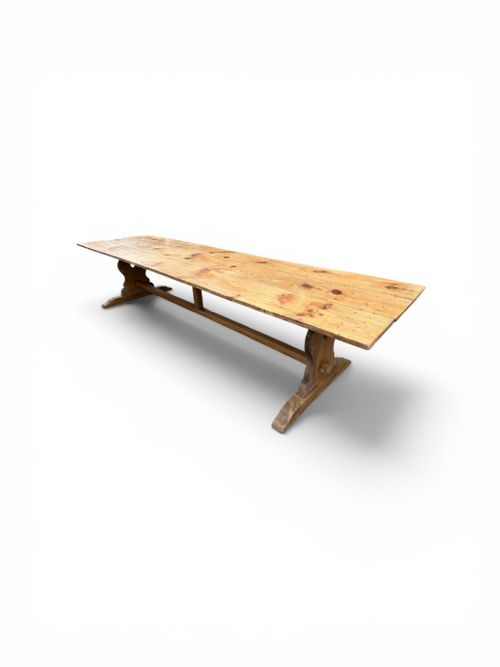


Vintage Pine Trestle Table
A vintage pine trestle table offers robust utility and honest charm, grounding a room with centuries of working history.
Vintage Pine Trestle Table
When searching for a vintage pine trestle table, buyers encounter sturdy work surfaces originating predominantly from the nineteenth century alongside early twentieth-century examples. These pieces span rustic farmhouse, French country, and industrial styles, reflecting practical origins in taverns, workshops, and kitchens.
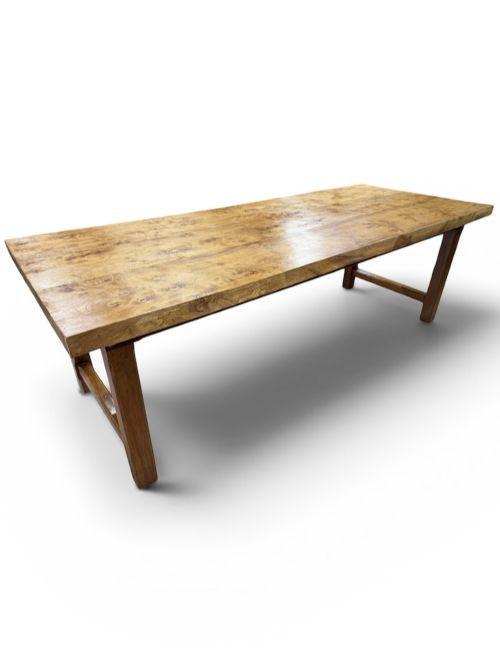
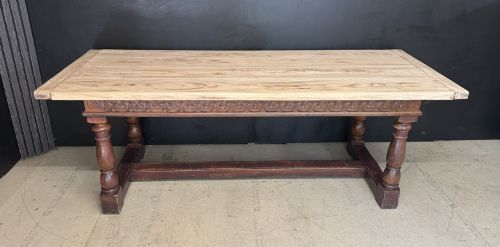
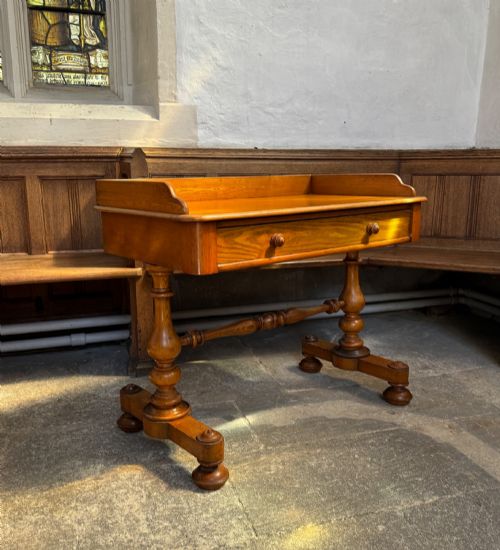
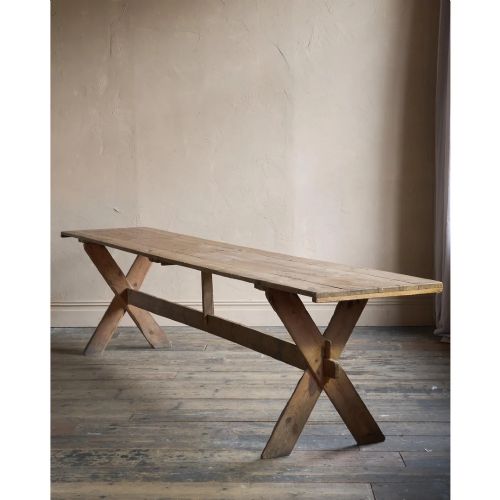
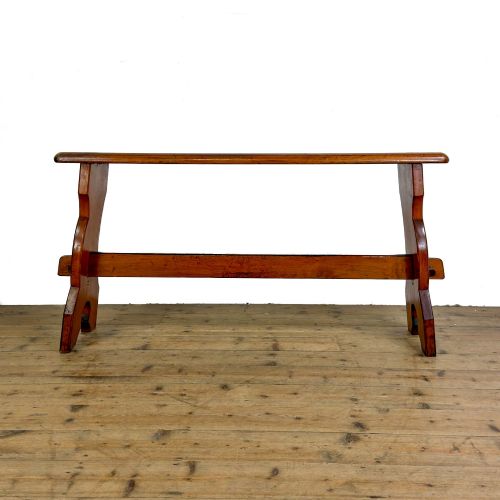
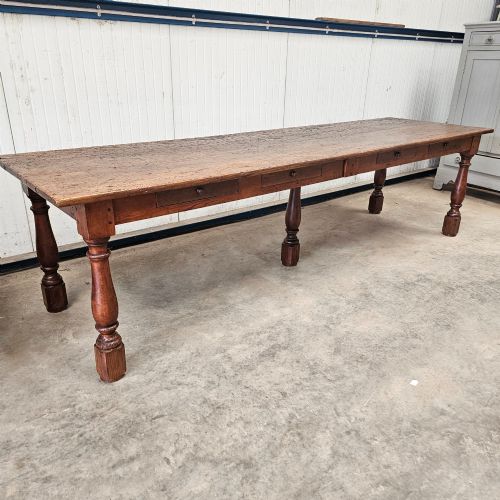
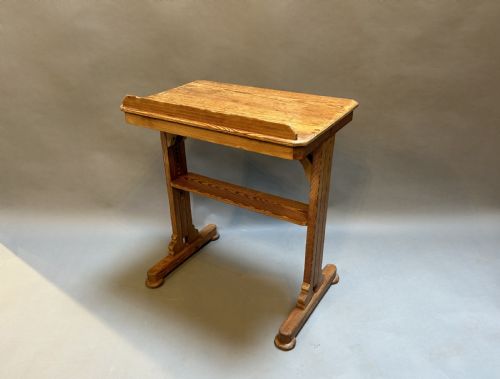
The selection ranges from expansive community harvest tables and refectory dining boards down to compact console tables and washstands. Many feature distinctive X-framed or iron trestle bases paired with scrubbed timber tops, showing the enduring utility of traditional joinery.
Materials and construction
Makers utilised resilient softwoods like standard pine and pitch pine, frequently combining them with iron components, painted finishes, and occasional hardwood elements such as oak, sycamore, or elm. Timber boards were often joined with cleated ends to manage seasonal wood movement in heavy-use environments.
Construction methods prioritised stability under pressure, employing trestle supports, cross-framing, and heavy iron braces. Surfaces show the marks of daily preparation, scrubbed finishes, and traditional paint applications such as Swedish Falu red.
The listings feature nineteenth-century and early twentieth-century pieces built from pine, pitch pine, oak, sycamore, and iron.
Assessing quality and character
Quality rests in the integrity of the timber top and the rigidity of the trestle base. Tables retaining their original paint finishes or untouched scrubbed surfaces command greater interest than those subjected to modern interventions.
Proportion and scale dictate desirability, particularly among longer harvest tables and tavern boards. The harmony between the base construction and the top planking determines the structural success of each piece.
The Vintage Pine Trestle Table Glossary
- Trestle table
- A table featuring a board top supported by two or more vertical frames or legs connected by a horizontal beam. This design maximises legroom and stability.
- Pitch pine
- A durable, resinous variety of pine timber prized for its strength and rich grain pattern. It frequently appears in heavy-duty utility and institutional furniture.
- Cleated ends
- Wooden battens fixed across the grain at the ends of a table top to prevent warping. This traditional technique manages the natural expansion of wide boards.
- Scrubbed top
- A timber surface repeatedly washed and scoured with water and abrasive agents, removing soft grain to leave a pale, textured finish. This was standard practice in working kitchens and dairies.
Vintage Pine Trestle Table: Frequently Asked Questions
How do I care for a vintage pine table?
Clean the surface with a damp cloth and mild soap, avoiding harsh chemicals that strip aged finishes. Periodic application of natural wax helps nourish the timber.
Keep the table away from direct heat sources and excessive moisture to prevent the wood boards from splitting or warping.
Were these tables used for dining originally?
Many examples served utilitarian roles in taverns, farmhouses, and workshops for food preparation or trade work rather than formal dining. Their sturdy trestle construction made them ideal for heavy daily tasks.
Over time, their generous proportions and honest aesthetic led to their adoption as family dining tables.
How can I tell the period of the wood?
Examination of tool marks, joinery methods, and nail types reveals the manufacturing era. Hand-sawn boards and pegged joints typically point to nineteenth-century production.
Patina, wear patterns, and original paint layers also provide reliable indicators of age and working history.
Are iron and pine tables authentic?
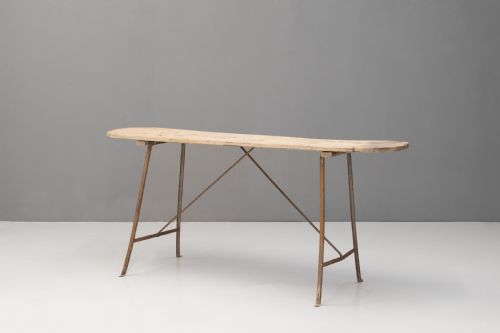
Industrial and tavern tables frequently combined pine timber tops with iron bases to withstand heavy use in nineteenth-century workshops and trade spaces. These mixed-material constructions are entirely period-correct.
Foundry tables and work tables often utilised cast iron components for enhanced structural support.